Written by: Nuno Leiria, Founder & CEO @ Nilo
Key Takeaways for Roblox Builders
- Bitmagic turns text prompts into playable 3D browser games, but everything stays locked inside its own engine with no export path to Roblox Studio.
- Raw AI-generated meshes are usually too dense for Roblox, so manual retopology and cleanup can still take 15–30 minutes per model.
- Modern browser-based AI 3D tools now cover full pipelines, including text-to-3D, retopology, rigging, and export, all without local installs.
- Nilo keeps polygon counts under control with real-time LOD, offers one-click rigging, and exports clean FBX/GLB files ready for Roblox Studio.
- Join Nilo’s open beta and start building and playing for free.
The Friction You Face Bringing AI Models Into Roblox
You generate something that looks great in the preview, then you try to bring it into Roblox Studio and everything breaks. AI-generated 3D models frequently require geometry reduction and optimization before import into Roblox Studio because they are not built for real-time game performance from the start.
Roblox enforces a hard limit of 10,000 triangles per individual mesh for import (whether single or batch). Most raw AI outputs blow past that limit. You then hit import errors, laggy performance on mobile, or hours of manual cleanup in Blender, including retopology, which means rebuilding a mesh’s geometry so it deforms cleanly and stays within polygon budgets.
Studios in 2026 still allocate 15 to 30 minutes per model for manual retopology and cleanup of raw AI-generated meshes in Blender. If you are building a full scene, that turns into hours of work that has nothing to do with actual game design. That is why tools that handle cleanup in the browser matter so much for you.
Skip the Blender cleanup step and try Nilo’s automatic retopology in your browser.
What Makes an AI-Assisted Browser 3D Tool Useful
An AI-assisted browser 3D tool lets you generate, edit, and export 3D assets entirely in your browser, with no downloads, no installations, and no app switching. Desktop software like Blender needs installation and months of learning before you can ship anything. Multi-tool stacks force you to generate in one app, clean up in another, rig in a third, and export from a fourth.
The browser-based category has matured fast. Creator platforms now deliver a full browser-based pipeline, including text-to-3D, image-to-3D, texturing, retopology, rigging, and export, without code or local installs. You now need to check whether a browser tool closes the gap between generation and Roblox-ready output in one place.
Bitmagic fits this category but focuses on prompt-to-game generation on its own engine. Nilo stands out by focusing on what happens after generation: cleanup, optimization, rigging, and clean export to Roblox Studio.
Fixing Raw AI 3D Assets Before Roblox Import
Raw AI meshes are almost never production-ready. They are typically dense, irregular polygon soups containing millions of triangles, completely random edge flow, and non-manifold geometry, where more than two faces meet at an edge, which makes them unusable for rigging and inefficient for real-time engines.
Common defects you will find in first-pass AI outputs include:
- Hollow backs and fused materials
- Triangle soup with no logical edge flow
- Non-manifold edges that cause import failures
- UV layouts with thousands of tiny shattered islands that cause texture bleeding
- Wonky shading and unnecessary vertices that prevent effective use of modifiers
Fixing these issues by hand takes time. Technical artists typically spend multiple hours to several days per asset on mesh unwrapping, rebaking textures, and fixing artifacts. Builders call this retopology hell for a reason.
Nilo reduces that pain by handling cleanup automatically. Its real-time LOD system, which adjusts polygon counts on the fly, keeps assets within Roblox’s usual polygon caps without you touching a slider. As one builder put it in Nilo’s February 2026 survey, “I do not have to spend hours on 3D modeling the simplest things. Now I can use Nilo and do it in 15 seconds.”
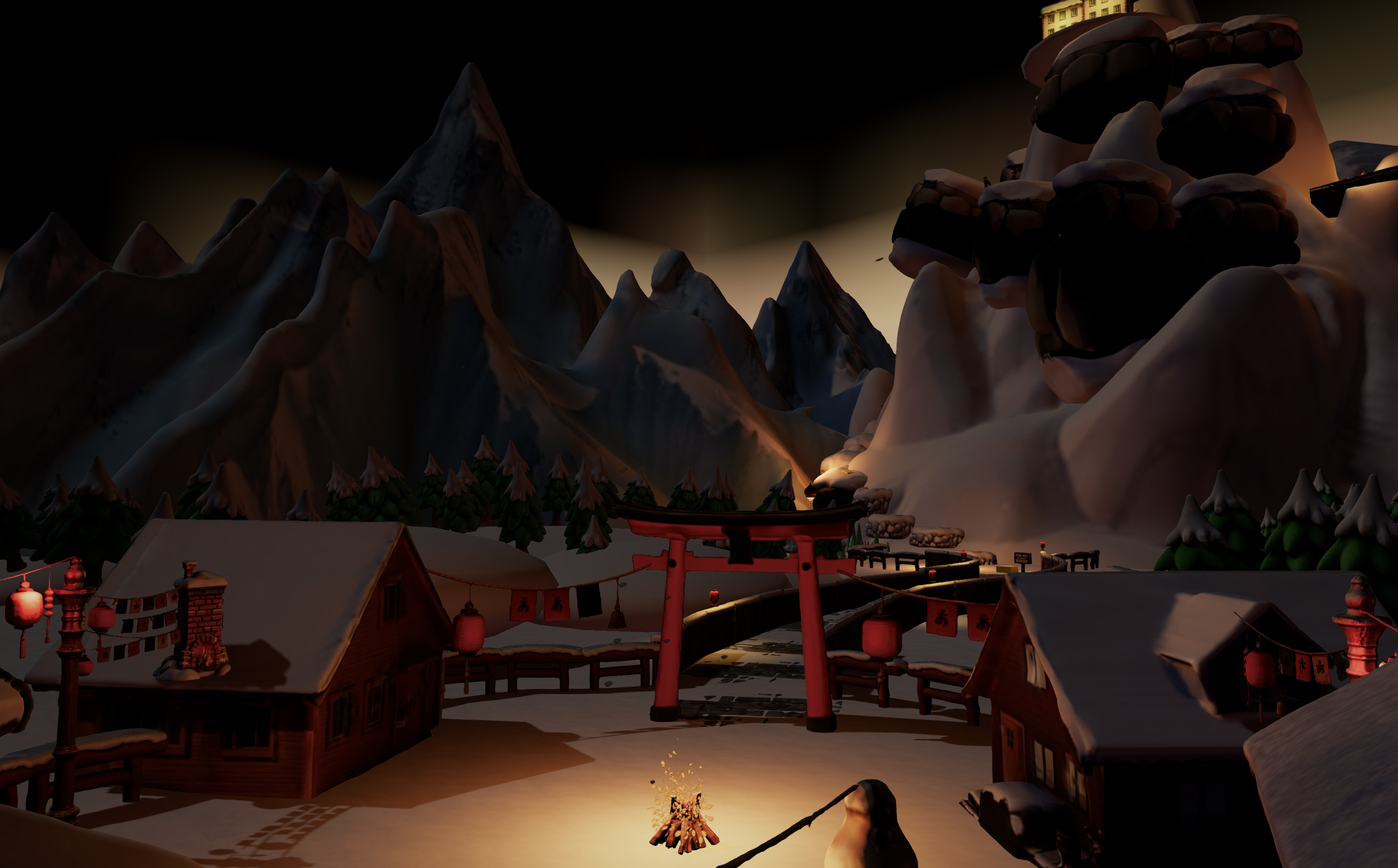
See how Nilo’s real-time LOD keeps your meshes Roblox-ready without manual optimization.
Building Worlds With Natural-Language Logic
Generating a single asset is one step. Turning that asset into part of a working game world is a different challenge. You need objects that interact, physics that behave correctly, and logic that runs without you writing Lua from scratch.
Bitmagic handles this with its custom WebGL engine built in TypeScript and Three.js, which lets the AI modify game code, environments, mechanics, and assets in real time. The result is a hosted web game you can share with a link, but the content stays locked to Bitmagic’s engine with no export path.
Nilo takes a different path. Its built-in code editor accepts natural language prompts, so you create 3D game logic by talking, texting, or even sending images to the AI. The system generates working code and shows changes in your 3D world in real time. Physics simulation runs by default, so everything feels interactive without manual wiring.
Nilo runs on a custom game engine with C++ physics compiled to WebAssembly and accelerated with WebGPU. That setup keeps performance solid even on mobile browsers, which matters when you invite friends to build or play from their phones.
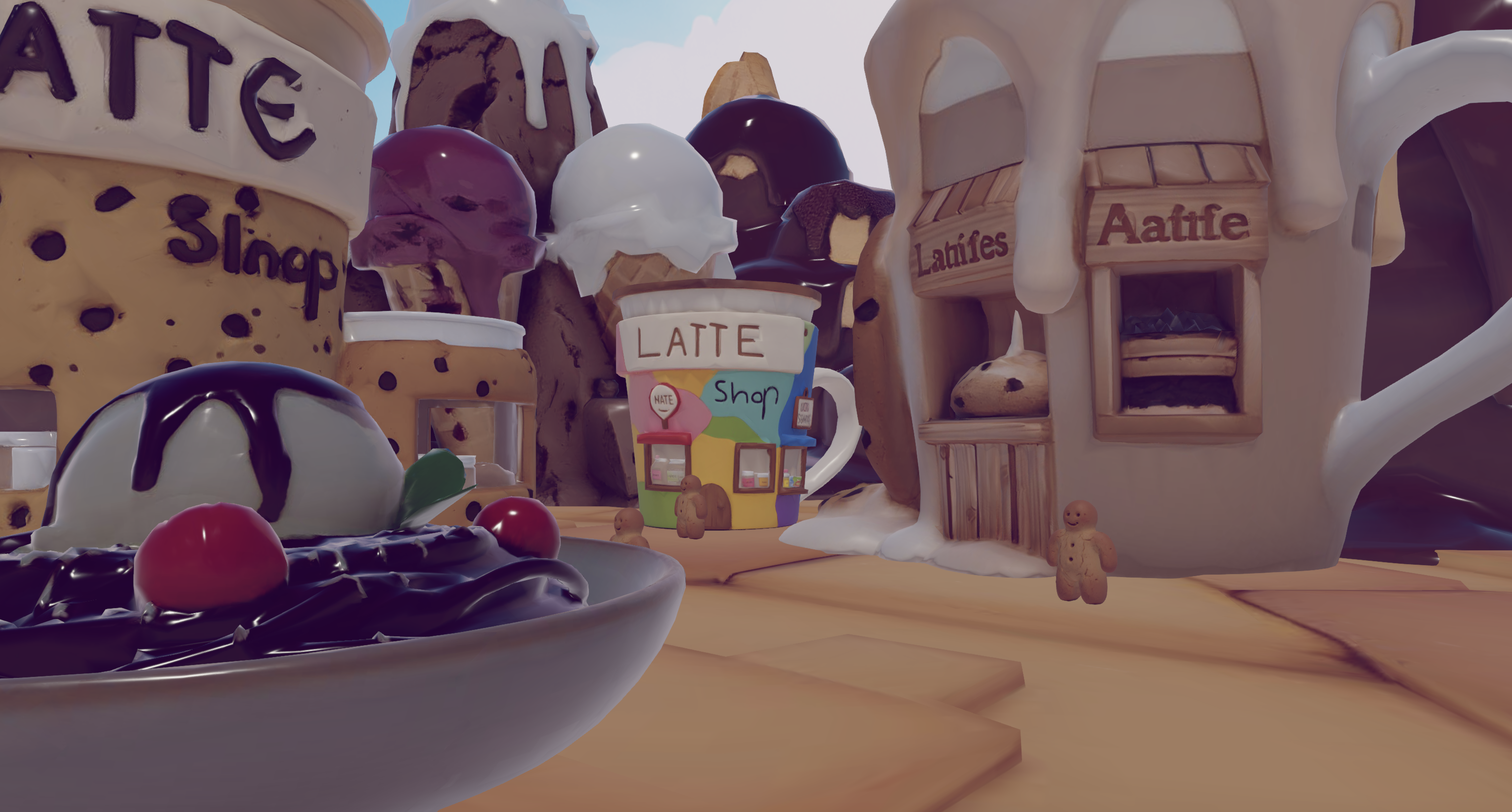
Even in 2026, AI-generated 3D models often need extra artist work for complex rigging and animation because auto-rigging handles only standard humanoids reliably. Nilo’s rig and animate with one click cover the standard cases that matter most for Roblox builders, so you can focus on your ideas instead of bone weights.
Collaboration and Exporting Cleanly to Roblox Studio
Sharing work and getting it into Roblox Studio creates its own friction. Export format matters. Rig compatibility matters. Polygon counts at export matter. Rigging only helps if you can move those rigged assets into Roblox Studio without breaking them.
Bitmagic outputs are platform-locked. Bitmagic does not support exporting generated 3D assets or games to external engines because all output runs exclusively on its own proprietary engine. If you want to use a Bitmagic-generated asset in Roblox Studio, you currently have no direct path.
Nilo exports to FBX, OBJ, STL, and glTF and optimizes polycount so models work directly in Roblox Studio and other platforms without extra steps. Rigged and animated models export cleanly. The LOD system keeps polygon counts within Roblox’s triangle cap before the file leaves Nilo.
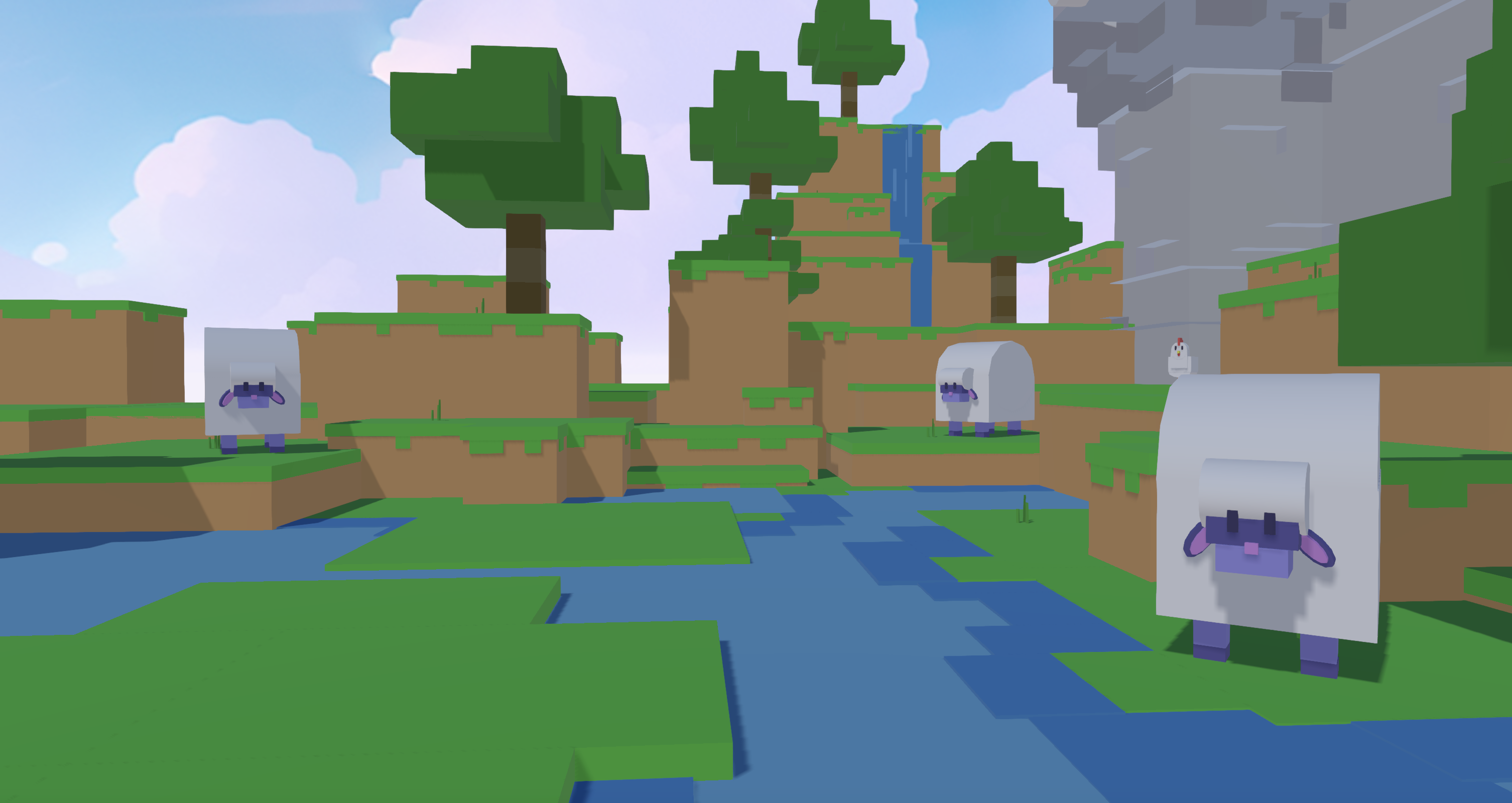
On collaboration, Nilo supports real-time multiplayer creation. You share a URL and build together on desktop or mobile. Bitmagic is currently available in early access, which limits who can try it at all.
How To Evaluate AI 3D Tools for Roblox Work
When you compare AI-assisted 3D tools for Roblox, start with access. You should be able to open your browser and start building without installs or long setup. Then look at output quality, because your mesh needs to import cleanly and stay within Roblox’s triangle cap automatically.
After that, check export formats. You want standard options like FBX or GLB so you can move assets between Roblox, Unity, and Blender without getting stuck. Rigging and collaboration decide whether you can animate characters and work with friends efficiently. Finally, think about learning value, so you pick a tool that teaches real 3D concepts instead of hiding everything behind a black box.
Specifically, evaluate:
- Onboarding: Does it run in the browser with no install, and can you start building in under five minutes?
- Roblox Studio output quality: Does the exported mesh import cleanly, and does it stay within Roblox’s triangle cap automatically?
- Export compatibility: Does it export to FBX or GLB, and can you take assets to Roblox, Unity, or Blender?
- Polycount management: Does the tool handle retopology automatically, or do you still need Blender for cleanup?
- Rigging quality: Does one-click rigging produce animation-ready skeletons, or do you need to fix weight painting afterward?
- Collaboration: Can you build with friends in real time without a separate app?
- Learning value: Does the tool teach real concepts like mesh topology, polygons, and LOD through the interface?
Test these criteria yourself by joining Nilo’s open beta and starting a build.
Three Ways You Might Use These Tools
Think about how these tools behave in real situations you might face.
First-time creator: You want to generate a character, rig it, and drop it into Roblox Studio. With Bitmagic, the character lives inside Bitmagic’s engine only, with no export path. With a tool like Nilo, you generate, adjust with the LOD system, rig with one click, and export a Roblox-ready FBX. You skip the Blender detour.
Power builder: You are building a full map with props, characters, and custom animations. You need clean topology on every asset and consistent polygon budgets. Dense or non-uniform meshes from AI generators burn GPU and memory budgets in real-time engines like Roblox, slow performance, and inflate file sizes. A tool with automatic retopology and a real-time LOD system removes that bottleneck from your workflow.
Team workflow: You and a friend want to build a scene together, then export assets for a shared Roblox project. Real-time multiplayer creation, where both of you are inside the same 3D world at once, cuts iteration time a lot. As one builder noted in Nilo’s February 2026 survey, “I like how it feels like a good game engine rather than a vibe coding tool, with easy building and a good focus on being able to export and import content.”

Bitmagic vs Nilo: Capabilities That Affect Your Roblox Builds
| Capability | Nilo | Bitmagic |
|---|---|---|
| Polycount management | Real-time LOD system that optimizes polygon counts automatically for Roblox’s 10,000-triangle cap | No documented polycount control or topology enforcement features |
| Rigging quality | One-click character rigging with animation from text prompts, exporting animation-ready FBX | Animations generated as part of the game output, with no documented skeletal rigging export |
| Export friction | Exports FBX, OBJ, STL, and glTF that work with Roblox Studio, Unity, Blender, and Unreal Engine | No export to external engines, with output platform-locked to Bitmagic’s proprietary engine |
| Access | Open beta, free to join now | Early access |
Frequently Asked Questions
How do Bitmagic and Nilo differ for Roblox builders?
Bitmagic generates complete playable 3D games from text prompts on its own engine. The output is a hosted web game you can share with a link, but you cannot export the assets to Roblox Studio or any other platform. Nilo focuses on the full asset creation pipeline, so you generate, optimize, rig, animate, and export directly to Roblox Studio in formats like FBX and GLB. If you want to build assets for Roblox, Nilo’s workflow is designed with that goal in mind.
Do you still need Blender if you use an AI 3D tool for Roblox?
With most AI generators, you still do. Raw AI meshes usually contain dense triangle geometry, broken edge flow, and UV layouts that cause texture issues in Roblox Studio. Fixing these manually in Blender often takes 15 to 30 minutes per model. Tools that include automatic retopology and a real-time LOD system, such as Nilo, handle this step inside the platform, so you do not need to open Blender for standard Roblox assets. Complex hero characters with custom animation rigs may still benefit from a Blender pass, but everyday props and characters can go straight from Nilo to Roblox Studio.
What does “retopology” mean for Roblox builders?
Retopology means rebuilding a 3D mesh’s underlying geometry by replacing messy, dense triangle soup with clean, organized polygons that follow the model’s shape. It matters for Roblox because the platform caps individual meshes at 10,000 triangles. AI-generated meshes often exceed this cap and contain geometry that deforms badly during animation. Retopology brings the mesh within budget and makes it animation-ready. Automatic retopology tools handle this in seconds, while manual retopology in Blender can take 15 minutes to several hours depending on the model’s complexity.
Can you collaborate with friends using browser-based 3D tools?
It depends on the tool you pick. Bitmagic is currently in early access, so access itself is limited. Nilo supports real-time multiplayer creation, where you share a link and build together inside the same 3D world on desktop or mobile, with no installation needed on either side. This setup works well for team projects where you want to iterate on assets together before exporting to Roblox Studio.
Is Nilo free to use right now?
Yes. Nilo is currently in open beta and free to join. You get 1,000 Nilo Bits per month, which are the credits used for AI generation, export, and creation features. Many core building tools use no Bits at all. You can also earn more Bits through Nilo Rewards by referring friends and building within the community. You do not need to pay anything to get started.
Keep Your Creative Momentum Going
The real cost of messy AI output is not just cleanup time. It is the broken momentum. You had an idea, you generated something, and then you spent the next hour in Blender fixing topology instead of building your world. That cycle kills projects.
A single-tool workflow, where you generate, optimize, rig, animate, and export in one place, keeps you inside the creative flow from start to finish. A traditional 3D model-to-export pipeline took 3 to 5 days before AI tools, and with current AI 3D generation the same workflow takes minutes. The remaining friction is the gap between generation and Roblox-ready output, and Nilo is built to close that gap for you.
In Nilo’s February 2026 survey, 93% of builders said they would recommend Nilo to a friend, and 72% said it makes their creative process easier by “a lot.” The platform is backed by Supercell, runs entirely in your browser, and exports directly to Roblox Studio without a Blender detour.
No more retopology hell. No more tool-switching. You just build what is in your head.
Join Nilo’s open beta and try building and playing for free.