Written by: Nuno Leiria, Founder & CEO @ Nilo
Key Takeaways for Aspiring Game Creators
- Many aspiring builders like you feel a big gap between playing games and creating them, especially with tools like Roblox Studio that expect pro-level skills.
- Prompt-only AI tools such as Bitmagic lower the first barrier but do not give you the iteration, collaboration, and export control you need for real game projects.
- Integrated browser-based platforms solve these issues by combining asset generation, cleanup, rigging, scripting, and real-time collaboration in one place.
- When you compare tools, focus on onboarding speed, output quality, export compatibility, performance, and how much you actually learn while building.
- For a seamless browser-based experience with AI-powered tools and real-time collaboration, try Nilo’s free open beta.
The Problem: Friction When You Move from Playing to Creating
You spend hours in Roblox or Minecraft, you know what a good game feels like, and you want to make your own. You open Roblox Studio or a prompt-only AI tool, and your momentum disappears.
This experience is common for aspiring builders aged 11–18. Roblox did not report 3.5 million active developers for 2025; its filings instead note over 35,500 qualified creators as of December 31, 2025, and the gap between “player” and “creator” stays huge. Tools like Roblox Studio, Unity, and Blender were built for professionals, not for someone who wants to turn an idea into a playable world without deep technical training.
The friction shows up in specific, painful ways that stack on top of each other.
- Retopology, which means cleaning up the geometry of a 3D mesh so it works in a game engine, can take 30+ minutes per asset in Blender when you do it by hand.
- Polycounts, or the number of triangles in a 3D model, must stay under Roblox’s hard limit of 21,000 triangles per MeshPart or your import fails.
- Scripting becomes the biggest barrier. You have strong ideas but cannot code in Lua, so you wait for a scripter or drop the project.
- Tool fragmentation forces you to chain Meshy → Blender → Roblox Studio, and you lose creative momentum at every handoff.
Prompt-only AI tools like Bitmagic promise to skip these steps, but they create a different kind of friction that only appears once you try to build a full game.
The Real Cost: Lost Momentum, Slow Learning, and Abandoned Projects
Each step up the 3D creation ladder, from a single asset to a full scene to a complete world, adds requirements for spatial relationships, scale, continuity, and structure that prompt-only systems cannot preserve consistently. You generate one asset and it looks fine. You generate another and the scale feels wrong. You try to combine them into a scene and the proportions clash while the geometry becomes heavy.
Raw text-to-3D outputs from tools like Meshy AI and Tripo AI often include messy topology, chaotic UV maps, and very high triangle counts.
Cleaning up a single generated asset by hand, including retopology, UV unwrapping, texturing, and export, can take several hours.
The emotional cost hits hard. You burn out, drop the project, and repeat the cycle. Solo developers using AI tools can generate assets much faster than with manual 3D modeling, but only when the AI sits inside a real creation pipeline instead of acting as a one-time generator.
The creator economy keeps growing quickly. Roblox pays over $1B each year to creators, with more than 30% year-over-year growth. The opportunity is real, and your tools need to catch up so you can actually participate.
Start building and playing in Nilo’s free open beta.
The Solution Category: AI-Assisted Browser-Based 3D Creation Tools
The category that actually helps here is not “AI game generators”. You should look at integrated asset-to-world workflows, where you generate, refine, rig, animate, script, and export inside one environment without jumping between apps.
Use these points when you evaluate tools in this category:
- Accessibility: It should run in the browser with no download, and you should start creating in about a minute.
- Creation flow: You should move from text prompt or sketch to a game-ready 3D asset without leaving the platform.
- Collaboration: You and your friends should build together in real time just by sharing a link.
- Performance: The platform should handle level of detail and other optimization tasks automatically so your worlds do not lag.
- Portability: You should export to Roblox, Unity, or Blender in standard formats such as FBX, OBJ, or GLB.
Desktop engines like Roblox Studio and Unity give you deep control but require installation, scripting knowledge, and a long learning curve. Prompt-only tools like Bitmagic, Rosebud AI, and Spawn feel fast but produce a web page instead of a real game project, so you cannot use a scene tree, node inspector, or asset pipeline for serious editing. Integrated browser-based platforms sit between these extremes and currently offer some of the most practical options for aspiring builders.
Explore Nilo’s browser-based creator tools in the open beta.
How Integrated Workflows Handle 3D Asset Generation and Refinement
Different approaches handle core asset creation in very different ways.
| Capability | Prompt-Only Tools (e.g., Bitmagic) | Integrated Platforms (e.g., Nilo) |
|---|---|---|
| Asset generation | Text prompt to a single mesh output | Text, sketch, or image to a refined 3D model using multiple AI providers |
| Topology quality | Messy topology with high triangle counts that needs manual cleanup | Real-time retopology and an LOD slider, so assets start Roblox-ready |
| Iteration | Full regeneration required for every change | Refine in place and adjust polycount, rigging, and animation without leaving the world |
| Rigging and animation | Not included | Rig and animate with one click, plus text-to-animation with natural language prompts |
| Export | Limited or locked to one platform | FBX, OBJ, STL, GLB, compatible with Roblox, Unity, Blender, and Unreal Engine |
| Collaboration | Solo use | Real-time multiplayer building through a shared link |
Nilo uses a model-agnostic AI layer that connects providers such as Meshy, Tripo, Nano Banana, Cartwheel, and Uthana behind one interface. As these models improve, Nilo improves with them, so you keep using the same workflow while generation quality increases.
Try Nilo’s integrated asset workflow in your browser.
Natural Language Logic Creation with Vibe Coding
Scripting stops many builders. You might have a strong idea for an obby, tycoon, or survival game, but you cannot write Lua, so you either search for a scripter or stop building.
Vibe coding gives you another path. You describe what you want in plain language and create 3D game logic by talking, typing, or even sending images to the AI. The platform turns that into working code and shows the result live in your 3D world. You can also open the code, change variables like “speed = 2” to “speed = 20”, and learn real programming concepts while you build.
Prompt-only tools like Rosebud AI and Spawn also use code generation, but they do not support professional-style iteration, custom assets, detailed physics tuning, or complex interconnected systems. Nilo’s built-in code editor accepts natural language in any language, including English and Spanish, and updates your 3D world instantly. One builder from Nilo’s February 2026 survey said, “You made me enjoy vibe-coding. The code assistance works almost flawlessly, other experiences have just been frustrating at best.”
World Building, Scene Assembly, and Performance Tuning
Generative AI systems create recognizable single-object shapes but lack the correctness engines needed for functional games. They struggle with exact dimensions, materials, positions, and structured multi-object scenes, which is why building a full world with prompt-only tools breaks down quickly.
Integrated platforms approach this differently. Nilo’s world-building tools mix procedural generation with direct spatial editing. A radial menu lets you drop objects into the scene quickly. An inspector panel gives you detailed control over properties. Real-time physics simulation keeps everything moving, bumping, and reacting without manual wiring.
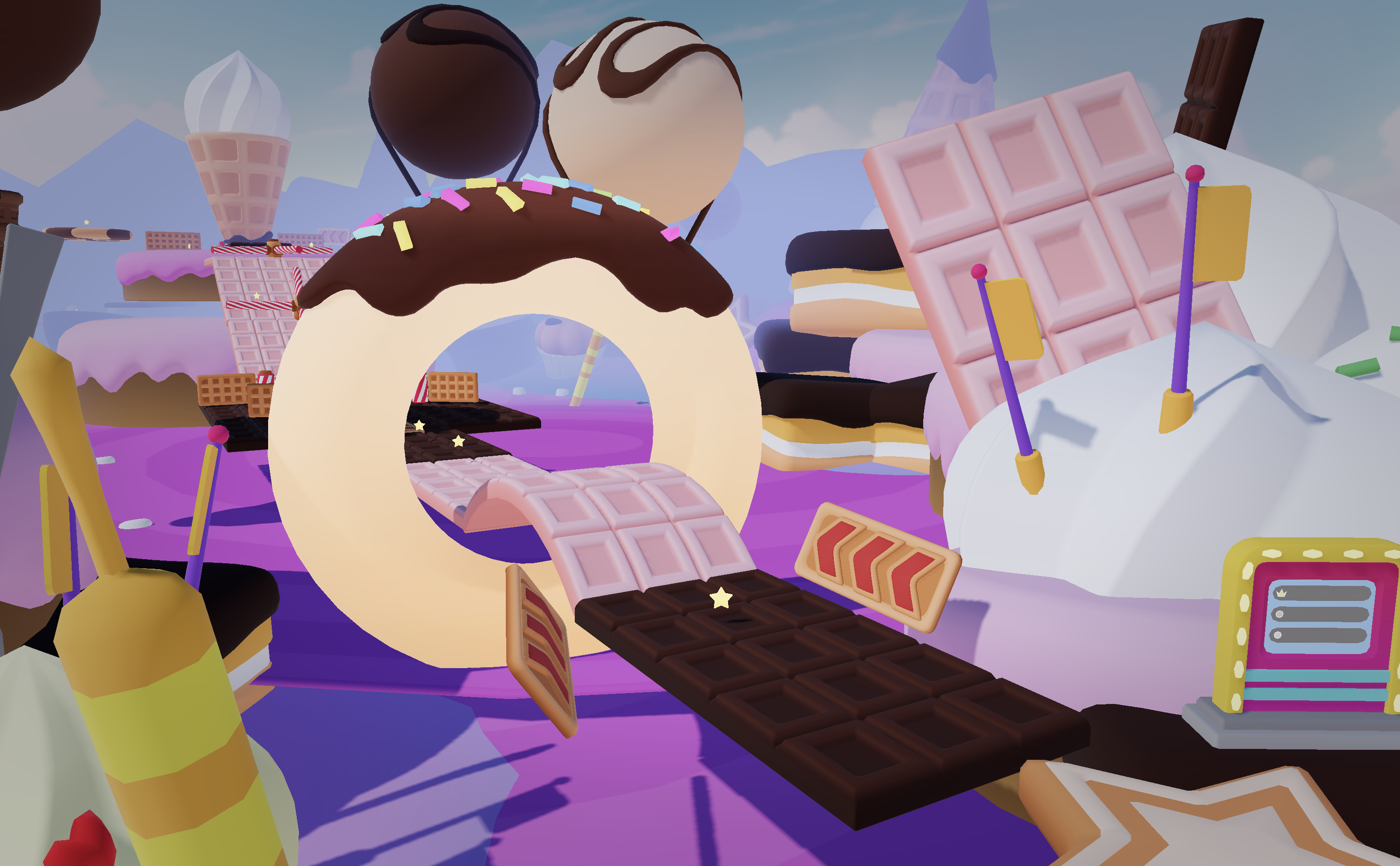
The level-of-detail system automatically adjusts polygon counts while you build. Roblox enforces this strict polygon limit, and Nilo’s LOD slider manages it for you so you can focus on layout and gameplay instead of counting triangles.
Collaboration, Sharing, and Export for Real Projects
Building alone feels slow and isolating, especially when the games you love are multiplayer. Your creation tools should match that social energy.
Nilo supports real-time multiplayer creation. You share a URL, your friends join on desktop or mobile, and you all build in the same world. You can publish worlds publicly, keep them private for staging, or clone and remix other builders’ creations.
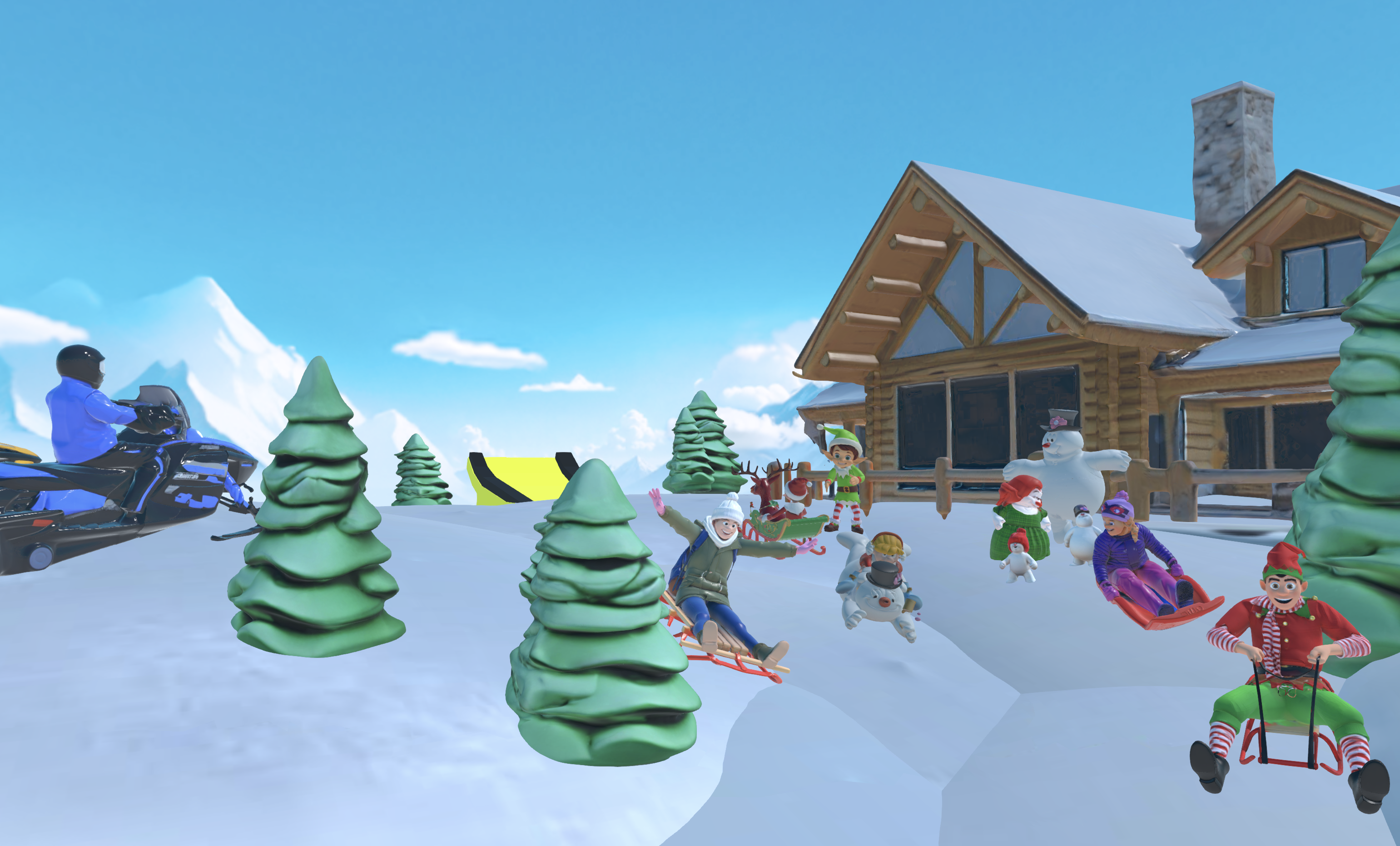
For export, Roblox Studio accepts FBX, GLTF, and OBJ files, with FBX recommended for rigged or animated models. Nilo exports these formats plus STL and works with Unity, Blender, VRChat, and Unreal Engine. You are not locked in, and you can use Nilo purely as an asset pipeline for Roblox while continuing your main build in Roblox Studio.
How to Evaluate Tools for Your Game-Building Goals
When you compare browser-based 3D creation tools, use these criteria as a checklist.
- Onboarding speed: You should create something in under five minutes without watching a tutorial.
- Output quality: Generated assets should be game-ready instead of needing hours of cleanup.
- Export compatibility: The tool should export to Roblox-friendly formats with correct polygon limits.
- Performance: The platform should manage level of detail and other optimization tasks for you.
- Collaboration: You should build with friends in real time, not just send each other files.
- Learning value: The tool should teach you real concepts such as rigging, mesh topology, and physics instead of hiding everything behind a black box.
Prompt-only tools usually feel great on onboarding but fall short on output quality, export control, and learning. Desktop engines excel at quality but feel heavy on onboarding and collaboration. Integrated browser-based platforms like Nilo aim to perform well across all six points so you can grow from first project to serious worlds.
Compare your current tool to Nilo using this checklist in the open beta.
Three Real-World Scenarios: Where Nilo Fits
Scenario 1 — First-time creator: You have never built a game and want something playable without learning Blender or Lua. A prompt-only tool gets you a quick prototype, but you cannot really customize it. An integrated platform like Nilo lets you generate assets, drop them into a world, add game logic with vibe coding, and share a playable link in a single session.
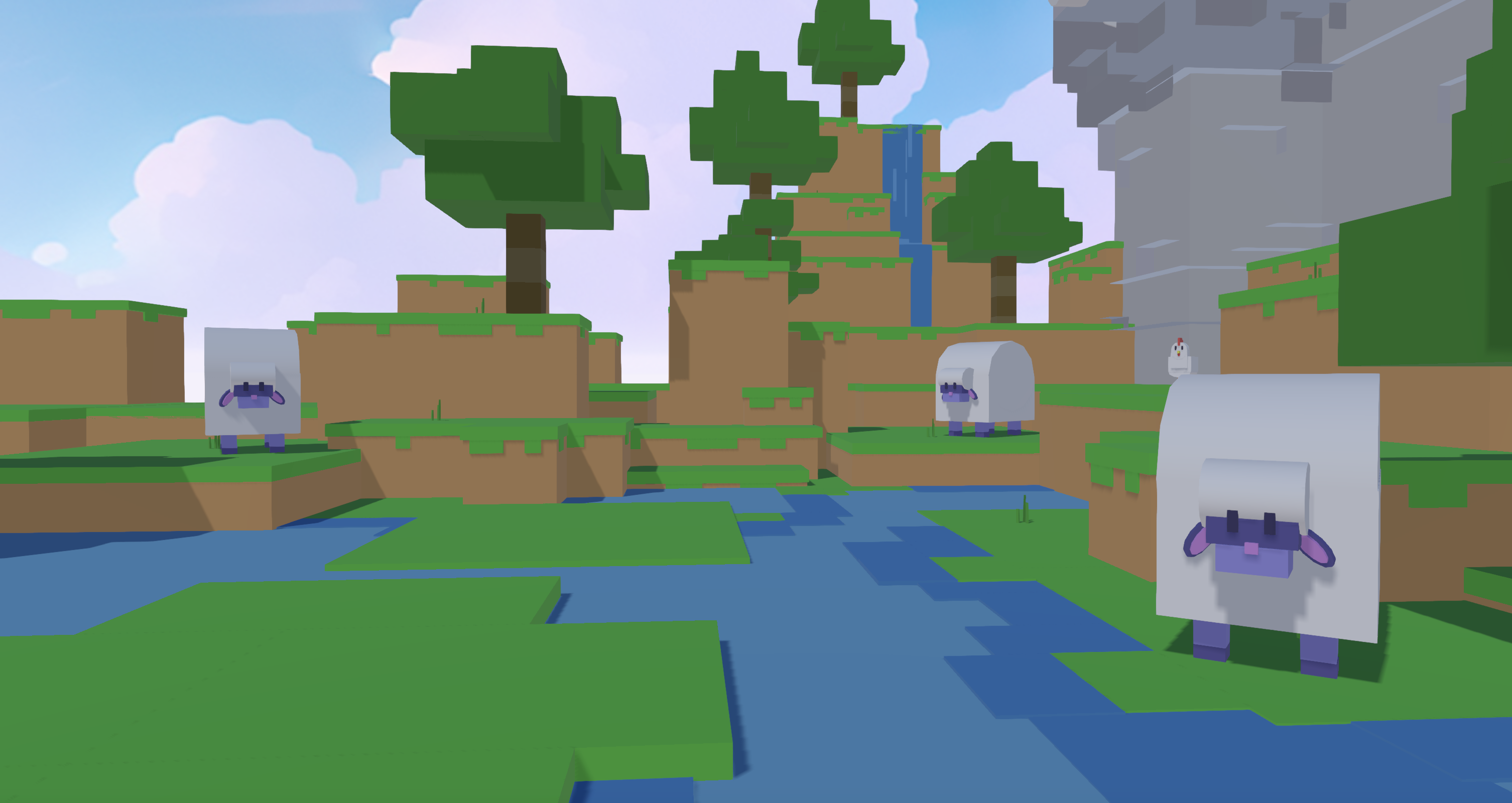
Scenario 2 — Roblox-focused builder: You already build in Roblox Studio but spend too much time on retopology and switching tools. You need Roblox-ready exports with correct polygon limits and solid rigging. Nilo’s level-of-detail system and one-click export to FBX or GLB support this workflow. One builder in Nilo’s February 2026 survey said, “I do not have to spend hours on 3D modeling the simplest things. Now I can use Nilo and do it in 15 seconds.”
Scenario 3 — Small team: You and two friends want to build a game together. Roblox Studio does not support true real-time co-creation, and prompt-only tools feel single-player. Nilo’s multiplayer building lets you share a link so all three of you build in the same world at once on any device.
Test these scenarios yourself in Nilo’s free beta.
Nilo vs Bitmagic: Feature-by-Feature View
| Feature | Nilo | Bitmagic |
|---|---|---|
| Browser-based | Yes, no download or install | Yes |
| Custom game engine | Yes, with C++ physics, WebAssembly, and WebGPU | No dedicated engine |
| Real-time collaboration | Yes, multiplayer building via shared link | Not available |
| Roblox-optimized export | Yes, FBX, OBJ, GLB with automatic level of detail | Not a primary feature |
| Rigging and animation | Yes, rig and animate with one click plus text-to-animation | Not included |
| Vibe coding (natural language scripting) | Yes, built-in code editor that accepts any language | Prompt-based generation only |
| Open beta access | Yes, free with 1,000 Bits each month | Sign-up required, limited feature set |
| Community | 9,000+ Discord members, backed by Supercell | Smaller community |
Is Bitmagic Game Lab Real or Fake?
Bitmagic Game Lab is a real AI-native, browser-based game creation tool that uses prompts to generate content, and it is not a scam. It mainly works as a generation tool without a full collaborative creation environment or a custom engine underneath. Browser-based prompt-only tools focus on speed-to-playable and do not support deep editing with a scene tree, node inspector, or asset pipeline. If you want a quick prototype, Bitmagic can help. If you want to build, iterate, collaborate, and export Roblox-ready assets, an integrated platform gives you more control.
Can a 12-Year-Old Create a Game with Bitmagic?
A 12-year-old can use Bitmagic, because its prompt-based interface feels simple. You describe what you want and the tool generates it.
The limits appear once you try to change things. Prompt-only systems often require full regeneration on every iteration because they lack a persistent scene graph or stored spatial state, so a small tweak can mean starting over. For a 12-year-old who wants to build something to share with friends, play together, and export to Roblox, that workflow breaks down quickly.
Nilo focuses on this age group and on aspiring builders like you. It runs in any browser, needs no downloads, teaches real game development concepts through use, and has a community of more than 9,000 builders on Discord. In Nilo’s February 2026 survey, 93% of builders said they would recommend it to a friend.
How to Sign Up for Nilo Instead
You can sign up for Nilo in about 30 seconds.
- Go to Nilo’s sign-up page.
- Click Sign Up and log in with Google.
- Use your 1,000 free Nilo Bits each month for AI generation, rigging, animation, and export.
- Start building in your browser with no download, no setup, and no credit card.
Nilo is backed by Supercell, whose Head of Investments Jaakko Harlas said, “Their approach to making game creation as enjoyable as gameplay itself really stood out. Nilo has the potential to open up game development to a whole new generation of builders.” In Nilo’s February 2026 survey, 82% of builders rated their experience as “Awesome” or “Good,” and 93% said they would recommend it to a friend. The community has grown to more than 9,000 Discord members through organic interest alone.
Create your Nilo account and start building for free.
Frequently Asked Questions
What is the difference between a prompt-only tool and an integrated game creation platform?
A prompt-only tool takes a text description and generates a game or asset in one step. You get output quickly but cannot edit it deeply, because there is no scene tree, physics control, or asset pipeline. An integrated platform like Nilo gives you a full creation environment where you generate assets, refine them, rig and animate characters, add game logic with vibe coding, build a world, and export, all inside one browser tab. You move from a single result to a real building process.
Do I need to know how to code or use Blender to build in Nilo?
You do not need coding or Blender skills to start. Nilo’s vibe coding editor lets you describe game logic in plain language, then turns that into working code with live feedback in your 3D world. For 3D modeling, Nilo handles retopology and optimization automatically, so you skip Blender cleanup. You can generate characters, props, and environments from text prompts, sketches, or reference images. If you want to learn programming, you can open the code and tweak variables directly, like using “View Source” for games.
Can I export what I build in Nilo to Roblox?
Yes. Nilo exports to FBX, GLTF, OBJ, and STL, which are all formats Roblox Studio accepts, with FBX recommended for rigged or animated models. Nilo’s level-of-detail system automatically adjusts polygon counts to meet Roblox’s requirements. Rigged and animated models export with full compatibility. You can use Nilo as an asset creation pipeline for Roblox or build full worlds in Nilo and then export assets to continue in Roblox Studio.
Is Nilo free to use?
Yes. Nilo’s open beta is free to join. You receive 1,000 Nilo Bits each month for AI generation, rigging, animation, and export, and many core building features do not use Bits at all. You can also earn more Bits through Nilo Rewards by inviting friends and building with the community.
Can I build with friends in Nilo?
Yes. Nilo supports real-time multiplayer creation. You share a link, your friends join your world on desktop or mobile, and you all build together. You can publish worlds publicly, keep them private, or clone and remix other builders’ worlds. Creation in Nilo starts social instead of becoming social only after you finish.
Jump into Nilo with your friends and build together for free.
Conclusion: Choosing Your Path from Idea to Playable World
The gap between “I want to build a game” and “I have a playable game” feels very real. Prompt-only tools like Bitmagic remove some technical barriers but limit your ability to iterate, collaborate, and export in a Roblox-friendly way. Desktop engines such as Roblox Studio and Blender give you full control but demand months of learning before you can ship something meaningful.
Integrated browser-based platforms sit in the middle and currently offer some of the most useful tools for aspiring builders. Nilo stands out in this space because it combines a custom game engine with AI-powered generation, vibe coding, real-time collaboration, and Roblox-aware export, all inside a browser tab. One builder in Nilo’s February 2026 survey said, “I like how it feels like a good game engine rather than a vibe coding tool, with easy building and a good focus on being able to export and import content.”
If you arrived here planning to sign up for Bitmagic Game Lab, you should first decide what you actually want to build. If your goals include Roblox-ready assets, real-time collaboration with friends, and a workflow that keeps your momentum, Nilo is worth trying before you commit to a prompt-only path.
Open Nilo in your browser and start building your world today.