Written by: Nuno Leiria, Founder & CEO @ Nilo
Key Takeaways
- Rosebud AI is built for prototyping, and most 3D asset issues come from unoptimized mesh topology, browser engine ceilings, and rigid export boundaries.
- The seven failure modes cover inconsistent art style, messy topology, weak rigging, scale and pivot errors, non-deterministic regeneration, export breakage, and browser performance limits.
- Workarounds exist inside Rosebud AI, yet each failure mode reaches a stop-patching point where moving assets to a production tool becomes faster than repeated fixes.
- Browser-only builders like you can live with loose topology and style drift. Export-bound builders need clean geometry, working LOD, and collision data that survives handoff to Unity, Unreal, or Roblox.
- For Roblox-ready, game-ready 3D assets, look for real-time retopology, automatic LOD, one-click rigging, and direct RBXMX export in a single browser-based tool.
Seven Ways Rosebud AI 3D Projects Break
- Inconsistent art style across generations — assets drift in proportions, materials, and color language between sessions.
- Mesh topology and polycount problems — messy wireframes and models that fall apart under animation.
- Rigging and animation weakness — models that do not animate, or skeletons that break under motion.
- Scale, pivot, and positioning problems — assets that load at the wrong size or snap to the wrong point.
- Asset integration and non-deterministic regeneration — changes that do not stick after another AI pass.
- Export and engine handoff — assets that break on the way into Unity, Unreal, or Roblox.
- Browser and engine ceilings — scenes that freeze, frame rates that drop, cleanup that feels impossible.
Start building and playing with your own 3D game assets in Nilo’s free open beta.
Style, Mesh, And Topology Quality
Failure Mode 1 — Inconsistent Art Style Across Generations
Each generation is independent, with no persistent style reference carried between prompts.
Symptom: Assets generated in the same Rosebud AI session drift in proportions, materials, and color language. A sword and a shield that should match look like they came from different games.
Root cause: Rosebud AI has no dedicated system for keeping art consistent across an entire game. Each generation is largely independent, so a game world can end up looking like it was assembled from different art directions.
Workaround inside Rosebud AI: Reuse the same reference image and prompt phrasing across generations, and keep a written style note with palette, material finish, and proportion rules to paste into every prompt.
Stop-patching point: When you need a coherent asset set for a shipped game, generate or refine the set in a tool with a persistent style layer. Repeated re-prompting for consistency signals that you have outgrown Rosebud AI for this task.
Failure Mode 2 — Rosebud AI Mesh Topology Problems
Rosebud AI does not perform automatic retopology, so generated meshes arrive with irregular edge flow and high polycounts.
Symptom: Messy wireframes, distorted geometry around hands and faces, and models that look “mostly right” but fall apart under animation.
Root cause: Rosebud AI does not perform automatic retopology, the process of rebuilding a mesh’s surface with clean, predictable geometry. Without it, a game-ready mesh is missing three things: clean edge loops (the rings of connected edges that define how a model bends), predictable UV maps (the flat layout that tells the engine how to apply textures), and a polycount (total number of triangles) that fits the target platform. 3D projects in Rosebud AI run in-browser via Three.js and slow down as scenes become more complex. Rosebud AI’s own import guide recommends keeping voxel and low-poly models under approximately 5,000 triangles each to avoid performance drops. Roblox caps models at 10,000–20,000 polygons, and every extra triangle is rendered in real time in the browser, so high polycounts turn into a direct performance problem.
Workaround inside Rosebud AI: Simplify the concept, generate smaller parts separately, and avoid asking for fine surface detail in a single generation pass.
Stop-patching point: When the model needs to animate or ship to Roblox, retopologize or regenerate it in a tool built for game-ready output. You cannot fix topology inside Rosebud AI. The editor exposes no node-level geometry controls, so you adjust 3D geometry by editing the generated Three.js JavaScript code (for example, in ThreeScene.js) or through chat prompts. Models can be generated and inserted from the Assets tab, but not through node-level UI controls.
See how real-time retopology cleans up messy meshes in Nilo’s open beta.
Rigging, Scale, And Browser Limits
The next three failure modes show up once your assets need to move or animate, starting with the gap between a generated model and a character that actually holds up in motion.
Failure Mode 3 — Rosebud AI Rigging And Animation Problems
There is a large gap between “a model” and “a production-ready character with a clean skeleton and consistent animation states.”
Symptom: Models that do not animate, skeletons that break under motion, and animation states that do not carry over.
Root cause: Rosebud AI lacks the advanced rigging and frame-by-frame control required for complex, high-end animation. Rigging, the process of adding a skeleton to a mesh so it can move, works best on bipedal humanoid characters in a T-pose (arms extended horizontally, body upright). That constraint shows up across most browser-based AI rigging today. Quadruped and creature rigs are supported by Rosebud AI through its integrated Tripo Uni-Rig auto-rigging, which handles characters of many shapes and sizes. A model frozen in a dramatic action pose fights the rig and tears at the elbows and knees during playback.
Workaround inside Rosebud AI: Keep characters humanoid and T-posed, and test animation before building anything on top of the rig.
Stop-patching point: When the character sits at the center of your game, rig and animate it in a tool with one-click rigging and text-to-motion animation. Rebuilding a broken rig inside Rosebud AI usually costs more time than moving the asset out.
Failure Mode 4 — Scale And Pivot Problems
Generated assets arrive without a standardized scale or a clean pivot, and Rosebud AI does not give you a deep scene editor for inspecting nodes or modifying vertices.
Symptom: Assets load at the wrong size, sit at awkward origins, or snap to the wrong point in the scene, the “wrong size” complaint you see in forums.
Root cause: Rosebud AI’s own troubleshooting documentation treats scale mismatch as a known failure mode, recommending you prompt the AI with “Scale my imported model to 1 block unit” or use transform controls to correct it. The deeper issue is that you generally cannot open a full scene editor, inspect nodes, or import all of your own assets the way a standard engine allows. That matters most for pivots, the point around which an object rotates or from which it is placed. When the pivot sits at the mesh center instead of the base, props float, clip, or rotate around the wrong point. Scale mismatch shows up often when importing AI-generated 3D models because tools disagree on units. Blender and Unity default to meters while Unreal defaults to centimeters, so a model can arrive 100× off.
Workaround inside Rosebud AI: Re-prompt with explicit size language, and place the asset in a test scene before committing it to a build.
Stop-patching point: Set scale and pivot in an external tool before import. It takes minutes, and it is the fix that actually sticks.
Failure Mode 5 — Rosebud AI Browser And Engine Ceilings
Three.js and WebGL constraints, plus no deep scene editor, cap what you can build and clean up in the browser.
Symptom: 3D scenes freeze, frame rates drop, and manual cleanup feels nearly impossible when a model is “mostly right.”
Root cause: The number-one performance bottleneck in Three.js scenes is too many draw calls. The number of separate meshes controls the draw calls. Each mesh is a separate draw call, and modern GPUs stall on CPU overhead at roughly 100–1,000 draw calls per frame, even though they can process millions of triangles per call. Three.js is a JavaScript library that renders 3D graphics in the browser using WebGL, a browser API for GPU-accelerated graphics. A practical production budget for broad device compatibility is under about 500,000 total triangles in a scene, with small environment props at 500–5,000 triangles each. Rosebud AI adds no deep scene editor on top of these limits, so full 3D with meshes, lighting, physics, and a movable camera is hard to run well inside the browser. That is why its 3D output stays limited compared to a real engine.
Workaround inside Rosebud AI: Reduce scene complexity and keep assets low-poly.
Stop-patching point: When performance blocks your progress, move to a browser-based engine built for real-time 3D performance instead of a code-generation layer running on Three.js.
Iteration And Export Headaches
Once your assets exist, two more problems surface: they do not stay put between AI passes, and they do not always survive the trip into another engine.
Failure Mode 6 — Rosebud AI Asset Integration Failures
The generation layer and the scene layer are not fully deterministic, so a new AI pass can overwrite manual work.
Symptom: Rosebud AI struggles to decide whether an asset already exists, generates a missing one, and wires it in incorrectly. Edits get ignored or overwritten after another AI iteration, the “changes do not stick” problem.
Root cause: Complex projects hit a wall around 2,500 lines of generated code, which is attributed to a context-window limitation rather than a bug, causing the AI to lose track of earlier code and introduce bugs it cannot fix. The same non-determinism applies to assets. A new AI pass has no reliable memory of what you hand-adjusted, so it can regenerate or overwrite your work. AI generation flips the traditional asset pipeline. The model optimizes for a convincing preview instead of a downstream pipeline it understands.
Workaround inside Rosebud AI: Lock in an asset before making further AI edits, and keep a copy of anything you have hand-adjusted.
Stop-patching point: This failure mode frustrates builders the most, and it clearly signals that you have outgrown a prototyping layer. When changes do not stick, the tool fights your creative momentum.
Failure Mode 7 — Export And Engine Handoff
Export boundaries are rigid and LOD support is missing.
Symptom: Assets that look fine in the browser break on the way into Unity, Unreal, or Roblox. Textures go missing, orientation looks wrong, and collision data disappears.
Root cause: Rosebud AI’s Assets tab accepts GLB/GLTF, OBJ, FBX, and Blender files, with GLB described as the cleanest, smallest, and most compatible real-time format because it bundles mesh, textures, and animations into a single file. GLB/GLTF was designed as the “JPEG of 3D”. It packs geometry, PBR materials, and textures into one file, which makes it the least lossy starting point. What breaks on the way into Unity and Unreal: Unity uses meters and is Y-up, so a model exported from a Z-up tool like Blender can arrive lying on its side. Unreal defaults to centimeters, so a meters-authored model can arrive 100× too small. Rosebud AI does not author LOD chains for exported assets. In Rosebud’s own Marble + Rosebud case study, a mesh-based collider was generated from the stitched scene and exported as a single .glb file, which was then imported into Rosebud. Collision data does not survive export from Rosebud AI as a native property. Instead, Rosebud’s official workflow requires generating a mesh-based collider from the source scene, exporting it as a .glb file, and uploading it into Rosebud’s Assets tab, where it is used for physics-based collision in gameplay.
Workaround inside Rosebud AI: Export as GLB/GLTF, then repair materials and collision in the destination engine.
Stop-patching point: When you are exporting more than you are building, switch to a pipeline that produces platform-optimized output from the start.
Before you pick an export format, it helps to know what each one actually carries. The table below shows which formats preserve textures, rigs, and animation, and which ones drop them.
| Format | What It Carries | Best For |
|---|---|---|
| GLB/GLTF | Mesh, textures, animations in one file | Recommended bundle format for engine handoff |
| OBJ | Geometry only | Static props, no textures or animation |
| FBX | Mesh, rigs, animation | Rigged or animated models |
| .blend | Full Blender scene | Blender-first workflows |
The Browser-Vs-Export Fork
The seven failure modes split into two very different problems depending on where your game lives. If you are staying in the browser, your tolerance for asset imperfection is higher. If you are exporting, it drops to near zero. Here is what that means in practice.
Browser-only builders can tolerate:
- Looser topology
- Inconsistent style across assets
- No LOD chain
- No collision data
Export-bound builders cannot tolerate any of the following, because each one will break the handoff:
- Messy topology without predictable edge flow
- Incorrect scale and pivot before import
- A format that drops textures or animation (use GLB/GLTF or FBX)
- Missing LOD and collision data
Browser-only builders can live with looser topology and inconsistent style because nothing ships. Export-bound builders need clean topology, correct scale and pivot, and a format that survives the handoff. If you are not sure which category you are in, think about your goal. You might want a shareable browser link, or you might need a file that goes into Roblox Studio, Unity, or Unreal. That answer determines which failure modes actually matter for your world.
Export a Roblox-ready asset straight from your browser with Nilo.
When To Switch — And Where Nilo Fits
When you are prototyping, you can stay in Rosebud AI. When you are shipping, move the asset out. That pipeline decision keeps you honest, and it is where Nilo fits as a practical next step rather than a verdict.
Nilo stands out for aspiring builders and already builders like you who need Roblox-ready, game-ready 3D assets. It is a browser-based, AI-native 3D creation platform with real-time retopology that cleans up mesh geometry, a LOD system that adjusts polygon counts on the fly, one-click rigging for bipedal humanoid characters in a T-pose, and text-to-motion animation. It exports to FBX, OBJ, STL, glTF, and Roblox’s native RBXMX format, which packs textures and attachments into one file without forcing you into a subscription. You can also connect your Roblox account and export straight into your Roblox experience using your own API key.
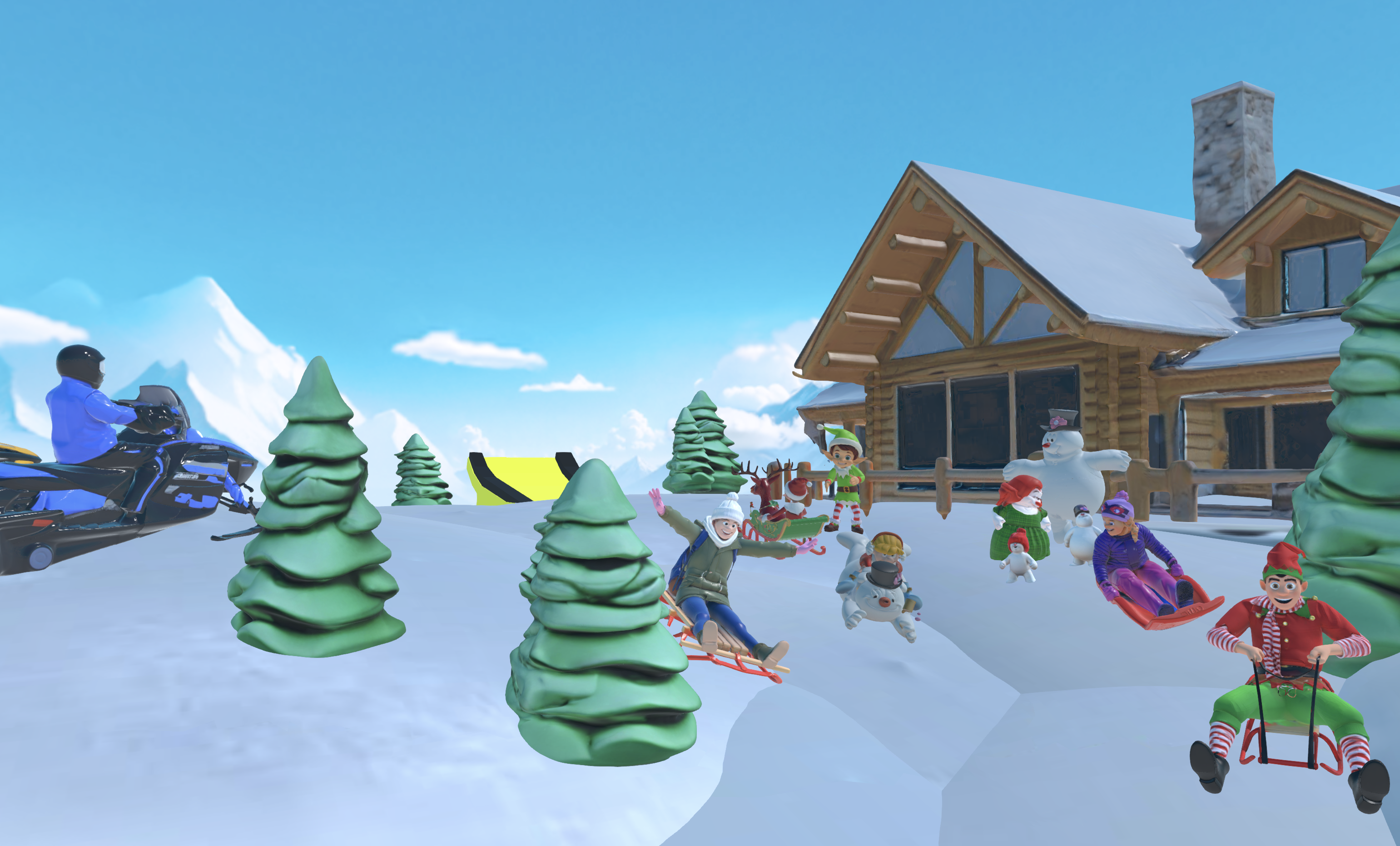
Nilo’s model-agnostic AI layer abstracts multiple providers — Meshy, Tripo, Nano Banana, Cartwheel, Uthana — behind one interface, so you can switch models for quality, style, or speed without leaving the platform. As models improve, Nilo automatically gets better. Nilo is currently in open beta, and its Starter tier is free with 1,000 Nilo Bits per month. In a February 2026 Nilo survey, 93% of respondents said they would recommend Nilo to a friend and 82% rated their experience as “Awesome” or “Good.”

One builder described it this way in Nilo’s February 2026 survey: “I like how it feels like a good game engine rather than a vibe coding tool, with easy building and a good focus on being able to export and import content.”
Rosebud AI Vs Nilo For 3D Assets
Rosebud AI does some things genuinely well for you: fast prototyping, browser access, and code generation from natural language prompts. A basic 2D platformer can go from prompt to playable in about 90 seconds. For a game jam deliverable or a quick idea test, that speed feels great.
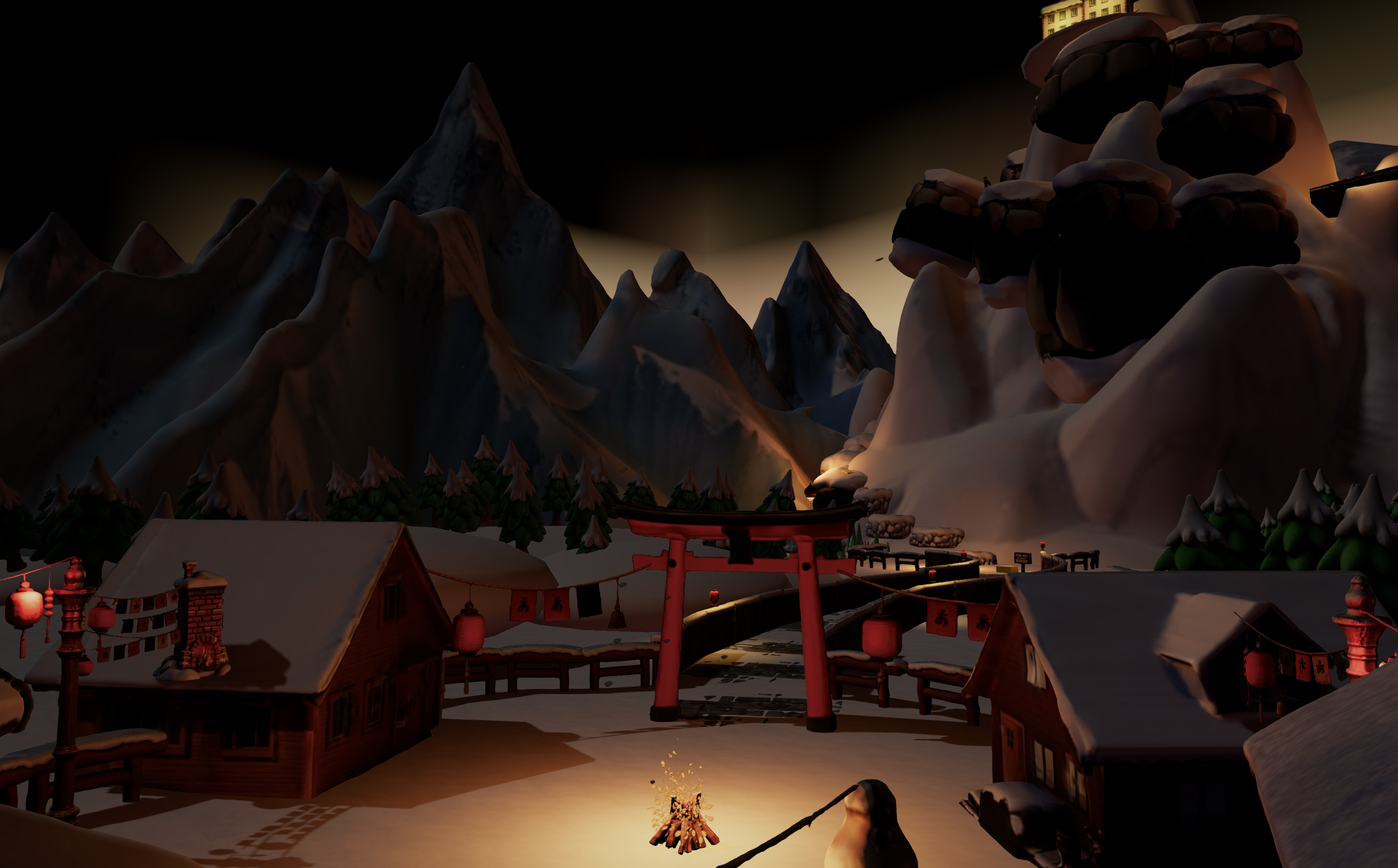
The difference sits underneath. Rosebud AI offers no API, no portable project file, and no way to fold its generation into an external pipeline. It focuses on code generation and skips a real game engine, deep 3D, and social or multiplayer creation. Nilo works as a game engine first. You build inside a 3D environment, tweak, collaborate, and play in real time, with AI as a co-pilot instead of a replacement. The platform runs on a custom engine built with C++ physics compiled to WebAssembly and accelerated with WebGPU. That setup lets it handle real-time retopology and LOD in the browser without the Three.js performance ceiling that limits Rosebud AI’s 3D output.
If your world lives in the browser and never ships, Rosebud AI’s speed gives you a strong reason to stay. If your assets need to move into Roblox, Unity, or Unreal, the pipeline decision becomes clear.
Frequently Asked Questions
What Are The Limitations Of Rosebud AI?
The seven documented failure modes are inconsistent art style across generations, mesh topology and polycount problems, rigging and animation weakness, scale and pivot problems, asset integration failures from non-deterministic regeneration, export and engine handoff breakage, and browser and engine performance ceilings. Most trace back to three root causes: unoptimized mesh topology, browser-based engine ceilings from Three.js and WebGL constraints, and rigid export boundaries with no LOD or collision authoring. Rosebud AI is designed as a prototyping layer, and its limits come from that design.
Can Rosebud AI Make 3D Games?
Yes, Rosebud AI can produce browser-based 3D games. The constraint is that projects live on hosted pages rather than portable local files, and 3D performance is bounded by Three.js and WebGL running in the browser. Full 3D with meshes, lighting, physics, and a movable camera is harder to run well in a browser than in a native engine, so visually ambitious or physics-heavy 3D worlds will fight the format. Games cannot be packaged as Steam builds or native desktop or mobile apps.
What Are The Best Alternatives To Rosebud AI For 3D Game Assets?
When evaluating alternatives, look for four things. First, real-time retopology so you are not doing manual cleanup. Second, a LOD system that handles polygon optimization automatically. Third, one-click rigging for humanoid characters. Fourth, export formats that match your target platform, such as RBXMX for Roblox and FBX or GLB for Unity and Unreal, plus a browser-based workflow that does not require downloads. Nilo stands out for builders who need Roblox-ready output, because it covers retopology, LOD, rigging, text-to-motion animation, and direct RBXMX export in one browser-based platform. Standards in this space still move quickly, so you should test any tool against your specific asset type and target engine before committing to a workflow.
Why Do Rosebud AI 3D Models Look Distorted?
The most common cause is irregular edge flow and high polycounts from the absence of automatic retopology. AI generators optimize for a convincing preview render instead of a downstream pipeline, so the mesh arrives as dense, unstructured geometry rather than clean quads with predictable edge loops. A game-ready mesh requires clean edge loops around deformation areas, UV-unwrapped surfaces that tell the engine how to apply textures, and a polycount within the target platform’s budget. When those conditions are missing, geometry distorts around joints and faces, especially under animation.
Can You Export Rosebud AI Assets To Unity Or Unreal?
Yes, via GLB/GLTF or FBX. GLB is the recommended format because it bundles mesh, textures, and animations into a single file, which avoids the broken texture paths that often show up in OBJ exports. The unit mismatch described in Failure Mode 4 is the usual culprit. Unity and Blender use meters, Unreal uses centimeters, so models can arrive 100× off or rotated. LOD chains and collision data are not authored by Rosebud AI and do not survive the export. Materials and collision typically need repair in the destination engine after import.
What Formats Does Rosebud AI Accept?
Rosebud AI’s Assets tab accepts GLB/GLTF, OBJ, FBX, and Blender (.blend) files. GLB/GLTF is the recommended bundle format because it packs mesh, textures, and animations into one file with no path issues. OBJ carries geometry only and is best for static props with no textures or animation. FBX works for rigged or animated models. Blender files suit Blender-first workflows. For image assets, PNG, JPG, and WebP are supported. For audio, MP3 and WAV work.
When Should You Stop Using Rosebud AI For 3D Assets?
Three signals stand out. First, you are exporting more than you are building, so the export repair loop costs more than the generation saves. Second, changes do not stick after another AI pass, so non-deterministic regeneration overwrites your manual work. Third, performance blocks you, because Three.js and WebGL constraints cap your scene before you finish building it. Any one of these signals tells you to move the asset into a pipeline built for production output instead of prototyping.
Conclusion: Stop Patching, Start Shipping
Most of the problems in this playbook trace back to the same design choice. Rosebud AI is built for prototyping, and that focus makes it genuinely fast for early ideas. When your assets need to animate, export, or survive inside Roblox, Unity, or Unreal, the seven failure modes in this playbook eventually catch up.
Every failure mode has a workaround worth trying inside Rosebud AI. Every failure mode also has a point where patching costs more than moving. Knowing which side of that line you are on gives you real control over your pipeline.
For aspiring builders and already builders like you who need Roblox-ready, game-ready output with clean topology, automatic LOD, one-click rigging, and direct RBXMX export, Nilo stands out as a practical next step. As one builder put it in Nilo’s February 2026 survey: “There are no limits on what you can create — just type, draw or add in an image and you can generate, rig, customise and place a fully 3D model within minutes.”
Start building game-ready assets in Nilo’s free open beta.