Written by: Nuno Leiria, Founder & CEO @ Nilo
Key Takeaways for Aspiring 3D Game Builders
- Most AI-assisted game tools use credit systems that slow you down and break your creative flow once limits hit zero.
- Bitmagic’s free access depends on a waitlist-only Game Lab program, so you cannot count on it every month.
- Browser-based AI tools like Nilo remove installs and run real engine performance in your browser using WebAssembly and WebGPU.
- Nilo gives you 1,000 free Nilo Bits every month with automatic renewal, Roblox-ready exports, and open access without approvals.
- Start building in Nilo without credit anxiety and see how far you can push a world for free.
How Credit Limits Disrupt Your Building Flow
Most AI-assisted game creation tools today use a credit system. You get a free allowance when you sign up, and every time you generate a 3D asset, run a script, or export a file, that allowance shrinks. When it hits zero, you either stop building or start paying.
This setup creates momentum loss. You build a world, hit your limit, and your creative flow stops. If you are still learning what is possible, that interruption feels like a wall, not a small bump.
Free tiers of commercial AI game asset platforms impose limited monthly credits and sometimes restricted commercial use rights compared to paid plans. The free version of many tools exists mainly for testing, not for serious month-long iteration.
You avoid mid-project dead ends when you understand these limits before you commit to a tool.
Start building in Nilo with a renewing free allowance
Why Credit Walls Hit Young Builders Hard
Game creation already feels tough. You learn 3D modeling, world design, and game logic at the same time. A tool that cuts you off right when you start improving makes that climb even steeper.
Iteration speed drives your progress. You try something, watch it fail, adjust, and try again. That loop makes you better. Credit limits slow that loop. Paid plans in 2026 for tools like FlutterFlow unlock code export, deployment, collaboration features, and additional AI generation credits, which matter once your projects grow.
For builders aged 13–18 without a credit card or subscription budget, these limits feel like a hard stop. Tools that remove this barrier are the ones that actually help you ship a playable world.
AI-Assisted Browser-Based 3D Creation Tools Explained
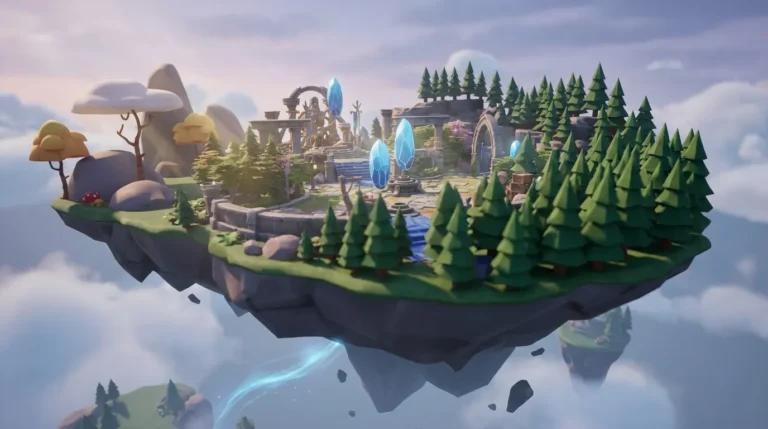
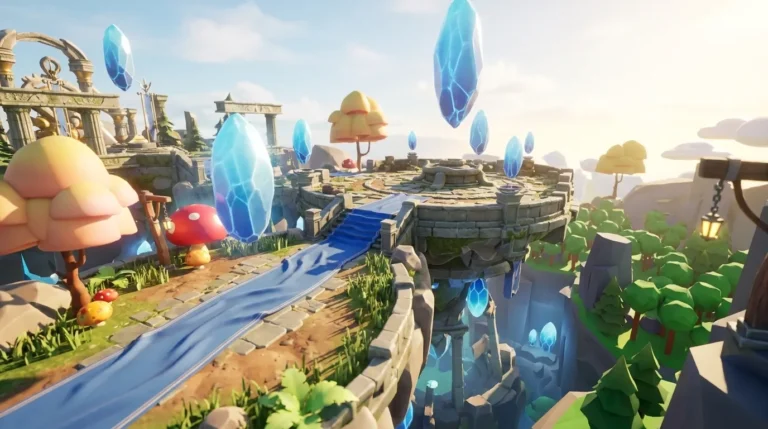
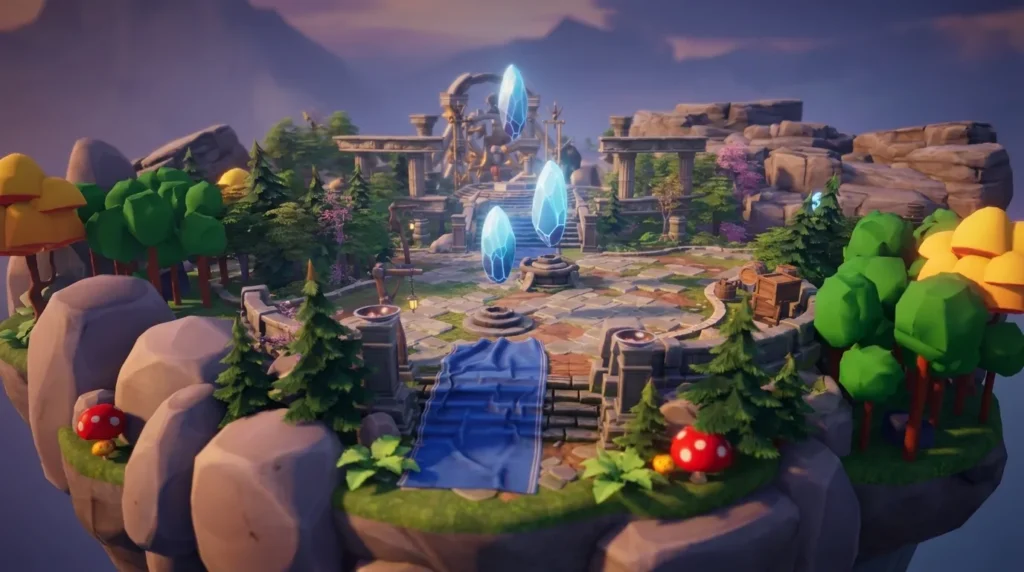
AI-assisted browser-based 3D creation tools let you build, generate, and export 3D game content directly in your browser, with no downloads, installs, or high-end PC. You describe what you want using text, a sketch, or an image. The AI generates it. You tweak it, drop it into your world, then export it to a platform like Roblox.
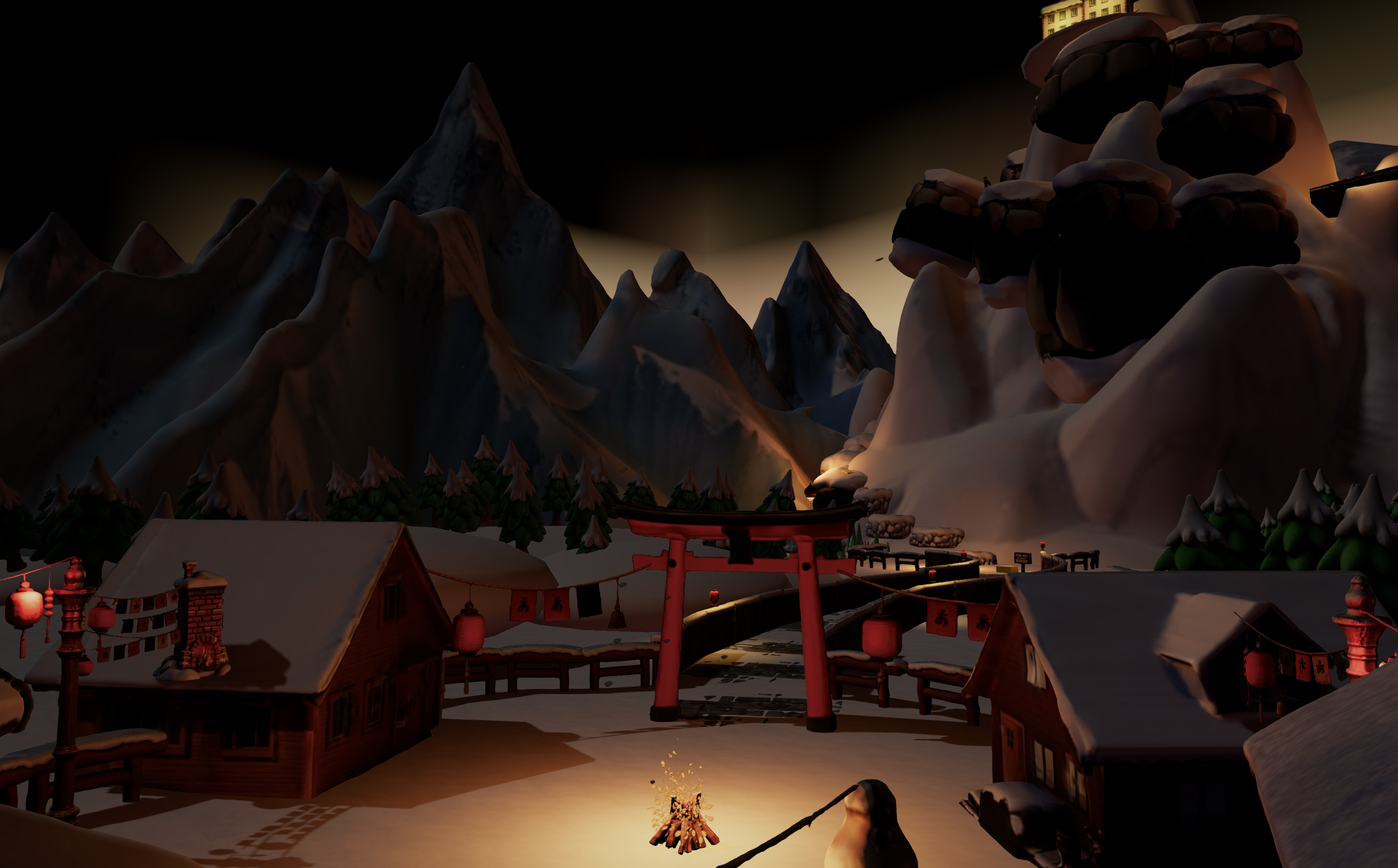
This approach differs from desktop engines such as Roblox Studio, Unity, or Blender. Those tools target professionals. They need installation, strong hardware, and months of learning before your game starts to look polished.
Browser-based AI tools shrink that gap. Rosebud AI’s free tier generates small playable HTML5 browser games, including 3D, with no Steam or desktop export support. That pattern shows up a lot in this category. Browser access feels easy, but depth and export options change a lot from tool to tool.
Nilo stands out here because it runs a custom game engine with C++ physics compiled to WebAssembly and WebGPU graphics. This is the same kind of shift that let Figma bring pro design into the browser. You get real engine performance while staying in a single browser tab.
Try Nilo’s browser engine and feel the difference while you build
How Free Is “Free” When You Make Games?
You can make games for free, but each tool defines “free” differently. Some tools feel free at the start, then lock exports, commercial use, or higher quality behind a paywall. Others give you a real monthly allowance that keeps refreshing. Here is how the main options compare on what actually matters for Roblox builders like you:
| Tool | Free Tier | Credit/Limit Details | Roblox Export |
|---|---|---|---|
| Nilo | Yes — 1,000 Nilo Bits/month | Monthly recurring allowance, available to every account | Yes — Roblox-optimized with automatic LOD (level of detail, automatic polygon reduction so your models meet Roblox’s performance caps) |
| Bitmagic | Waitlist-gated, Game Lab credits via application | Up to $1,000 in AI credits via selective application | Not Roblox-specific |
| Rosebud AI | Yes — limited free tier | Generation limits, paid plans needed for advanced features and branding removal | No — HTML5 browser games only on free tier |
| Unity | Yes — Personal plan | Free for users under $200K revenue or funding and includes a 1,000 monthly Unity AI credit allowance | No direct Roblox export |
| Roblox Studio | Yes — fully free | No credit limits, but requires installation and scripting knowledge | Native, but custom 3D assets usually need Blender |
| Blender | Yes — open source | No credit limits, zero license fees under GNU GPL | Manual export with a steep learning curve |
The real dividing line sits between “free to build” and “free to start.” Many browser generators block commercial release, standalone downloads, or watermark-free exports behind subscriptions. Nilo’s monthly Bits allowance renews automatically, so you keep building without approvals or surprise paywalls.
Explore Nilo’s renewing free tier while you test ideas
Core Features to Look For in AI 3D Creation Tools
3D Asset Generation and Cleanup
Text-to-3D generation, where you type a description and get a model, sits at the center of most AI tools. Output quality creates the real challenge. Many tools produce models that need manual cleanup before they work inside Roblox. Meshy’s free tier grants 100 credits per month, usually enough for around 10 models, but the credit system limits heavy iteration. Nilo connects to several AI model providers, including Meshy and Tripo, behind one interface so you can chase better results without hopping between sites.

Natural-Language Logic Creation
Scripting blocks most builders. Natural language prompts remove that wall by letting you create 3D game logic by talking, typing, or sending images to the AI. Nilo’s built-in code editor accepts prompts in any language and shows changes live inside your 3D world, a style many builders call “vibe coding.” You can also open the real code, tweak variables, and slowly learn programming concepts while you play with your world.
World Building and Scene Assembly
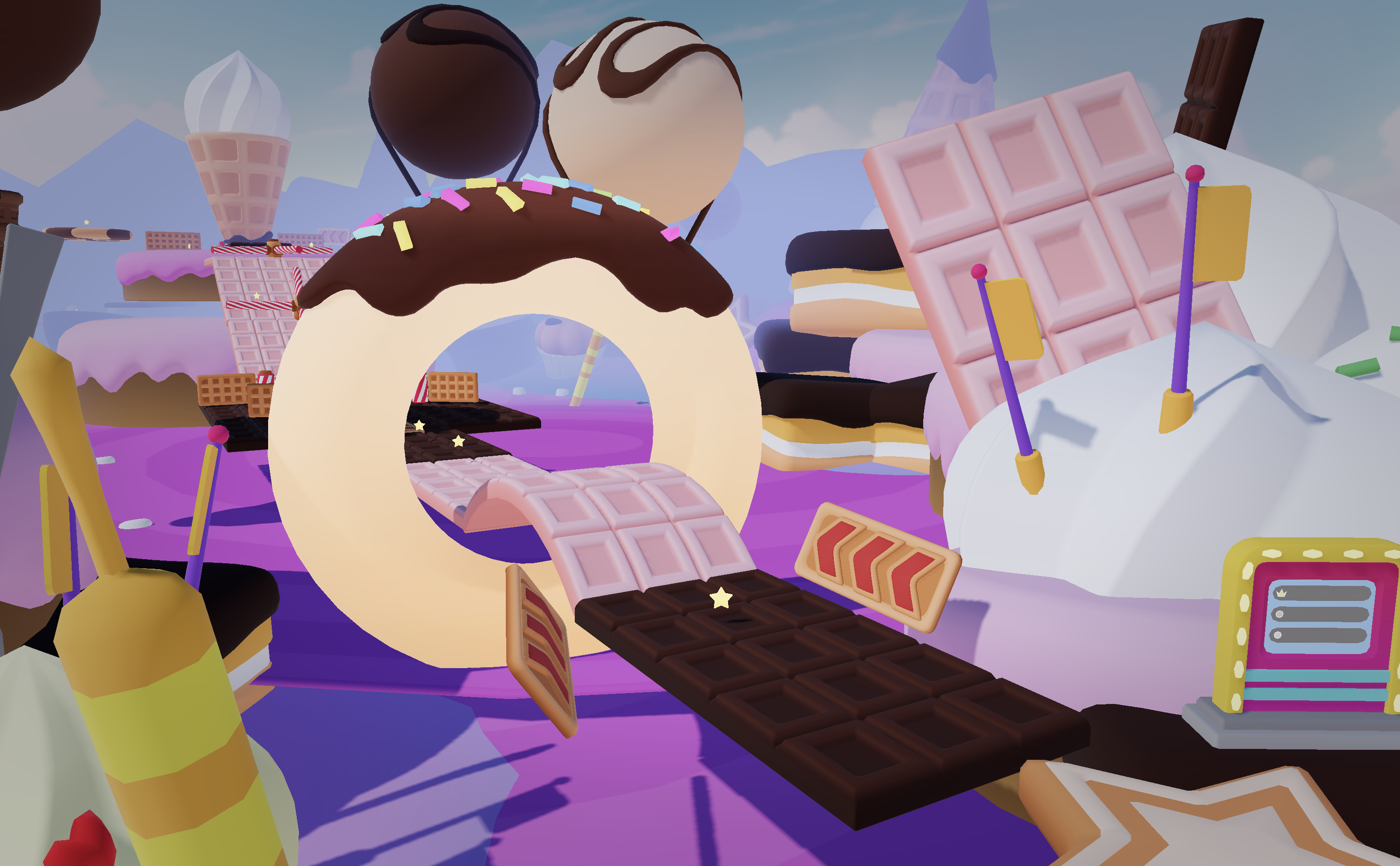
World building tools help you place, arrange, and customize objects in 3D space. Nilo’s radial menu lets you drop objects quickly, and an inspector panel handles detailed property edits. Real-time physics simulation runs in the background, so things move, bump, and react without you wiring up every interaction. As one builder said in Nilo’s February 2026 survey, “It helps me physically visualize any images I may have drawn and helps make my ideas actually come to life.”
Optimization for Roblox Performance Limits
Roblox caps assets at 10K–20K polygons, the triangles that form a 3D model’s surface. Most AI tools generate models that blow past that cap, which forces you into Blender for manual reduction. Nilo’s LOD system handles this for you. It adjusts polygon counts on the fly so your exports meet Roblox’s requirements without extra cleanup. Nilo optimizes polycount so models work directly in Roblox Studio and other platforms without extra steps.
Collaboration and Sharing With Friends
Real-time multiplayer creation lets you and your friends build in the same world at the same time. You share a link, and they join instantly. Because everything runs in the browser, no one needs to install a client, whether they use desktop or mobile.
Once your world feels ready, you can publish it to a scrollable feed similar to Roblox’s experience list. Other builders discover your world there, clone it, and remix it. That flow helps you iterate on ideas together instead of building alone.
Export and Using Assets Across Platforms
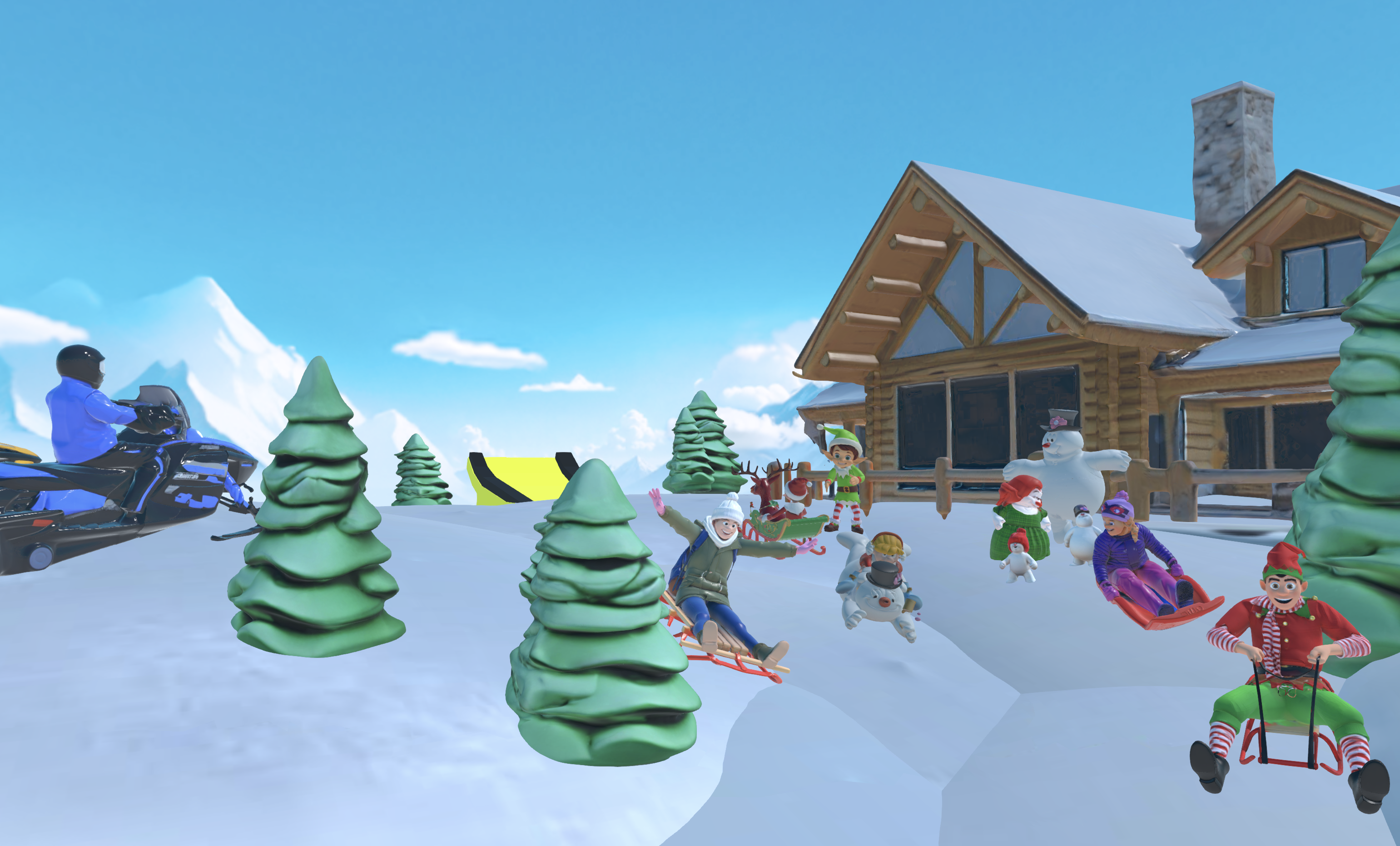
Nilo exports to FBX, OBJ, STL, and glTF, which all work with Roblox, Unity, Blender, VRChat, and Unreal Engine. You are not locked into a walled garden. You can treat Nilo as your asset pipeline and send everything into Roblox Studio with one export click. Tripo’s free tier provides 200 credits per month, and public information does not clearly state how auto-rigging varies by tier. Nilo includes rigging and animation inside its free allowance, so you can rig and animate with one click while staying in the same project.
Try Nilo’s export flow from browser to Roblox Studio
How To Judge AI Game Creation Tools
When you compare tools, look past the big “free” label and dig into the details. Focus on these checks:
- Free tier renewal. A one-time credit drop runs out fast. A monthly recurring allowance keeps your projects moving.
- Access gates. Bitmagic’s Game Lab program grants selected creators up to $1,000 in AI credits, but access requires an application and selection by the team. If you must apply and wait, you are dealing with a grant program, not a standard free tier.
- Cleanup time. Meshy’s free tier often produces models that need manual cleanup before they are game-ready. That extra time still counts as a cost.
- Export rules. Many browser generators block commercial release or watermark-free exports behind subscriptions. Read the terms before you invest effort into a world you want to publish.
- Roblox-specific support. Generic 3D export and Roblox-optimized export are not the same. Roblox’s polygon and texture limits need special handling that many tools ignore.
Real-World Scenarios for Different Builders
Different stages in your journey change how you judge tools.
If you are just starting and want to make your first Roblox prop without touching Blender, you need zero setup friction and a free tier that does not vanish after a handful of generations. Nilo’s browser access and monthly Bits allowance match that situation.
If you are an aspiring builder working on a full map with custom characters, vehicles, and environments, you need fast iteration. Hitting a credit wall in the middle of that map kills your pace. A recurring allowance, not a one-time grant, keeps your workflow smooth.
If you already build in Roblox Studio and want to stop spending 30 minutes per asset in Blender, export quality and compatibility matter most. Nilo’s automatic LOD and one-click Roblox export target that exact pain. As one builder said in Nilo’s February 2026 survey, “I do not have to spend hours on 3D modeling the simplest things. Now I can use Nilo and do it in 15 seconds.”
In that same survey, 93% of Nilo builders said they would recommend Nilo to a friend, and 82% rated their experience as “Awesome” or “Good.” The Nilo community has grown to more than 9,000 builders on Discord, supported by Supercell.
Frequently Asked Questions
Is Bitmagic free to use?
Bitmagic offers a free Steam sandbox multiplayer playtest mode that anyone can try without waitlist approval. The full creation platform remains waitlist-gated as of mid-2026, and public paid tiers have not been announced. Larger credit access comes through the Game Lab program, which needs an application and selection by the Bitmagic team. Accepted creators receive up to $1,000 in AI credits, so this works as a grant program rather than a predictable free tier.
What are Bitmagic Game Lab credits (Sparks)?
The Bitmagic Game Lab program gives selected creators up to $1,000 in AI credits, called Sparks. Entry into this program stays selective and application-based.
What are Nilo Bits and how do they work?
Nilo Bits are the credits that power AI generation inside Nilo, including text-to-3D model creation, rigging, animation, and export. Every Nilo account gets the monthly allowance mentioned earlier, applied automatically. Many core building actions, such as placing objects, editing scenes, and playtesting with friends, use no Bits at all. You can also earn extra Bits through Nilo Rewards by inviting friends and building with the community.
Do I need to know how to code or use Blender to build in Nilo?
No. Nilo’s built-in code editor uses natural language prompts. You describe what you want your game to do in plain text, and Nilo generates working code with real-time feedback in your 3D world. You do not need scripting knowledge to start. For 3D modeling, Nilo’s AI handles model creation from text, sketches, or images, and the LOD system adjusts polygon counts for Roblox without any Blender work. If you want to learn, you can open and edit the generated code directly inside the editor.
Can I export Nilo assets directly to Roblox?
Yes. Nilo exports to FBX, OBJ, STL, and glTF, all compatible with Roblox Studio. The LOD system reduces polygon counts to fit Roblox’s triangle caps, so your models import cleanly without extra optimization. You can export rigged and animated characters as well as static props. Nilo works as a standalone browser platform, and you bring your finished assets into Roblox Studio with a single export click.
Export a test asset from Nilo into Roblox Studio
Choosing the Right Tool for Your Roblox Worlds
Credit limits create real problems when you want to iterate fast and keep your momentum. Bitmagic’s Game Lab program offers large credit bundles, but access stays selective and application-based, so you cannot treat it as a stable monthly tier. Tools like Rosebud AI bring creation into the browser but limit depth on free plans. Open-source tools such as Blender and Roblox Studio stay truly free, yet they demand heavy learning and do not include AI generation by default.
The right setup depends on what you are building and how you like to work. If you want a recurring free allowance, browser access, Roblox-aware exports, and a creation flow that feels closer to playing than grinding, Nilo stands out as a strong option to test. Your monthly Bits refresh automatically, so you can keep experimenting without approvals or mid-build pauses.