
Written by: Nuno Leiria, Founder & CEO @ Nilo
Key Takeaways
- Lemonade is an open-source local AI server developed with AMD that runs text, image, and speech models privately on consumer AMD hardware through an OpenAI-compatible API.
- It supports multiple modalities including LLM inference, image generation, speech-to-text, and text-to-speech, with automatic backend selection for AMD Ryzen NPUs, Radeon GPUs, and CPU fallback.
- Hardware requirements start at 8 GB RAM and 5–20 GB storage, with 16 GB RAM recommended. NPU acceleration is limited to AMD Ryzen AI processors with XDNA 2 NPUs on Windows and Linux.
- Lemonade v11.5.0 adds a smart router for automatic model selection and optional cloud fallback, plus a 3D generation backend through the Trellis.2 pipeline.
- If you want a complete Roblox-focused 3D asset workflow without running your own server, try Nilo’s browser-based creation platform.
What Lemonade AI Actually Does On Your Machine
Lemonade is an open-source local AI server developed with AMD that exposes an OpenAI-compatible API for text generation, image synthesis, speech-to-text, and text-to-speech, all running on your own machine. Local inference keeps your prompts, files, and outputs on your device, with no cloud upload or third-party processing. Lemonade Server is implemented in Python for flexible deployment of local LLMs on GPUs and NPUs.
Modalities, Backends, and 3D Support in Lemonade
- Text generation and chat completions, powered by llama.cpp (GGUF models), ONNX Runtime GenAI (ONNX models), and FastFlowLM (q4nx models). These backends handle chat completions, text completions, embeddings, and reranking. You can use this for private code assistants, document summarization, and local chatbots without sending queries to OpenAI or Anthropic.
- Image generation, powered by stable-diffusion.cpp, supporting models such as SD-Turbo, SDXL-Turbo, SD-1.5, and SDXL-Base-1.0 in .safetensors format. Endpoints cover generation, editing, variations, and upscaling through Real-ESRGAN.
- Speech-to-text, powered by whisper.cpp for transcription tasks. A WebSocket /realtime endpoint streams audio transcription with Voice Activity Detection (VAD, automatic detection of when speech starts and stops).
- Text-to-speech, powered by the OpenMOSS backend.
Lemonade 11.0 also includes a 3D generation backend that ports the Trellis.2 image-to-3D pipeline and exposes a POST /v1/3d/generations endpoint. You can generate 3D assets from images locally, which helps if you are building Roblox assets or other 3D game content.
Hardware Acceleration on AMD Ryzen and Radeon Systems
Lemonade automatically configures NPU, GPU, and CPU backends based on the hardware it detects, so your models use the fastest available path.
- Ryzen AI 300/400-series NPU. Lemonade uses a hybrid mode where the XDNA 2 NPU handles prompt prefill while the integrated Radeon GPU handles token generation. This split improves power efficiency on laptops. NPU acceleration in Lemonade requires an AMD Ryzen AI processor with a compatible NPU driver and works on both Windows and Linux.
- Radeon GPU via ROCm or Vulkan. ROCm is the primary backend for supported Radeon RX 7000/9000 series dGPUs (7800/9070 or greater). Ryzen AI iGPUs use Vulkan and older or unsupported Radeon cards fall back to Vulkan. Both paths use llama.cpp.
- CPU fallback. If your system has no compatible NPU or GPU, Lemonade falls back to CPU-only inference through llama.cpp’s CPU backend. This keeps Lemonade usable on any x86_64 processor, although throughput is lower than on accelerated paths.
Hardware limits still matter. Lemonade needs at least 8 GB RAM and 5–20 GB of storage, with 16 GB RAM recommended. NPU acceleration is supported on AMD Ryzen AI processors with XDNA 2 NPUs under both Windows and Linux. To see whether a model fits in memory, check its file size on Hugging Face and add 2–4 GB overhead for KV cache and runtime.
Installing Lemonade and Connecting Your Tools
Lemonade installs through one-click installers. You then pull models from Hugging Face or, starting in v11.5.0, from ModelScope, using the built-in Model Manager.
Lemonade exposes an OpenAI-compatible API at http://localhost:13305/v1 that covers:
- Chat completions and text completions
- Embeddings and reranking
- Audio transcription and text-to-speech
- Image generation, editing, variations, and upscaling
- A WebSocket /realtime endpoint for streaming audio
Lemonade connects to VS Code via Continue and CodeGPT, Open WebUI, n8n for workflow automation, Anything LLM, Dify, and OpenHands. You usually only change the base URL from the OpenAI default to your local Lemonade address.
If you mainly want AI-powered 3D asset creation for Roblox and do not want to touch local servers, skip the server setup and start creating in Nilo. You avoid model downloads and hardware checks entirely.
Smart Routing and Optional Cloud Fallback in v11.5.0
Lemonade v11.5.0, released July 22, 2026, completed the Lemonade Router, which evaluates each request and sends it to the most suitable installed local model.
- Rule-based routing uses explicit conditions you define.
- Classifier-based routing uses an ONNX classification model to score the request.
- Semantic-similarity routing matches prompts to model capabilities by meaning.
- LLM-as-router routing lets a language model decide which model to use.
The router can also use cloud fallback when local resources are not enough. This option trades local-only privacy for extra capacity. Any request that goes to a cloud endpoint leaves your device, so if you have strict data rules you should tune routing policies carefully and log which prompts trigger cloud fallback.
How Lemonade Stacks Up Against Other Local Runtimes
When you compare Lemonade with tools such as Ollama or vLLM, focus on a few concrete differences.
AMD-specific optimization. Lemonade is developed with AMD and focuses on AMD Ryzen hardware, including NPU support, while still using upstream llama.cpp with Vulkan for cross-vendor GPU acceleration. Ollama supports AMD GPUs through ROCm but does not offer NPU acceleration or hybrid NPU plus iGPU execution. vLLM targets high-throughput server deployments, and Lemonade includes vLLM as an experimental backend for AMD ROCm GPUs on Linux, first added in v10.4.0.
Multi-modal coverage. Lemonade bundles text, image, speech-to-text, and text-to-speech in one installer. Ollama focuses on text generation. vLLM is also text-focused for server workloads. If you want all four modalities on one local endpoint, Lemonade’s single stack reduces the number of tools you maintain.
Setup complexity. Lemonade’s automatic backend selection simplifies AMD-specific configuration. Ollama’s setup feels lighter overall but does not expose NPU paths. vLLM expects more infrastructure knowledge and fits server-style deployments more than consumer laptops.
Ecosystem integrations. Lemonade can act as a drop-in replacement for Ollama clients by translating Ollama-formatted requests, so existing Ollama-based workflows can often connect without code changes.
When a Roblox-Focused Platform Replaces a Local Runtime
Lemonade solves private, on-device inference for developers. If your real goal is generating, rigging, animating, and exporting 3D assets for Roblox, running a local server can feel like extra overhead.
Nilo is a browser-based 3D creation platform that bakes AI asset generation into the editor you use. You can generate 3D characters, props, and environments from text prompts or sketches, rig bipedal characters with one click, create animations from text descriptions, and export Roblox-ready files without leaving the browser or configuring any backend. Nilo’s model-agnostic AI layer connects to providers such as Meshy, Tripo, Nano Banana, Cartwheel, and Uthana behind one interface, so the platform improves as those models improve.
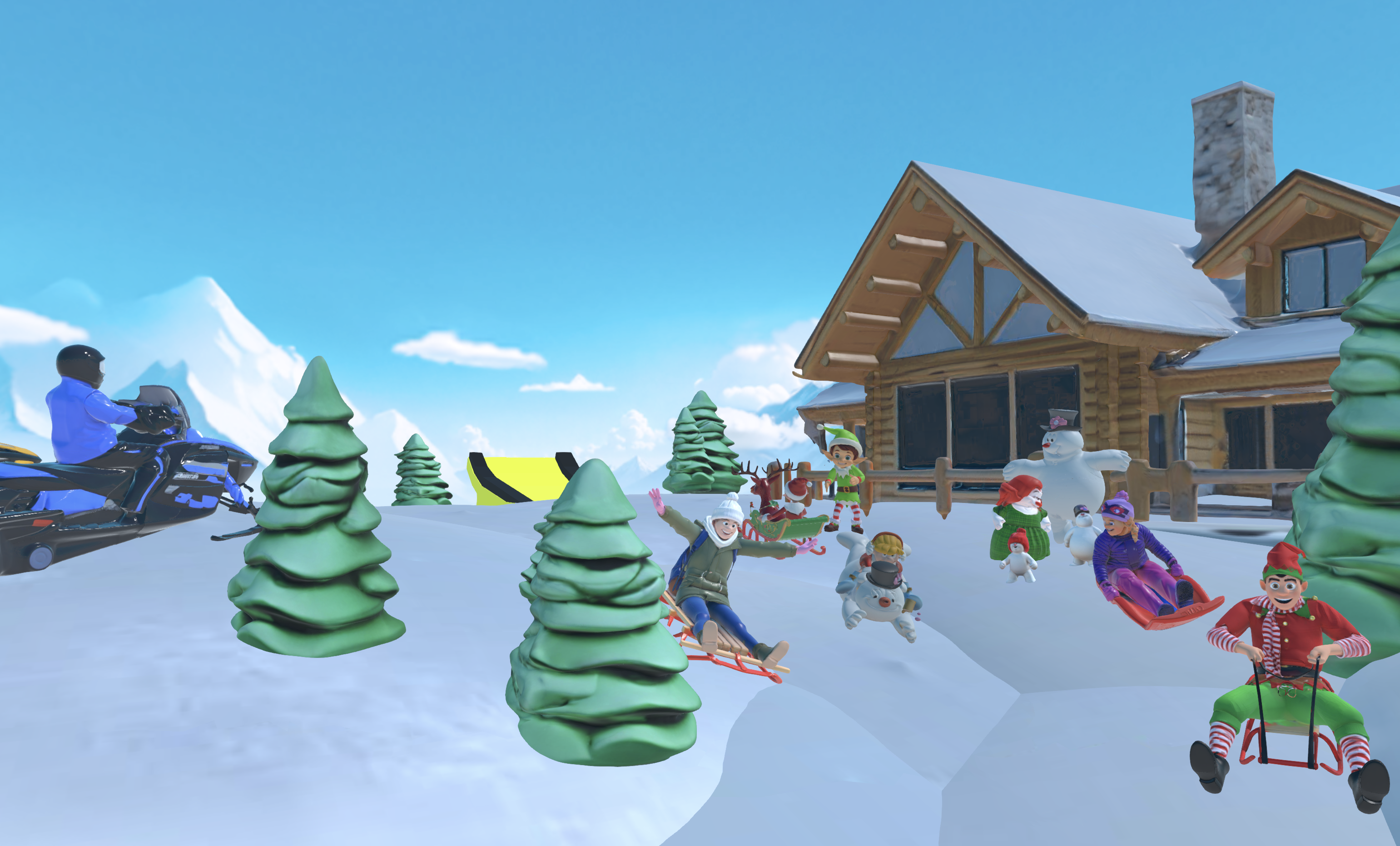
In Nilo’s February 2026 Survey, 93% of builders said they would recommend Nilo to a friend, and 82% rated their experience as “Awesome” or “Good.” One builder summed it up: “I do not have to spend hours on 3D modeling the simplest things, now I can use Nilo and do it in 15 seconds.”

Lemonade still needs an AMD Ryzen AI processor with a compatible NPU driver for NPU acceleration, enough RAM, model downloads, and backend configuration. Nilo runs in any modern browser on any device with no installation. The trade-off is scope. Nilo focuses on 3D asset creation and Roblox export, not general-purpose local text, image, or audio workloads.

Join Nilo’s open beta and generate your first Roblox-ready asset in minutes.

Readiness Checklist: Local Runtime vs Roblox Creation Platform
Use these questions to decide which setup fits how you want to build.
- What is your hardware? If you have an AMD Ryzen AI processor with an XDNA 2 NPU and want NPU-accelerated inference, Lemonade fits that hardware well. If you only have a browser, Nilo works from a simple URL.
- What modalities do you need? If you need text generation, embeddings, reranking, speech-to-text, and image generation for general developer tasks, Lemonade covers them. If your main output is Roblox-ready 3D assets, Nilo’s pipeline handles generation, cleanup, rigging, animation, and export in one place.
- How strict are your privacy requirements? Lemonade keeps inference local by default and only sends data to the cloud if you enable fallback. Nilo uses cloud-based AI providers for generation, which matters if your project has strict data residency rules.
- Do you need 3D output? Lemonade 11.0 includes a 3D generation backend through the Trellis.2 image-to-3D pipeline and a POST /v1/3d/generations endpoint. If you want Roblox-ready characters, props, or environments with rigging and animation included, Nilo handles that end-to-end.
- How much setup time can you invest? Lemonade’s installer is quick, but backend selection, model downloads, and hardware tuning still take time. Nilo opens in a browser tab and is ready as soon as the page loads.
- Are you building general developer tooling or Roblox assets? Lemonade fits when you are integrating local inference into VS Code, n8n, or your own applications. Nilo fits when you want to spend your time designing and testing Roblox experiences instead of managing servers.
Frequently Asked Questions
Does Lemonade support 3D generation?
Yes. Lemonade 11.0 added a 3D generation backend that uses the Trellis.2 image-to-3D pipeline and exposes a /v1/3d/generations endpoint, as described earlier in the Supported Modalities section. You can use this for local 3D asset generation, or you can use Nilo, which is a browser-based platform that handles text-to-3D, sketch-to-3D, rigging, animation, and Roblox-optimized export without any extra server setup.
What AMD hardware is required for NPU acceleration in Lemonade?
NPU acceleration in Lemonade is supported on AMD Ryzen AI processors with XDNA 2 NPUs under both Windows and Linux. You need an AMD Ryzen AI processor with a compatible NPU driver, and on Linux you also need specific kernel drivers and firmware. If you do not have a Ryzen AI processor, you can still run Lemonade with GPU acceleration through Vulkan or ROCm, or with CPU-only inference.
Can Lemonade run multiple models at once?
Lemonade can run multiple models at the same time, within your memory limits. Each model type (LLM, Embedding, Audio, Image) has its own LRU cache controlled by the –max-loaded-models flag, which defaults to 1 per type. On Strix Halo systems with up to 128 GB unified memory, you can run larger concurrent setups. On machines with 8–16 GB RAM, several large models will hit memory limits quickly. The Lemonade Router in v11.5.0 helps decide which model handles each request, but your RAM still sets the ceiling.
How does Nilo differ from running Lemonade locally for asset creation?
Lemonade is a general-purpose local inference server. It runs text, image, and speech models on your AMD hardware and exposes an OpenAI-compatible API that other apps can call. It does not include a 3D editor, rigging tools, animation timeline, or Roblox export. To use Lemonade for asset creation, you would connect it to separate 3D software and manage that pipeline yourself.
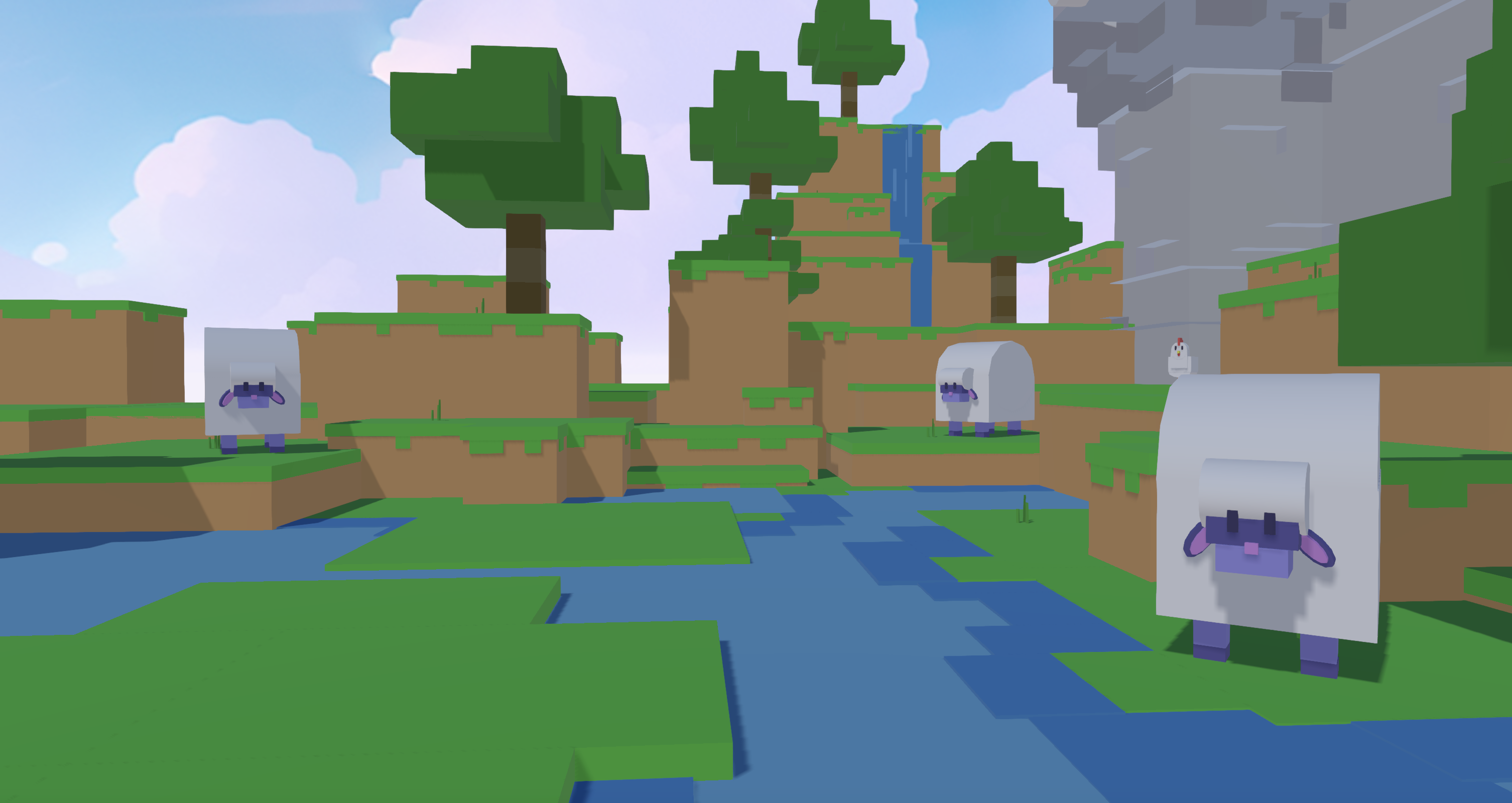
Nilo is a browser-based 3D creation platform built for aspiring builders and already builders like you who focus on Roblox. It combines AI text-to-3D, sketch-to-3D, one-click rigging for bipedal characters, AI animations from text, and Roblox-optimized export in a single place. You open a tab, generate an asset, rig it, animate it, and export it without configuring any backend or downloading models. Nilo’s February 2026 Survey found that 72% of builders say Nilo makes their creative process easier “by a lot.” Lemonade gives you a private local inference API, while Nilo gives you a complete Roblox asset creation workflow.
Conclusion
Lemonade AI is a capable local inference server for AMD hardware. It covers text generation through llama.cpp, ONNX Runtime GenAI, and FastFlowLM; image generation through stable-diffusion.cpp; and transcription plus text-to-speech through its audio backends, all behind one OpenAI-compatible API. The v11.5.0 Router adds smarter multi-model routing, and hardware acceleration on Ryzen AI NPUs and Radeon GPUs through ROCm or Vulkan is well documented, with clear limits around RAM and model size.
Lemonade stands out for developers who want general-purpose local AI pipelines on AMD systems. If your focus is Roblox and you care about generating, rigging, animating, and exporting 3D assets, Nilo folds that entire workflow into a single browser-based environment, with no server to configure or models to manage. As one builder said in Nilo’s February 2026 Survey, “There are no limits on what you can create — just type, draw or add in an image and you can generate, rig, customise and place a fully 3D model within minutes.”
Join Nilo’s open beta and try building and playing for free.