Written by: Nuno Leiria, Founder & CEO @ Nilo
What You Will Learn About Roblox Props and AI
- Most AI 3D generators fail Roblox checks because they focus on looks, not performance, which creates dense meshes and broken collisions that you must fix by hand.
- Roblox enforces strict triangle limits under 20,000 per MeshPart and recommends 500–2,000 polygons for props, so automatic LOD and retopology matter if you want smooth gameplay.
- When you compare AI tools for Roblox, pay attention to real-time retopology, automatic LOD, direct FBX or glTF export, and browser access without extra software.
- Nilo’s four-step workflow with generate, LOD slider, in-world preview, and one-click export removes Blender detours and delivers Roblox-compliant assets in seconds.
- Join Nilo’s open beta to build and export performance-ready Roblox props without dealing with constant technical problems.
Roblox Triangle Limits, LOD, and Texture Rules
Roblox enforces hard limits on mesh complexity. A single MeshPart is capped at 20,000 triangles. In practice, you should aim well below those ceilings. Recommended targets are 500–2,000 polygons for most objects and up to ~2,000 for characters, especially if you want your game to run smoothly on mobile, where a large portion of Roblox’s audience plays.
LOD stands for Level of Detail. It is a system that automatically swaps a high-polygon mesh for a simpler version when the object is far from the camera. The engine does not waste resources rendering full geometry for objects the player can barely see. Many AI-generated models lack LODs entirely or collapse badly under auto-simplification, which multiplies performance costs because most assets spend the majority of their lifetime not at full detail. Without automatic LOD, every prop in your scene runs at full cost all the time, and frame rates drop quickly.
Textures add another layer of requirements. Roblox supports PNG, JPG, TGA, and BMP formats at a maximum resolution of 4096×4096 pixels. If you exceed those limits, your import fails or your textures break. Given these strict triangle, LOD, and texture rules, most AI 3D generators struggle to produce assets that pass Roblox checks on the first try.
Why Many AI Generators Break Roblox Performance Rules
Most AI generators fail Roblox checks for predictable reasons. Uncontrolled topology is the most common issue. AI systems learn how things should look, not how geometry behaves under real-time constraints like predictable LOD degradation. You often get uneven polygon distribution, excessive density on flat surfaces, and poor edge flow that collapses badly when you simplify the mesh.
When you evaluate AI tools for Roblox prop creation, focus on these criteria:
- Real-time retopology, which cleans up mesh geometry automatically so you do not need Blender for every asset.
- Automatic LOD, which generates simplified versions of your mesh for distance rendering without extra steps.
- Direct FBX or glTF export, which gives you a Roblox-compatible file without extra conversion tools.
- Browser access, which lets you work without installing heavy software so you can stay in your creative flow.
Here is how several popular tools line up against those criteria:
| Tool | Real-Time Retopology | Automatic LOD | Direct Roblox Export | Browser-Based |
|---|---|---|---|---|
| Nilo | Yes, built-in, no Blender needed | Yes, LOD slider with automatic optimization | Yes, FBX, OBJ, glTF one-click export | Yes, no install required |
| Meshy | Remesh tool on paid plans, manual step required | Not automatic, needs a manual remesh pass | Roblox Bridge on paid plans only | Yes |
| Sloyd | Limited, focused mainly on model generation | No automatic LOD generation | Manual export, no direct Roblox pipeline | Yes |
| Lemonade.gg | Dependent on Roblox Studio environment | Relies on Studio’s native tools | Plugin-based, requires Studio installed | No, Studio plugin |
Workflow friction stacks up quickly when a tool requires paid export, manual remeshing, and collision fixes for every asset. The time you saved with AI generation disappears. Nilo stands out by handling retopology, LOD, and export inside one browser environment, so you do not have to chain multiple tools together.
The Nilo Workflow for Studio-Ready Props in 4 Steps
Nilo is a browser-based AI creation platform built for aspiring builders and already builders like you who create on Roblox. You avoid downloads and Blender detours. Here is the complete workflow you can follow:
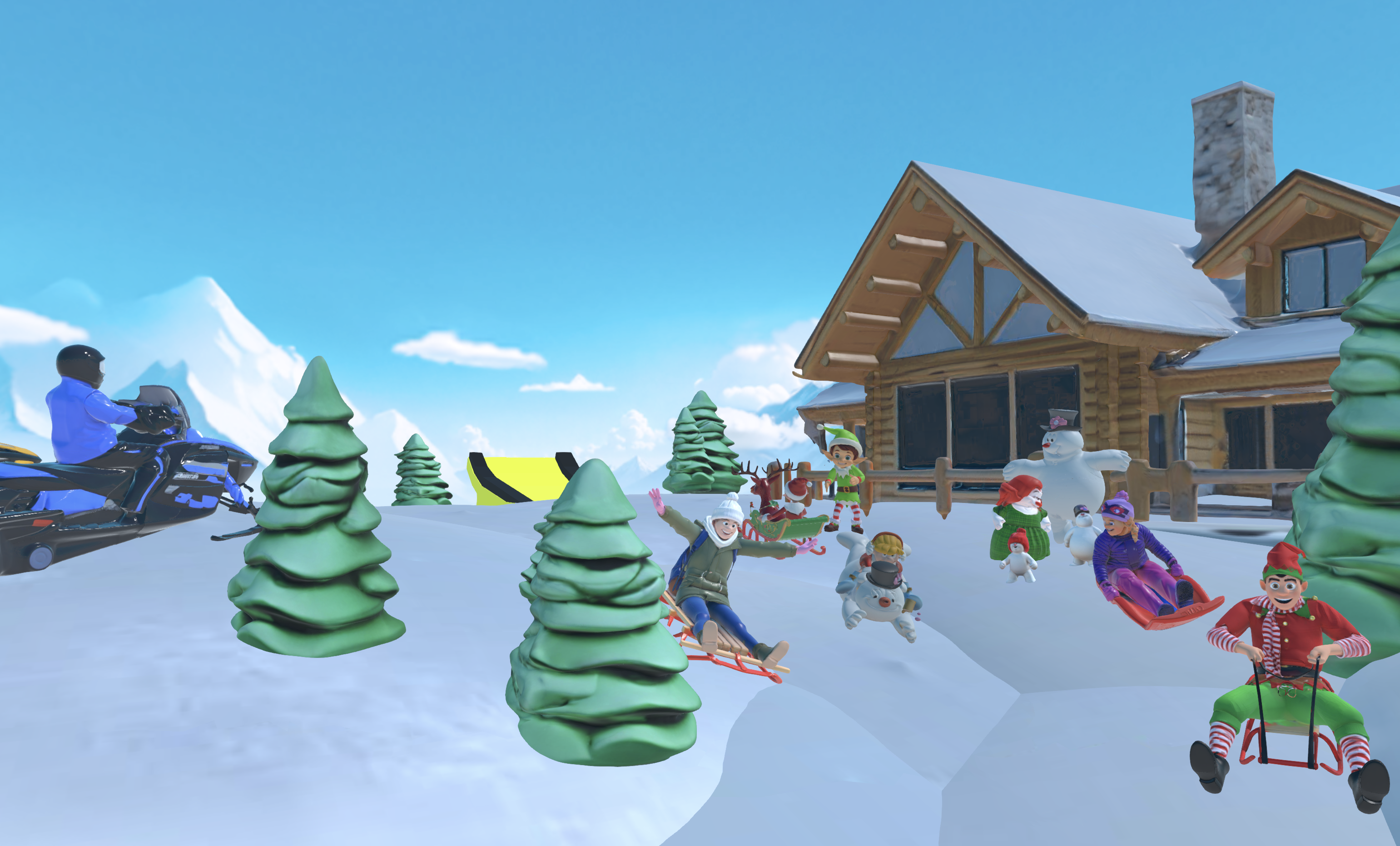
- Generate your prop. Open Nilo in your browser and type a text prompt, upload a sketch, or drop in a reference image. Nilo’s model-agnostic AI layer, which abstracts providers including Meshy, Tripo, and others, returns a 3D mesh in seconds. You are not locked into one AI model, so you can switch between providers based on the style and quality you want.
- Adjust detail with the LOD slider. Use Nilo’s built-in Level of Detail slider to hit your target polycount. Drag it down until your prop sits comfortably under 3,000 triangles for a simple prop or under 10,000 for a character. The mesh simplifies in real time, so you avoid painful retopology sessions and skip Blender completely.
- Preview inside your Nilo world. Drag the optimized prop into your Nilo world and playtest it right away. Physics and collisions run in real time. You can invite friends with a shared link and see how the prop behaves in a live-feeling game space before you open Roblox Studio.
- Export with one click to Roblox Studio. Click Export, choose FBX or GLB, and download a Studio-compatible file. Import it into Studio, and it arrives already optimized and within triangle limits, so it is ready to use in your game within seconds.
This streamlined workflow translates to real time savings. In Nilo’s February 2026 survey, builders confirmed the speed difference: “I do not have to spend hours on 3D modeling the simplest things. Now I can use Nilo and do it in 15 seconds.” You should be spending your time designing objects, not fighting polycounts.
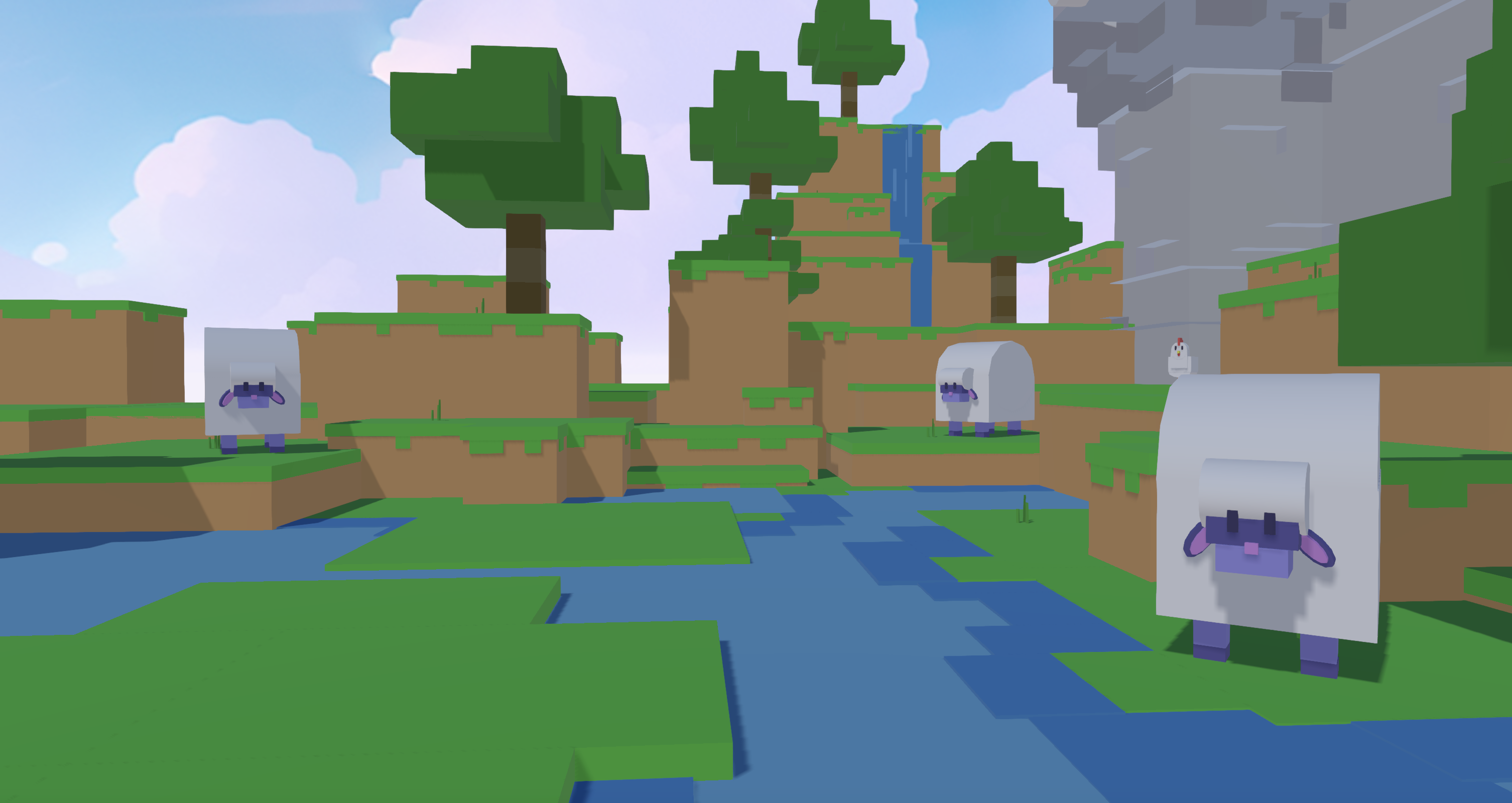
Start creating Studio-ready props in seconds by joining Nilo’s open beta.
Exporting from Nilo and Checking Performance in Studio
Once your prop is optimized in Nilo, exporting stays simple. Click the Export button, select your format, and download the file. FBX works best for props you plan to rig later. GLB works well for static meshes. Then open Roblox Studio, use the 3D Importer, and bring in your mesh.
To verify your prop passes performance checks in Studio, work through these steps in order. First, check the triangle count in the Properties panel after import. It should sit under the recommended limits you saw earlier. If the count is too high, go back to Nilo, lower the LOD setting, and re-export before you change anything else.
Once the triangle count looks good, set CollisionFidelity to Box or Hull on your MeshPart. This improves physics performance by avoiding complex collision meshes that match the visual geometry. This step matters most for props that players touch or run into often.
Next, confirm texture resolution is 4096×4096 or below. Oversized textures can cause import failures even when your geometry is correct. Finally, check scale and orientation. Nilo exports with correct orientation, but a quick check after import helps you catch edge cases before you build the rest of your scene around the prop.
Because Nilo’s LOD system handles polygon reduction before export, you should clear the triangle check on the first import instead of after several rounds of manual cleanup.
Fixing Common Roblox Import Problems
Even with an optimized workflow, a few issues can still appear. Here is what you should check first:
- Scale problems. AI-generated models often export at incorrect scales, such as 500-stud giants, which forces manual resizing after import. If your prop looks enormous in Studio, select it and adjust the Size property in the Properties panel until it matches your intended dimensions.
- Texture failures. If textures do not appear after import, confirm that your texture file is PNG or JPG at 1024×1024 or below, then reassign the TextureID in the Properties panel. Nilo exports textures embedded in GLB files, which reduces this risk.
- Collision geometry blocking players. AI-generated models can arrive with bounding-box collisions that block doorways or with textures that fail to bake onto the mesh. Switch CollisionFidelity to Hull for organic shapes or Box for simple rectangular props to fix this without rebuilding the mesh.
- Import rejection. If Studio rejects your mesh, the triangle count likely exceeds the 21,000 cap. Go back to Nilo, pull the LOD slider further down, and re-export.
The high builder satisfaction mentioned earlier, with 93% saying they would recommend Nilo to a friend, comes from not having to troubleshoot these issues over and over. The platform is designed to help you get past them on the first try.
Join the beta and feel the difference in your own workflow by signing up for Nilo’s open beta.
Frequently Asked Questions
What triangle count should my Roblox prop have?
For game props, target 1,000–3,000 triangles. For characters, stay under 10,000. These numbers line up with the mobile-friendly targets discussed earlier. Roblox’s hard cap is 21,000 triangles for a single import and 10,000 for batch imports, but hitting those ceilings will cause performance problems, especially on mobile. Nilo’s LOD slider lets you dial in your target polycount before export, so you hit the right number without guessing.
Do I need Blender to clean up AI-generated props for Roblox?
With most AI generators, you do. You spend time in Blender fixing topology, reducing polycounts, and correcting scale. Nilo is built to remove that step. Real-time retopology and the LOD slider handle mesh cleanup inside the browser, so you can go from prompt to a Studio-ready export without opening Blender.
What export formats does Nilo support for Roblox?
Nilo exports FBX, OBJ, STL, and glTF (GLB). For Roblox, FBX is recommended for rigged or animated models, and GLB works well for static props with embedded textures. All formats work with Roblox Studio’s 3D Importer.
Is Nilo free to use?
Yes. Nilo is currently in open beta and free to use. You get 1,000 Nilo Bits per month, which are the credits used to power AI generation and export. Many core building features require no Bits at all. You can also earn more Bits through Nilo Rewards by referring friends and building within the community.
Can I use Nilo for Unity or Unreal Engine props, not just Roblox?
Yes. Nilo exports standard 3D formats compatible with Unity, Unreal Engine, Blender, VRChat, and any other platform that accepts FBX, OBJ, STL, or glTF. The LOD and retopology tools help with any real-time engine, not just Roblox. In Nilo’s February 2026 survey, builders noted they already export rigged and animated models to other platforms as part of their regular workflow.
Try Nilo’s cross-platform export workflow in the open beta by joining today.