Written by: Nuno Leiria, Founder & CEO @ Nilo
Key Takeaways
- Rosebud AI Game Maker runs in your browser and turns short text prompts into playable 2D games with editable JavaScript and generated assets.
- You can build your first game in minutes by picking a template, using a focused prompt, and changing one thing at a time.
- The free tier currently allows 20 prompts per week for personal use, so heavy iteration can drain your allowance quickly.
- Rosebud AI Game Maker works best for quick 2D or light 3D prototypes and learning game logic. It does not handle deep 3D physics, real-time multiplayer, or export to other engines.
- Nilo stands out as a browser-based, AI-native 3D game engine with real physics, multiplayer building, and export to standard formats when you want to move beyond simple prototypes.
Start building your first 3D world in Nilo’s open beta.
Who Rosebud AI Game Maker Fits And What You Need Before You Start
This guide speaks to you as an absolute beginner. Maybe you saw Rosebud AI Game Maker on TikTok or YouTube, or you are a parent or hobbyist who wants to make a game without learning to code first. You only need a browser, an internet connection, and a clear idea of the kind of game you want to try.
Here are a few terms that help you follow along:
- Prompt-to-game tool: You describe a game in text and the AI generates code and assets for you.
- AI-native: Built around AI from the ground up, with AI handling core tasks like code and asset generation.
- Game engine: The system that handles physics, rendering, and game logic.
- Vibe coding: You describe what you want in natural language by talking, texting, or sending images to the AI instead of writing code by hand.
- Credits: The currency AI generation consumes. Every prompt you send uses some of it.
- Export: Moving your creation out of one platform and into another.
Prompt-to-game tools like Rosebud AI Game Maker sit at one end of a spectrum. Full engines like Unity, Unreal Engine, Roblox Studio, and Nilo sit at the other. Rosebud AI Game Maker gives you a fast on-ramp. Engines are where deeper, long-term worlds eventually live.
Step-By-Step: Your First Rosebud AI Game
Step 1 — Open Rosebud AI Game Maker And Pick A Starting Point
Rosebud AI Game Maker’s interface shows a single text box with a Create button and a row of templates such as top-down RPG, platformer, endless runner, narrative visual novel, and idle game. Templates give you the fastest path to a first win. The prompt field caps at 500 characters, so keep your description tight and focused.
Step 2 — Use This Prompt For Your First Game
Paste this prompt into the box:
“A 2D coin-collector game. The player controls a character with arrow keys. Coins appear randomly on screen. A score counter shows at the top. One enemy chases the player. If the enemy touches the player, the game ends. Collect 10 coins to win. Show a win screen with a restart button.”
Each sentence handles one job: genre, controls, collectible, UI, enemy, lose condition, win condition, and restart. Clear details beat short, vague prompts every time.
Step 3 — Play What The AI Generated
A single game generation usually takes around 60–90 seconds. You will see generated code, generated assets, and a playable preview. Play the game before you change anything. This first version becomes your baseline.
Step 4 — Improve It With Three Simple Follow-Up Prompts
- “Make the player move twice as fast.”
- “Add a second enemy that patrols left and right.”
- “Make the score go up by 10 per coin and show a win message at 100.”
Each follow-up changes one thing. That habit keeps the AI focused and makes it easier to see what each prompt actually did.
Step 5 — Ask The AI To Explain The Code
This move turns Rosebud AI Game Maker into a teacher. Ask it to explain what a specific block of generated code does. You start to see how variables, conditions, and functions connect, instead of treating the code as a black box.
Step 6 — Playtest And Fix One Issue At A Time
Play your game three times. Each run, look for one specific problem such as movement speed, enemy behavior, or scoring. Describe that problem in a follow-up prompt instead of saying “fix it.” The clearer your description, the better the AI’s response.
Step 7 — Save And Share Your First Game
Every published Rosebud AI game gets a one-click shareable browser link anyone can play instantly. Save your world and share the link with friends. That link marks the end of your first successful session.
Try building a small 3D scene in Nilo after you finish your first Rosebud game.
The Prompt-Play-Improve-Repeat Loop
The main loop you want to build is simple: prompt, play, improve, repeat.
Weak prompt: “Make it better.”
Stronger prompt: “Make the player 2x faster and add a chasing enemy that speeds up every 10 seconds.”
The second prompt works because it names a variable, a direction, and a condition. Those habits scale into a simple checklist you can use for every prompt you write. Start by changing only one thing at a time so you can tell which instruction caused which result. Then name the object you mean, the number involved, and the condition that triggers the change. Finally, describe the visible result you want to see on screen, because that is what the AI actually has to produce.
When a generation fails or breaks something that worked before, revert to the last working version and try again with a narrower change. Manual code edits can sometimes get overwritten by the agent on later iterations, so reverting usually stays safer than patching by hand.
A Simple Project Path For Your First Few Rosebud Games
Keep going after your first game so you build real skills. Use this sequence, and keep each world small enough to finish in one or two sessions:
- Coin collector teaches movement and collision.
- Simple platformer teaches gravity and jumping.
- Enemy AI with basic behavior teaches conditional logic.
- Lives and game-over states teach state management.
- An original game of your own design pulls everything together.
Rosebud AI Pricing, Limits, And Safety
Is Rosebud AI Free?
Rosebud AI Game Maker’s free plan is limited to personal, non-commercial use and allows 20 prompts per week, according to Rosebud’s official FAQ as of August 2026. Paid subscriptions add commercial-use rights, more AI credits, larger projects, and no Rosebud commission on game revenue. Always check Rosebud AI’s current pricing page, because credit models change over time.
Does Rosebud AI Have A Daily Limit?
A single afternoon of iterative game building can easily consume twenty or thirty generations, because every follow-up edit, bug fix, and asset request uses the same allowance. The exact number of free generations changes as the company updates its plans, so rely on the figure shown in your own account instead of fixed numbers from older articles.
Is Rosebud AI Safe?
Use Rosebud AI Game Maker in a browser and treat it like any other online tool. Rosebud AI’s services are not intended for users under 13, and local law may require a higher minimum age. Avoid putting personal information into prompts. Rosebud’s privacy policy states that anonymized user content and usage data may be used or shared for AI development, with no blanket opt-out. Review generated code instead of trusting it automatically.
What Rosebud AI Genuinely Cannot Do
Full 3D with meshes, lighting, physics, and a movable camera is genuinely hard to run well inside a browser, so camera-driven, physics-heavy, or very ambitious 3D projects quickly hit the format’s ceiling. Team collaboration features only appear on the Enterprise tier, so most of the time you build solo. Games cannot be packaged as a Steam build or a native desktop or mobile app. You receive a hosted browser link instead of a portable project file. These limits come from the design of the tool.
Is Rosebud AI Worth Using As A Beginner?
Rosebud AI Game Maker works well for fast 2D and light 3D prototypes and for learning how game logic works. It becomes less useful once you want a persistent 3D world with physics, real-time multiplayer, or assets you can move into other engines.
Explore Nilo if you are ready to keep your worlds growing in full 3D.
Rosebud AI Vs. A Real 3D Game Engine: When To Switch
Rosebud AI Game Maker helps you go from idea to playable game in minutes. A real engine helps you keep building that world for weeks or months. Think about what you want next:
- You want to keep iterating on the same world for weeks.
- You need physics that behave consistently.
- You want to build with friends in real time.
- You need to export assets to Roblox, Unity, or Blender.
- You want to publish and share a 3D world by link and also keep the underlying files.
The table below shows where Rosebud AI Game Maker and Nilo start to diverge once you outgrow quick prototypes. Focus on 3D depth, multiplayer, export, and free-tier limits. Rosebud AI Game Maker focuses on speed to a playable 2D game. Nilo focuses on helping you build and keep a 3D world.
| Feature | Rosebud AI Game Maker | Nilo |
|---|---|---|
| Primary use | Prompt-to-game prototyping | Browser-based 3D game engine |
| 3D support | Limited | Full 3D with C++ physics compiled to WebAssembly |
| Multiplayer creation | No team features outside Enterprise | Real-time multiplayer building |
| Export formats | Browser link (no portable project file) | FBX, OBJ, STL, glTF, RBXMX |
| Free tier | 20 prompts per week, non-commercial | 1,000 Nilo Bits per month |
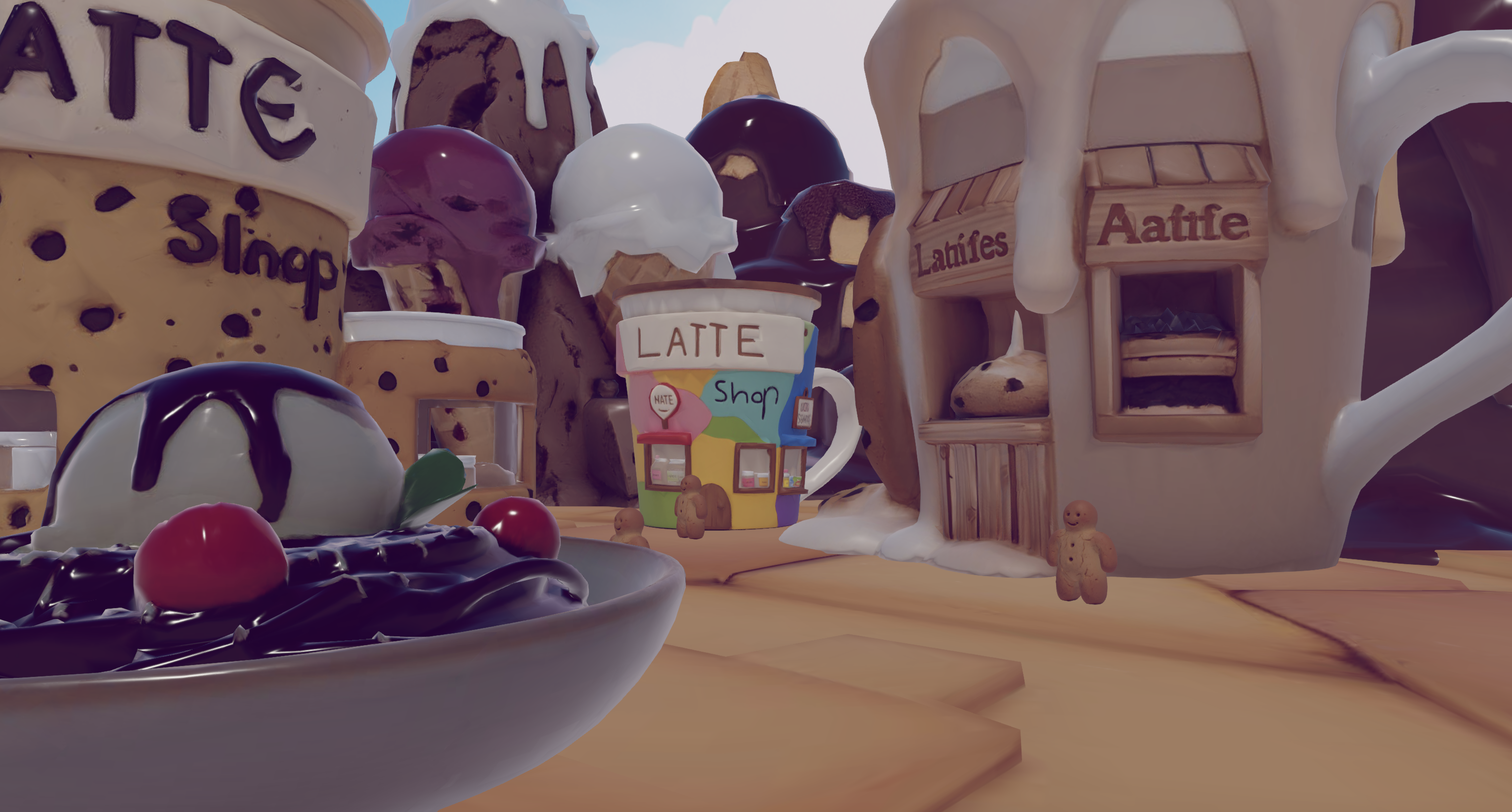
Nilo is a browser-based, AI-native 3D game engine. You build inside a live 3D world instead of waiting for a prompt to generate one. It runs entirely in the browser with no installs. A custom engine handles C++ physics compiled to WebAssembly and accelerated with WebGPU. That foundation supports real-time multiplayer creation.
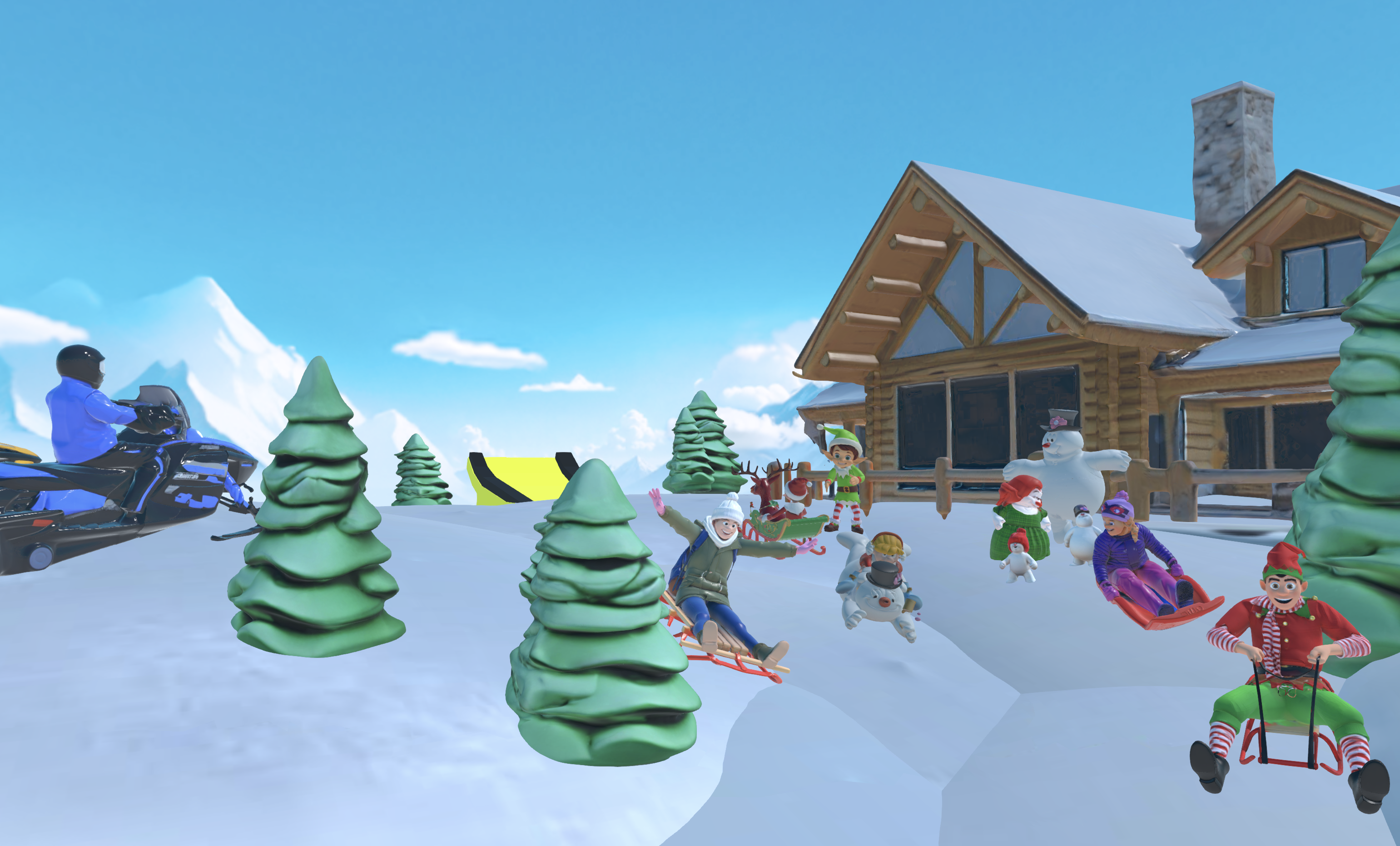
Capabilities that matter when you move on from Rosebud AI Game Maker include:
- AI text-to-3D generation for characters, props, and environments.
- A sketch-to-3D pipeline where you draw in 2D, refine with AI, and drag into 3D.
- One-click rigging for bipedal humanoid characters in a T-pose.
- AI-generated animation from text prompts.
- A natural language code editor for vibe coding, where you describe what you want in plain language and see it appear in your world in real time.
- A real-time level of detail (LOD) system that adjusts polygon counts on the fly, which helps when exporting to platforms like Roblox that cap polygons.
- Export to FBX, OBJ, STL, glTF, and Roblox’s native RBXMX format.
Nilo stays model-agnostic and abstracts multiple AI providers, including Meshy, Tripo, Nano Banana, Cartwheel, and Uthana, behind one interface. As models improve, your tools improve with them. In Nilo’s February 2026 survey with builders, 93% said they would recommend Nilo to a friend and 82% rated their experience as “Awesome” or “Good.” One builder summed it up like this: “I like how it feels like a good game engine rather than a vibe coding tool, with easy building and a good focus on being able to export and import content.”
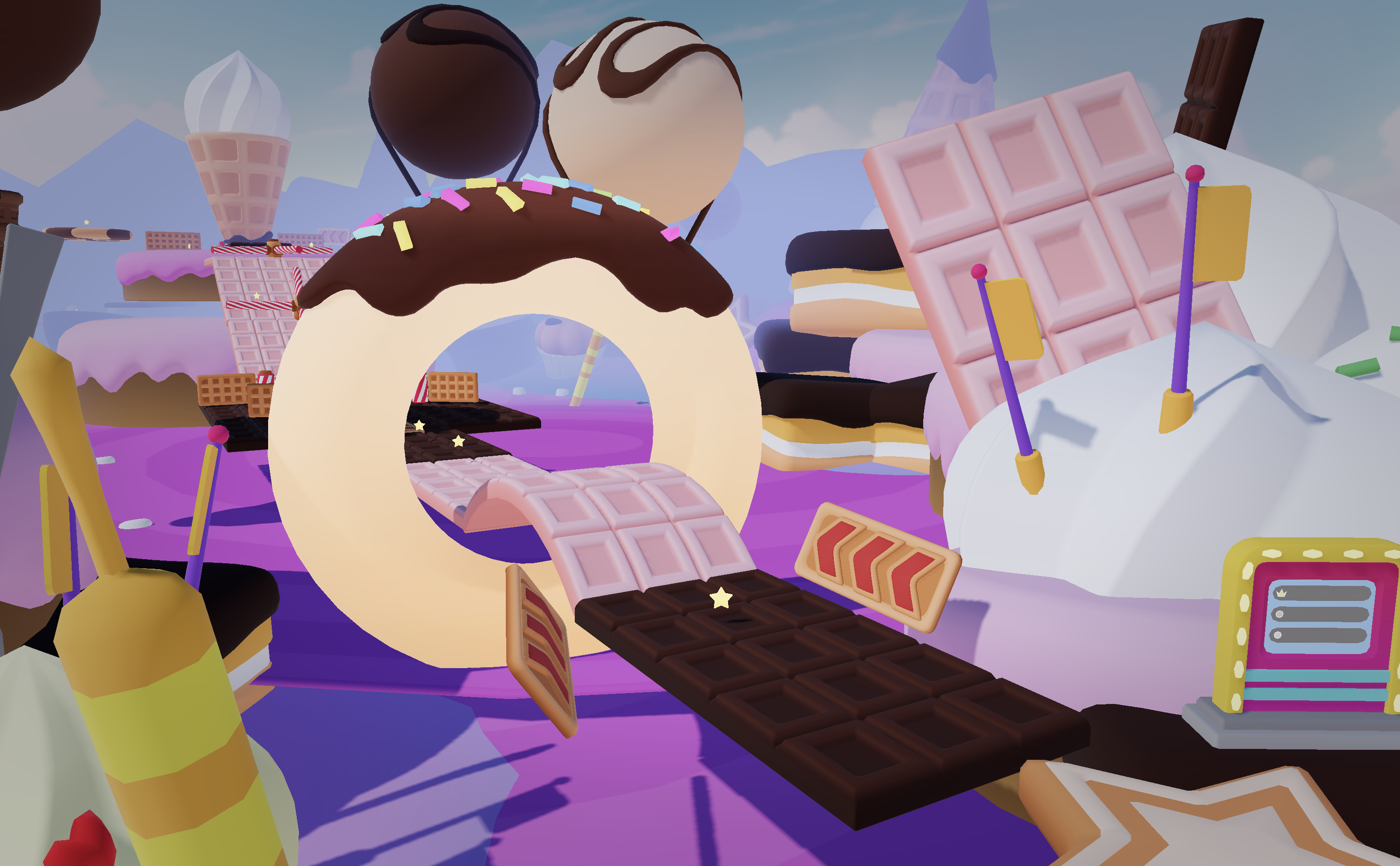
Keep Rosebud AI Game Maker for your first game and quick ideas. When you want to build a real 3D world and keep growing it, Nilo becomes the natural next step.

Jump into Nilo’s open beta and start shaping a 3D world with your friends.
Common Challenges And How To Fix Them
- The AI misreads your prompt. You will notice this when the game comes back in the wrong genre or missing features you clearly asked for. This usually happens because the prompt felt too broad for the AI to turn into one clear instruction. Revert to the last working version and send a new prompt that changes only one thing.
- A feature that worked before suddenly breaks. You might see the player stop moving or the score counter freeze. A new instruction probably conflicted with existing logic. Undo to the last working version, then rephrase your request with more detail about what should stay the same.
- You run out of credits halfway through a world. You will see generation requests stop working or fail. Repeated large generations usually drain your allowance faster than you expect. Plan your prompts before you generate so each one does a clear job.
- The game feels shallow after a few minutes. You know this is happening when there is nothing left to do after a short play session. Prompt-to-game output gives you a starting point instead of a finished design. Use the project progression above to add systems like lives, enemy behavior, and win conditions.
- You keep wanting 3D, physics, or multiplayer that Rosebud cannot provide. You will feel this as hitting the same wall over and over. At that point you have outgrown the prompt-to-game model. Move to a browser-based 3D engine like Nilo. You can get started with Nilo’s First Time Setup guide to get your bearings quickly.
Frequently Asked Questions
What Is Rosebud AI Game Maker, And Is It The Same As The Rosebud Journaling App?
Rosebud AI Game Maker is a browser-based, AI-native tool that turns text prompts into playable games. The Rosebud journaling app, made by Just Imagine, Inc., is a separate product focused on personal growth and emotional wellness. Search results often mix the two, so always check which product you are actually viewing.
How Do Rosebud AI Credits Work Over Time?
As mentioned earlier, the free tier currently caps your usage at around 20 prompts per week, so heavy iteration burns through it fast. Every follow-up edit, bug fix, and asset generation uses credits from the same pool. Paid plans unlock more credits, commercial rights, and deeper code access. Check Rosebud AI’s current pricing page for the latest numbers.
Is Rosebud AI Safe For Beginners And Younger Creators?
The age and privacy points above still apply here. Rosebud AI Game Maker is not intended for users under 13, and local rules may set a higher minimum age. Use a browser, avoid sharing personal information, and read the current privacy terms before you put anything sensitive into prompts.
What Can You Actually Build With Rosebud AI Game Maker?
You can build 2D games, light 3D experiences, voxel worlds, visual novels, RPGs, platformers, puzzles, and racing games. Deep 3D world building, real physics simulation, real-time multiplayer creation, and exporting assets into other engines sit outside its focus. The same boundaries mentioned earlier still apply, because the tool is tuned for fast browser prototypes.
When Should You Move From Rosebud AI To A 3D Game Engine?
Switch when you want persistent 3D worlds, working physics, real-time multiplayer building, or assets you can export to Roblox, Unity, or Blender. Rosebud AI Game Maker does not provide a portable project file, only a hosted browser link. Once your ambition grows beyond that, a browser-based 3D engine like Nilo becomes the logical next step.
What Is Nilo, And How Is It Different From Rosebud AI Game Maker?
Nilo is a browser-based, AI-native 3D game engine with real physics, real-time multiplayer creation, one-click rigging for bipedal characters, AI-generated animation, vibe coding, and export to standard 3D formats including Roblox’s native RBXMX. You build inside a live 3D world instead of waiting for a prompt to generate one. Nilo is currently in open beta with a free tier that includes 1,000 Nilo Bits per month.
Do You Need To Know How To Code To Use Either Tool?
You can start with both tools without knowing how to code. Rosebud AI Game Maker generates code from prompts. Nilo’s vibe coding editor lets you describe what you want in plain language and see it appear in your world instantly. You can also open the actual code and tweak simple variables, such as changing “speed = 2” to “speed = 20,” which gives you a gentle way to learn how game logic works.
Create your next world in Nilo and see how far your ideas can go.