Written by: Nuno Leiria, Founder & CEO @ Nilo
Key Takeaways
- Rosebud AI creates rapid first prototypes but lacks save/load, collision, LOD, and export, so projects often break when you iterate.
- Non-deterministic prompt regeneration makes reliable iteration nearly impossible, because every change can produce a different or broken result.
- If you build for Roblox, Rosebud AI’s browser-locked assets, missing LOD, and unoptimized polygons create immediate export and retopology headaches.
- Nilo brings real-time retopology, natural-language scripting, LOD management, and one-click Roblox/Unity export into one browser-based engine.
- When you feel ready to move from prompt-only prototypes to production-ready games, start building in Nilo’s open beta for free and see how it feels.
The Friction Point When You Shift From Player To Creator
Prompt-only tools like Rosebud AI run in the browser and focus on code generation but do not include a real game engine or 3D depth. This limitation creates a hard ceiling: no heavy systems, no 3D depth, no save/load, no progression curves. The first generation often feels great. The second prompt produces something different. The third breaks what the second fixed.
Editing AI-generated content through prompts feels challenging, inexact, slow, and hard to predict because the process is fundamentally non-deterministic. You never know exactly what will change when you send the next message.
Initial AI-generated browser games usually need multiple rounds of prompt-and-fix cycles before they feel playable, and you still do not get hands-on control over specific changes. This iteration friction is exactly what separates tools you keep using from tools you abandon.
In Nilo’s February 2026 survey, 82% of builders rated their experience “Awesome” or “Good.” That satisfaction rate reflects how much smoother creation feels when you can iterate directly inside your world instead of fighting prompt-only regeneration.
Experience Nilo’s iteration-focused engine and start building for free.
Why These Limits Hit You At Every Skill Level
If you are just starting out, prompt-only tools feel like a shortcut. Bugs and complexity multiply quickly as projects grow beyond the first prompt, with no built-in systems for testing, iteration, or stability fixes. You hit a wall fast and feel stuck instead of learning.
If you already build for Roblox, the export problem appears immediately. Rosebud AI’s output stays locked in the browser. Getting anything into Roblox Studio means manual cleanup, retopology in Blender, and hours fixing meshes, which is exactly the grind you tried to avoid.
Beyond individual workflow friction, collaborative teams face an even wider gap. Prompt-only tools do not support real-time multiplayer creation. You cannot share a link and build together. Every change passes through one person’s prompt history, one result at a time.
The broader shift is clear: AI compresses prototyping and asset generation into minutes, while your human iteration loop of design decisions, tuning, and playtesting decides whether the game actually feels good. Browser-based engines that keep you inside the world while you iterate help that loop move much faster.
What A Real Asset-To-World Workflow Needs
Moving from a cool prototype to a production-ready game requires systems that prompt-only tools cannot provide. Four core capabilities separate a real creation engine from a simple prompt wrapper:
- Real-time retopology, which rebuilds AI-generated meshes into clean geometry that fits Roblox’s polygon limits, so you skip Blender for basic fixes.
- Natural-language code editor (vibe coding), where you describe what you want your game to do in plain text, voice, or an image, and see working code appear with instant feedback in your 3D world.
- LOD system, where Level of Detail automatically simplifies meshes as objects move away from the camera, keeping frame rates stable without manual polygon tweaking.
- Roblox-ready export, where one-click export to FBX, OBJ, STL, or GLB keeps scale, axis orientation, and polygon budgets correct from the start.
Nilo brings all four into a single browser-based engine. You avoid downloads, Blender detours, and long chains of separate tools. One survey respondent explained it this way: “I like how it feels like a good game engine rather than a vibe coding tool, with easy building and a good focus on being able to export and import content.”
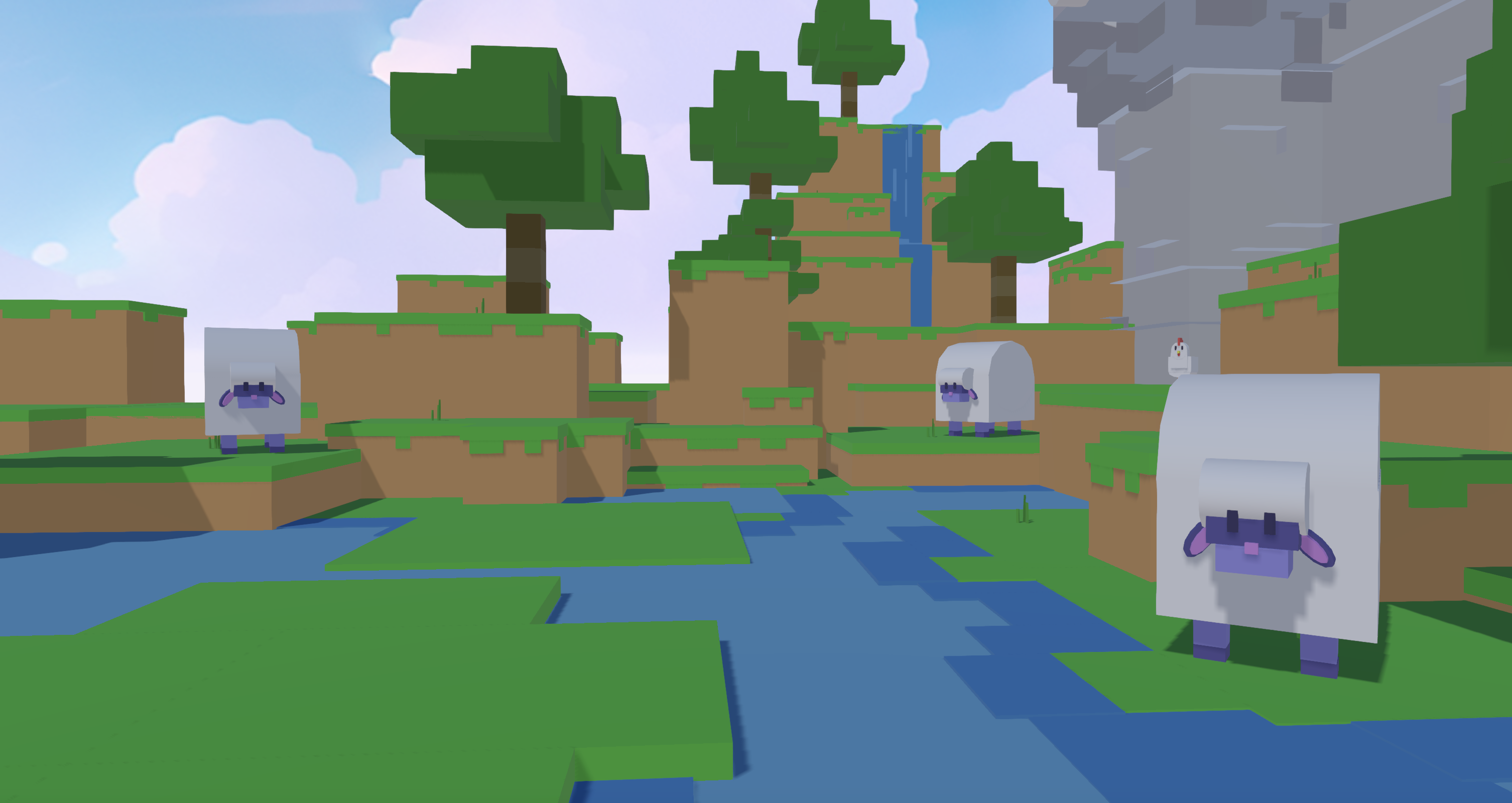
Try Nilo’s integrated workflow and handle building, exporting, and iteration in one place.
Eight Rosebud AI Game Examples And What They Teach You
1. The Last Free Man — Action / Survival
| Game | Genre | Rosebud Limitation | Nilo Solution |
|---|---|---|---|
| The Last Free Man | Action / Survival | No save/load, inventory, or progression curve | Vibe coding adds working game logic in real time |
The Last Free Man appears often in Rosebud AI showcases as a survival-action prototype. The first generation feels strong: your character moves, enemies spawn, and tension builds. Problems start when you try to add an inventory system or a save point.
AI game generators in 2026 still struggle with deeper systems like inventory, save/load, and progression curves, which are exactly the features that make you want to replay a game. In Nilo, you describe the system you want, such as “add a health bar that saves when the player exits,” and the natural-language code editor creates working logic with live feedback. You see the change in your world right away instead of waiting for another generation.
2. Abandoned Outpost — Rosebud AI Horror Games
| Game | Genre | Rosebud Limitation | Nilo Solution |
|---|---|---|---|
| Abandoned Outpost | Horror / Exploration | Static scene with no collision detection or atmosphere controls | Built-in physics, lighting, and environment settings work out of the box |
Abandoned Outpost is a popular Rosebud AI horror example. The first scene looks right: dark corridors and eerie shapes. The scene stays static, though, and you cannot tune atmosphere over time.
Prompt-only generation can create technically functional prototypes but rarely delivers cohesive art direction or polished atmosphere, which horror games depend on. Nilo’s built-in physics run in real time, so objects move and react by default. You adjust sky, ground, lighting, and environment settings directly in the inspector, which makes the world feel like a game instead of a single screenshot.
3. Desert Dunes Explorers — Open World / Adventure
| Game | Genre | Rosebud Limitation | Nilo Solution |
|---|---|---|---|
| Desert Dunes Explorers | Open World / Adventure | No LOD system; performance collapses as the world scales | Real-time LOD adjusts polygon counts automatically on the fly |
Desert Dunes Explorers shows what happens when a prompt-only tool tries to build a larger world. The first dune field appears quickly. As you add more terrain, props, and distance, frame rate drops hard.
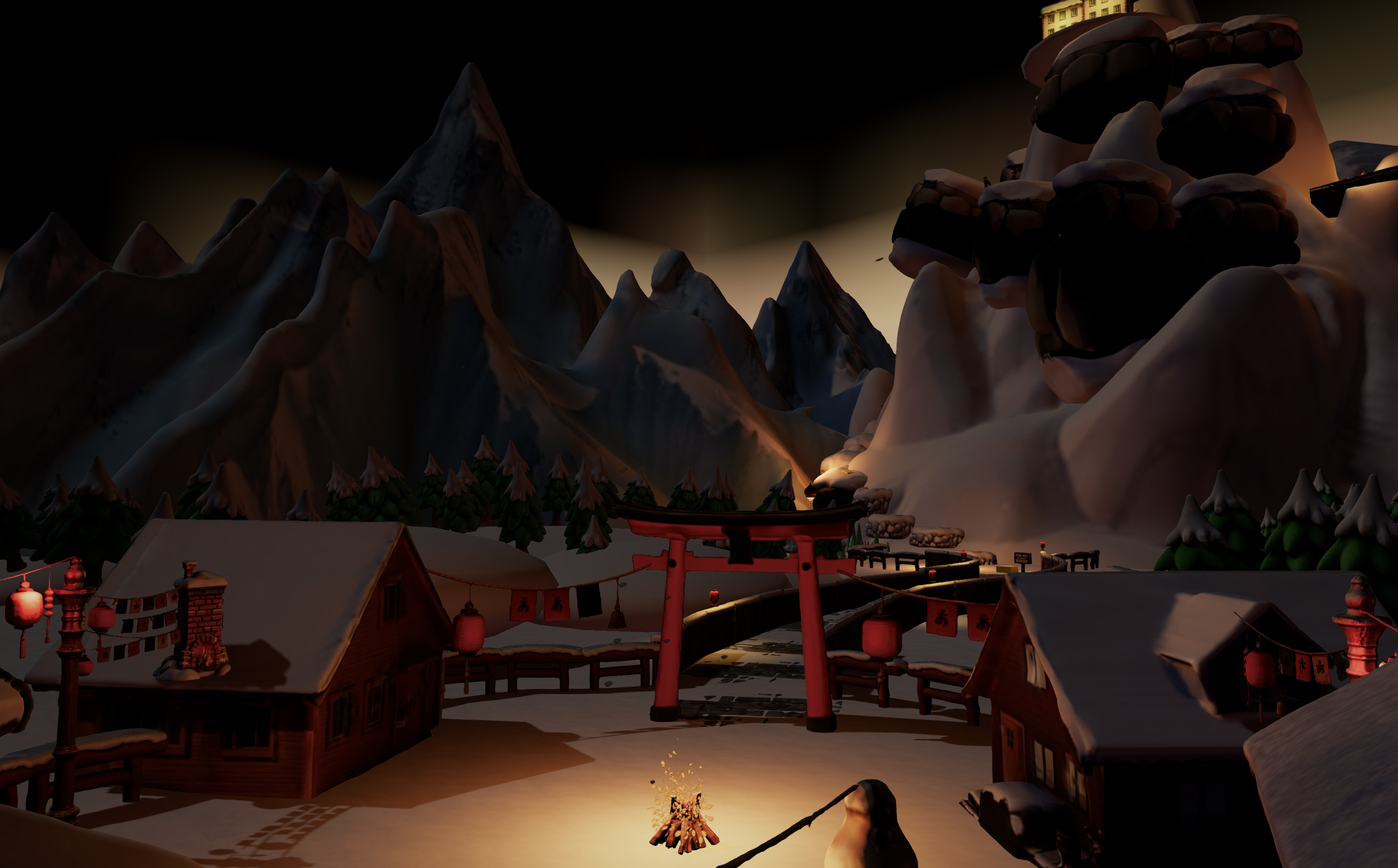
AI 3D generators usually output dense, high-poly meshes that need retopology and a proper LOD chain for real games. Nilo’s LOD system manages this for you. As objects move away from the camera, polygon counts drop in real time, so you focus on designing the world while Nilo keeps it running smoothly.
4. Cavernous Caution — Platformer / Puzzle
| Game | Genre | Rosebud Limitation | Nilo Solution |
|---|---|---|---|
| Cavernous Caution | Platformer / Puzzle | Poor mesh topology breaks on the first iteration | Real-time retopology delivers clean, Roblox-ready geometry |
Cavernous Caution looks solid as a cave platformer until you change the level layout. AI-generated 3D meshes from prompt-only systems often have poor topology, messy UVs, and inconsistent style across assets. Move one wall and the mesh tears. Adjust the ceiling and collision fails.

Nilo’s real-time retopology rebuilds mesh geometry as you create. You get clean topology, no visible artifacts, and Roblox-ready results in seconds. Another builder from the same survey said, “I do not have to spend hours on 3D modeling the simplest things. Now I can use Nilo and do it in 15 seconds.”
Test Nilo’s retopology on your own ideas and see how fast you can move.
5. Pixel Siege — Rosebud AI FPS Examples
| Game | Genre | Rosebud Limitation | Nilo Solution |
|---|---|---|---|
| Pixel Siege | FPS / Tower Defense | 2D-only output; no 3D cameras, controllers, or collision detection | Full 3D engine with cameras, controllers, and working collision |
Pixel Siege is one of the most searched Rosebud AI FPS examples and shows the hardest ceiling. Some prompt-only AI game generators now produce playable 3D games with cameras, controllers, and collision, but many tools still stay limited to simple browser scenes or pre-made asset assembly.
An FPS without real 3D systems is not an FPS. Nilo starts as a game engine. Physics, collision, and camera controls come built in and active. You focus on building the world while the engine handles the systems underneath.
6. Neon Drift — Racing / Arcade
| Game | Genre | Rosebud Limitation | Nilo Solution |
|---|---|---|---|
| Neon Drift | Racing / Arcade | Non-deterministic regeneration makes iteration impossible | Hands-on inspector lets you tune speed and physics values directly |
Neon Drift feels fast on the first generation. When you try to tune drift feel, tighten turning, or adjust top speed, you end up prompting again and hoping for the best. Regenerating the same prompt often gives you a different game, which breaks deterministic workflows.
Game feel in a racer depends on tiny timing and physics tweaks that prompts alone cannot target. In Nilo, you open the inspector and change values like “speed = 2” to “speed = 20” directly, then see the result instantly. You stay in a builder mindset instead of a prompt lottery.
7. Shadow Hollow — Rosebud AI Horror Games
| Game | Genre | Rosebud Limitation | Nilo Solution |
|---|---|---|---|
| Shadow Hollow | Horror / Stealth | No export path; assets are locked inside the browser tool | One-click export to FBX, OBJ, GLB for Roblox, Unity, or Blender |
Shadow Hollow shows strong stealth-horror potential but stays trapped inside the original tool. Browser HTML5 output from many AI game generators lacks the performance and compatibility you need for real distribution.
You cannot move Shadow Hollow to Roblox or refine it in Blender. Nilo avoids that trap by exporting to FBX, OBJ, STL, and GLB, which work with Roblox, Unity, Unreal Engine, Blender, and VRChat. You build in Nilo and decide where the game goes next.
8. Starfall Station — Sci-Fi / Multiplayer
| Game | Genre | Rosebud Limitation | Nilo Solution |
|---|---|---|---|
| Starfall Station | Sci-Fi / Multiplayer | No real-time collaboration; one creator, one prompt at a time | Share a link and build together with friends in real time |
Starfall Station instantly makes you want to invite friends to help build the station. Rosebud AI cannot support that. Prompt-only tools usually lack a real-time multiplayer creation layer, so every change runs through one person’s prompts.
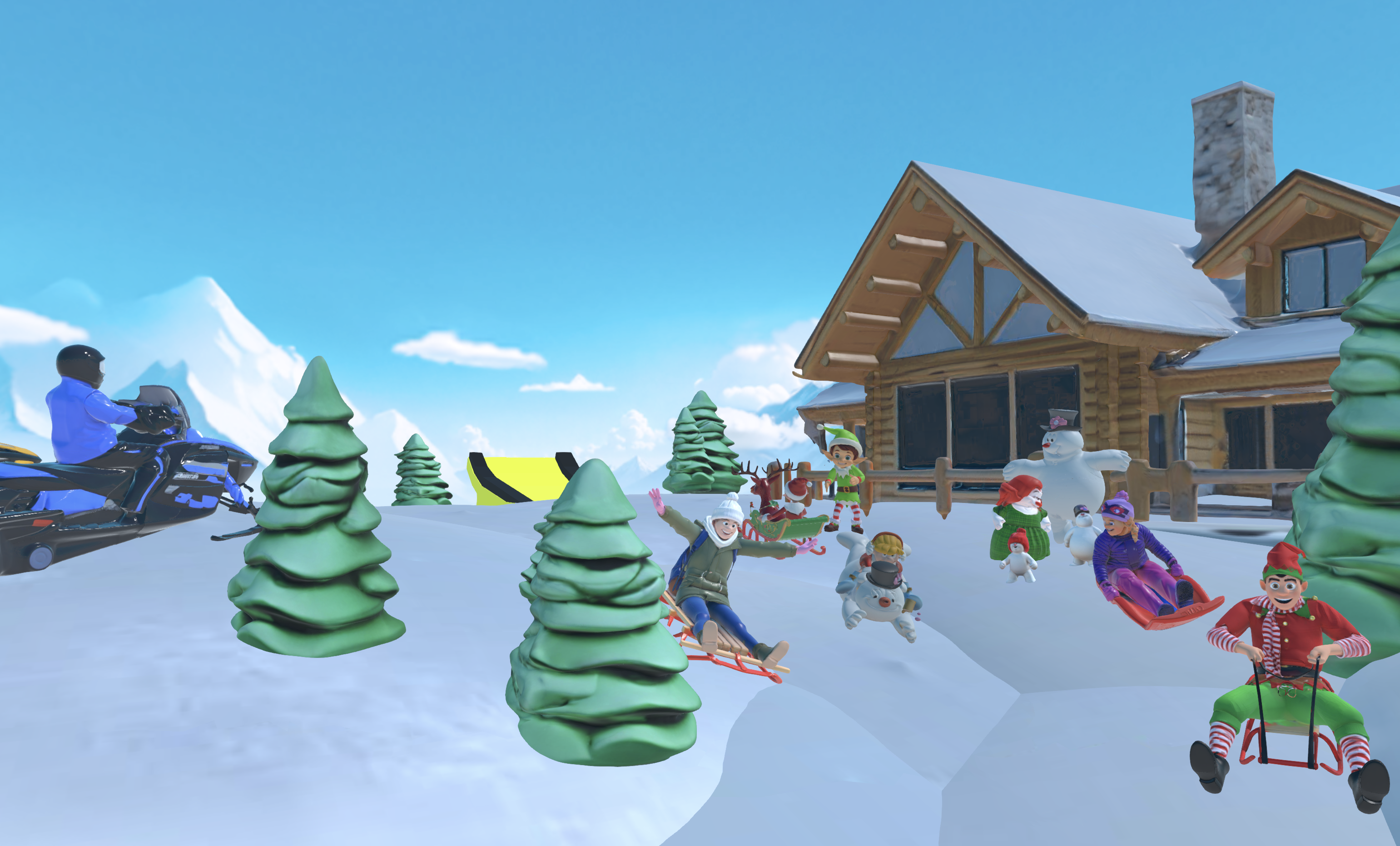
Nilo supports real-time multiplayer creation on desktop and mobile. You share a URL and your friends join you inside the same world, building, playtesting, and iterating together. Creation stays social from the first block to the final level.
Three Ways You Might Use Nilo Instead
First-time creator: You generate a Rosebud AI game, play for two minutes, and try to change jump height. Because prompt-only tools regenerate the whole game instead of editing one value, your new prompt can produce a completely different game. With Nilo, you open the code editor, type “make the jump higher,” and see the change in your world without breaking everything else. Your first sessions stay fun instead of turning into debugging.
Roblox-focused builder: You use Meshy or Rosebud AI for assets, then spend 30 minutes or more in Blender doing manual retopology before importing to Roblox Studio. Nilo’s real-time retopology and one-click Roblox export shrink that loop to minutes. You spend more time designing and less time wrestling with polycounts.
Collaborative team: Your group includes a builder, a scripter, and a designer. With prompt-only tools, you pass screenshots around and wait for regenerations. With Nilo, all of you stand inside the same world at the same time, building, scripting with vibe coding, and playtesting together through a shared link. Iteration that used to take days can fit into a single session.
Frequently Asked Questions
What is Rosebud AI and what kinds of games can it make?
Rosebud AI is a browser-based vibe-coding tool that generates small games from text prompts. You type a description and it produces a lightweight browser game you can tweak through a chat-style editor. It works well for quick prototypes and concept checks. Its ceiling stays at browser-scale experiences, without full 3D cameras, controllers, collision, save systems, or progression curves. If you want a deeper 3D world, you eventually need a more complete engine.
Why do AI-generated game prototypes break when you try to change them?
Prompt-only tools generate code and assets in one shot. When you prompt again to change something, the tool regenerates instead of editing. Because AI generation is non-deterministic, the new output often differs from the original in ways you did not request.
You do not get a hands-on editor, an inspector panel, or a safe way to change a single variable without risking the whole prototype. This makes prompt-only generation strong for first results but weak for reliable, directed iteration.
Can I export games made with Rosebud AI to Roblox?
No. Rosebud AI’s games and assets stay locked inside the browser tool and cannot export to Roblox Studio or other engines. If you want to build for Roblox, you need a tool that exports to standard 3D formats like FBX or GLB with polygon counts tuned to Roblox’s platform requirements, which Nilo handles through its LOD system and Roblox-ready export.
What is a LOD system and why does it matter for Roblox?
LOD stands for Level of Detail and describes a system that reduces polygon counts as objects move farther from the camera. A detailed prop might use many polygons up close and far fewer when viewed from across the map. This keeps frame rates stable without manual optimization on every asset.
For Roblox, this matters because the platform limits mesh complexity. Without LOD, AI-generated assets that arrive with very high polygon counts either fail to import or cause heavy lag. Nilo’s LOD system applies these reductions automatically so you can focus on design.
How is Nilo different from Rosebud AI?
Rosebud AI acts as a prompt-to-game tool where you describe a game, receive a generation, and then change it through more prompts. Nilo starts as a game engine. You stand inside a 3D world, build directly, and let AI act as your co-pilot instead of your replacement.
You can generate 3D assets from text, sketches, or images, rig and animate characters with one click, write game logic by talking or texting the AI, and export everything to Roblox, Unity, or Blender with a single click. Nilo runs fully in your browser and supports real-time multiplayer creation so you and your friends can build together by sharing a link.
Conclusion: Keep Building And Keep Control
Rosebud AI game examples show what you can create in the first minute of AI-assisted building. They also highlight where prompt-only tools stop helping you, which happens the moment you want to change something, export something, or build with a friend.
Creation should stay fun and social from the first idea to the final level. That means hands-on control, real iteration, clean exports, and a community of aspiring builders and already builders like you. Nilo stands out because it supports that whole journey, from your first asset to a finished Roblox-ready world.
One builder from the February 2026 survey summed it up: “There are no limits on what you can create — just type, draw or add in an image and you can generate, rig, customise and place a fully 3D model within minutes.”
Jump into Nilo’s open beta, build with friends, and see how far your ideas can go.