Written by: Nuno Leiria, Founder & CEO @ Nilo
Key Takeaways for You as a Roblox Builder
- Rosebud AI turns plain-English prompts into playable browser prototypes in 8–12 minutes, which works well for quick 2D concept checks.
- The 7-step workflow (sign in, prompt, generate, iterate, upload assets, test, publish) keeps you in creative flow without coding or Blender skills.
- Ready-to-use prompts for side-scrollers, 3D mazes, and clicker games show how clear genre, objective, and style details improve first-pass results.
- Limits such as no Roblox-ready export, no automatic retopology, and daily generation caps make Rosebud AI weak for production-level Roblox development.
- For a complete pipeline that generates, cleans up, rigs, and exports Roblox-ready assets directly from your browser, try Nilo’s open beta at try Nilo’s open beta.
7-Step Beginner Workflow in Rosebud AI for Your First Game
Rosebud AI is a browser-based game creation platform powered by its Vibe Coding engine, which turns your natural-language descriptions into playable games using JavaScript, Three.js, and React code. Follow this step-by-step workflow to ship your first simple game:
- Sign in and choose a template or start fresh. Go to rosebud.ai, create a free account, click Create Game, and select a template, such as platformer, RPG, or puzzle, or remix a game from the Showcase library. Starting from a template gives you a working foundation to modify instead of building from zero.
- Enter a descriptive prompt or upload reference images. Describe your game idea in plain English in the Chat tab. Include the genre, the player objective, and the main obstacle. Add details about art style and controls so the first output lands closer to what you imagined.
- Let Rosie generate the initial environment and code. Rosebud’s AI assistant, Rosie, generates visuals, gameplay logic, and NPC behaviors (non-player character behaviors, such as enemies or interactive characters) from your prompt. The result appears in the live preview window so you can test it right away.
- Use the Chat tab to add controls, mechanics, and physics. Type what you want, such as jump controls or scoring rules, and let Rosie update the project. Because Rosebud AI can lose track of existing logic when it handles several requests at once, request only one change per prompt. Ask for jump controls, collision rules, or scoring systems one at a time so the AI stays focused and avoids breaking what already works.
- Upload custom assets and reference them with the @ symbol. Rosebud AI includes a built-in asset manager for sprites, 3D models, and animations. Upload your own images or models, then reference them in prompts using the @ symbol so Rosie knows exactly which asset to apply in the scene.
- Test in the live browser preview and apply fixes. Click Apply after each prompt to update the game in real time, then use the Fix Error button for AI-assisted debugging on simple issues. Play through the game yourself to catch problems with difficulty, pacing, or visuals that the AI might miss.
- Publish and share the playable URL. When you feel happy with the result, click Publish to deploy the game instantly with a shareable browser URL. No downloads or installations are required, and anyone with the link can play it immediately.
Prompt Library: Three Examples You Can Paste Into Rosebud
Clear prompts help Rosebud AI understand what you want. Each of these examples defines the genre, objective, and fail condition in one sentence, then adds style and control details that work well in Rosebud AI:
- 2D side-scroller: “Create a 2D side-scrolling platformer where a fox collects acorns while avoiding falling rocks. Three lives, simple pixel art style, keyboard arrow controls.”
- Basic 3D environment: “Build a simple 3D maze game using Three.js where the player navigates a first-person view through a low-poly dungeon to find a glowing exit door. Add a timer and restart button.”
- Arcade clicker: “Make a 2D clicker game where the player taps falling stars before they hit the ground. Stars fall faster every 10 seconds. Show score and high score on screen.”
Explore Nilo’s open beta and start building in your browser.
Where Rosebud AI Starts to Limit Your Roblox Projects
Rosebud AI works well as a prototyping tool for simple browser games, but you will hit limits once you try to build deeper 3D experiences or move your work into Roblox. These are the main constraints you should keep in mind.
Limited 3D depth. Rosebud AI handles 2D games more reliably than complex 3D projects. Ambitious 3D work needs extra refinement and debugging because 3D projects slow down with complex scenes when they run in the browser through Three.js. The platform can generate basic 3D scenes, but it does not behave like a full 3D game engine.
No real-time retopology. Retopology means cleaning up a 3D mesh, the underlying geometry of a model, so it meets performance requirements. Roblox caps mesh parts at 10,000 triangles, which affects how detailed your models can be. Rosebud AI gives you far less manual control than a real editor, so nudging collision shapes, tweaking values, or reorganizing geometry by hand becomes difficult. There is no automatic retopology system to bring meshes within Roblox’s polygon limits.
No Roblox-ready export. Rosebud AI is web-only with no native desktop or mobile export options. That restriction keeps all output as browser-based experiences and blocks direct exports to game engines such as Roblox, Unity, or Unreal. If you want to use what you built in Roblox Studio, you need to rebuild the project from scratch.
Daily generation limits on the free tier. A single afternoon of iterative game building on Rosebud can consume 20–30 generations because each prompt, edit, and asset request counts separately against the daily cap. The free plan includes daily generation limits with no commercial rights and no code access, so you must pace your experiments.
Code ceiling for complex projects. Rosebud AI imposes a 2,500-line code ceiling because of AI context-window limits. That ceiling interferes with iterative editing and maintenance of large or complex projects, such as multi-level 3D games or systems with many interacting scripts.
No portable project file. Rosebud AI does not provide a portable project file that you can move into another engine. Migrating a game later usually means rebuilding the logic and assets in a different tool.
Fixing Common Rosebud AI Output Problems
When Rosebud AI output does not match what you expected, these common issues and fixes can help you get back on track:
- The game breaks after a prompt change. Request only one change per prompt. Stacking several requests in a single message often causes the AI to lose track of existing logic. Split your requests into separate prompts and apply each one before moving to the next.
- 3D scenes run slowly or freeze. Performance becomes heavy in the browser once you move beyond simple 3D scenes. Reduce the number of objects in the scene, simplify lighting, or switch to a 2D approach for the same game concept.
- Generated assets look low quality. Rosebud AI generates textures, sprites, and basic 3D assets that feel “good enough for prototyping” but lack the optimization needed for game-engine deployment. For production-quality assets, generate them in a dedicated tool and import them separately.
- You hit the daily generation limit mid-session. Free-tier generations may be slower or placed in a queue behind paid users during peak periods. Since an iterative session can exhaust your daily cap quickly, plan your most important changes first and save cosmetic tweaks for the next day.
- The Fix Error button does not resolve the issue. AI-assisted debugging can help with simple issues. For persistent errors, describe the problem in plain English in the Chat tab instead of clicking Fix Error again. A fresh prompt often produces a cleaner solution than an automated patch.
Rosebud AI vs Nilo: How to Compare Them as a Roblox Builder
When you feel ready to move beyond browser-only prototypes and build assets that actually work in Roblox, you should compare Rosebud AI and Nilo side by side. The table below focuses on four capabilities that decide whether a tool can carry you from quick prototype to production-ready Roblox asset.
| Criteria | Nilo | Rosebud AI |
|---|---|---|
| Real-time retopology (automatic mesh cleanup to meet Roblox’s polygon limits) | Nilo optimizes polycount so models work directly in Roblox Studio without extra steps. A built-in LOD (level of detail) slider adjusts polygon counts on the fly. | No manual retopology tools and no automatic polygon optimization for Roblox’s performance limits. |
| Roblox-ready export | Exports to FBX, OBJ, STL, and glTF, which work with Roblox Studio, Unity, Unreal Engine, Blender, and VRChat. One-click export keeps the workflow simple. | Web-only output with no export to Roblox, Unity, or Unreal Engine. All games remain hosted in the browser. |
| Multiplayer collaboration | Real-time multiplayer creation lets you share a link and build together with friends on desktop or mobile instantly. | Supports multiplayer game features through InstantDB integration, such as chat, leaderboards, and shared world state, but not real-time collaborative building. |
| Vibe coding (natural language prompts so you create games by talking, texting, or sending images to the AI) | The built-in code editor accepts text, voice, or image prompts in any language, and changes appear instantly in the 3D world. A model-agnostic AI layer connects to multiple providers behind the scenes. | The Vibe Coding engine generates JavaScript, Three.js, and React code from natural-language prompts. Code view becomes available on the Pro Creator plan at $19.99 per month. |
Rosebud AI gives you a fast way to prototype a simple browser game and share it with a link. Nilo stands out when you want the full pipeline, where you generate a 3D asset, clean up the mesh automatically, rig and animate a character with one click, and export directly to Roblox Studio without leaving your browser or touching Blender.
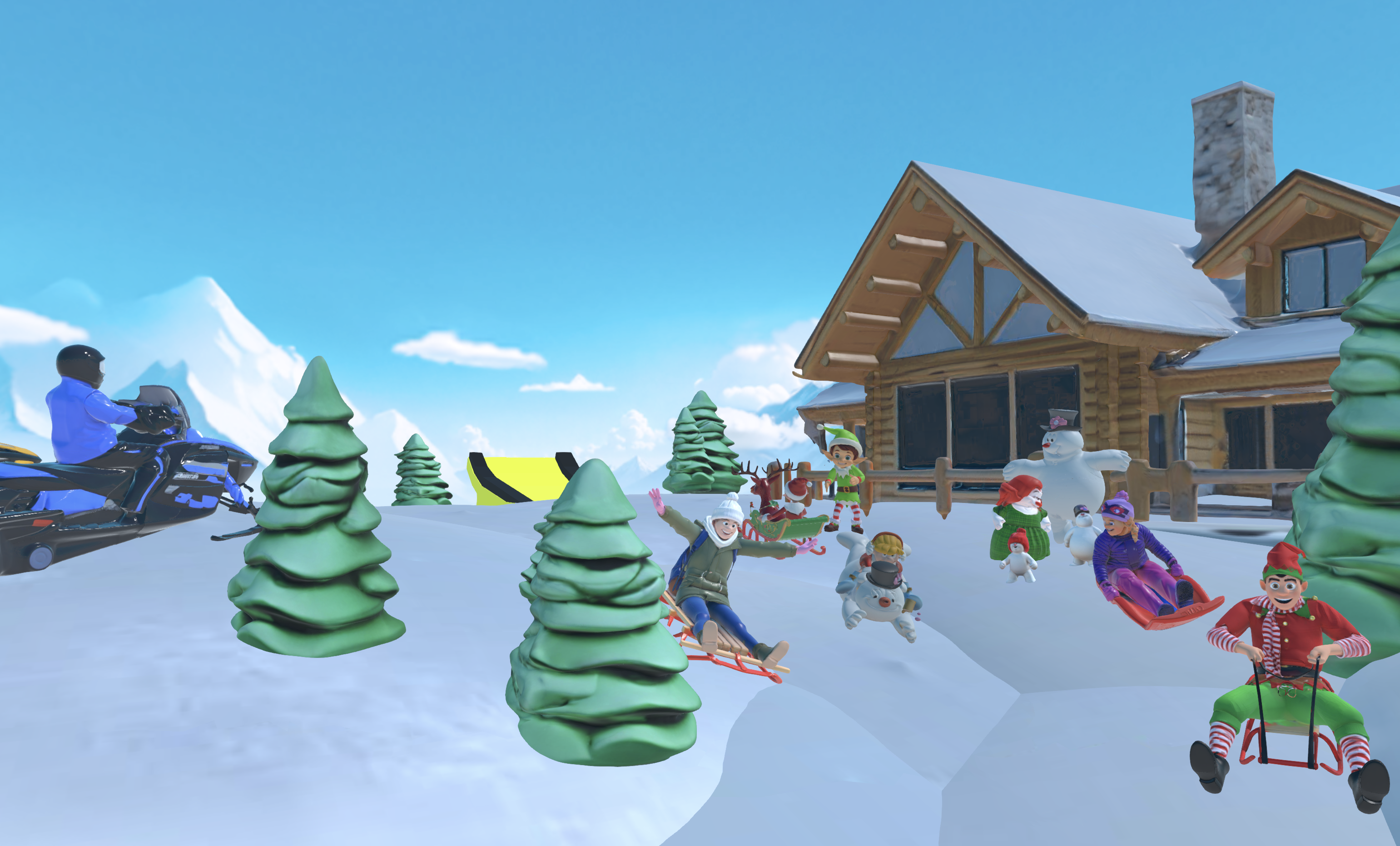
As one builder put it in Nilo’s February 2026 Survey, “I like how it feels like a good game engine rather than a vibe coding tool, with easy building and a good focus on being able to export and import content.”
Start building in Nilo and see the Roblox-ready workflow yourself.
Frequently Asked Questions
How long does it take to build a game in Rosebud AI?
For a simple one-screen 2D game, such as an avoider, clicker, or basic platformer, you can expect 8 to 12 minutes from your first prompt to a published browser URL. More complex projects with multiple mechanics or basic 3D scenes take longer, especially if you hit errors that need several fix attempts. Iterative sessions can consume 20 to 30 generations in a single afternoon, which matters if you use the free tier’s daily limit.
Do you need coding skills to use Rosebud AI?
You do not need coding skills to get started. Rosebud AI generates all the JavaScript code from your plain-English prompts. If you want to read or edit the generated code directly, for example to learn how jump mechanics work, you need the Pro Creator plan at $19.99 per month. The free tier gives you a playable game without ever seeing a line of code.
Can you export your Rosebud AI game to Roblox?
You cannot export directly. Rosebud AI outputs browser-only games hosted on its platform, with no export to Roblox Studio, Unity, or Unreal Engine. If you want to use your game concept in Roblox, you need to rebuild the assets and logic in a tool that supports Roblox-compatible export formats like FBX or glTF. Nilo exports to those formats with automatic polygon optimization for Roblox’s performance limits.
What kinds of games work best in Rosebud AI?
Rosebud AI works best for simple 2D games such as side-scrollers, clickers, puzzle games, arcade-style avoiders, and visual novels. Basic 3D scenes are possible using Three.js, but performance drops quickly as scene complexity increases. Full 3D open-world games, multi-level RPGs with save systems, or anything that needs production-grade 3D depth are not practical within Rosebud AI’s current browser constraints.
Is Rosebud AI free to use?
Rosebud AI offers a free tier that resets daily rather than accumulating as a monthly pool. The free plan includes daily generation limits, basic templates, and community showcase access, but no commercial rights and no code access. The Pro Creator plan at $19.99 per month adds higher generation caps, full commercial rights, code editing, private hosting, and priority support. Compute-heavy tasks such as 3D rendering also consume Spark Credits on top of any subscription.
Next Steps for Roblox Builders Who Want Production-Ready Assets
Rosebud AI gives you a fast path from idea to playable browser prototype. The 7-step workflow of signing in, prompting, generating, iterating, uploading assets, testing, and publishing works well for simple 2D games and quick concept validation, so it can serve as a genuine starting point.
You feel the gap as soon as you try to move that prototype into Roblox. There is no retopology, no polygon optimization, and no export path, so you end up starting over in a new tool.
Nilo is built specifically to close that gap for aspiring builders or already builders like you. You can generate 3D characters, props, and environments from a text prompt or sketch, clean up the mesh automatically with the LOD slider, rig a bipedal character with one click, and export a Roblox-ready file in FBX or glTF format, all in your browser with no Blender required. You can also invite friends to build with you in real time by sharing a link.
Builders who tested this workflow reported strong satisfaction. In Nilo’s February 2026 Survey, 93% said they would recommend Nilo to a friend, and 72% said it makes their creative process easier by “a lot.” The platform is currently in open beta and free to start.