
Written by: Nuno Leiria, Founder & CEO @ Nilo
Key Takeaways for Aspiring Roblox Builders
- Rosebud AI turns plain-text prompts into playable browser prototypes in seconds, so you can validate ideas fast without setup or coding.
- Prompt-only workflows create friction during revisions, because changing one element often breaks others and forces repeated re-prompts.
- The credit system limits free users to 20 prompts per week, which disappears quickly on complex projects that need many iterations.
- Exporting assets to Roblox requires manual checks on polygon counts, topology, and textures, since Rosebud AI is not tuned for Roblox’s strict 10K–20K polygon limits.
- For Roblox builders who want real-time 3D building, automatic asset cleanup, and multiplayer collaboration, Nilo offers a more complete engine-first experience, and you can join the open beta today.
What Rosebud AI Game Maker Actually Does in 2026
You will see two different products with similar names. Rosebud AI at rosebud.ai is a browser game creation tool that uses natural-language prompts to generate playable games. The Rosebud Journal App at rosebud.app is a journaling and mental wellness app. If you searched “Rosebud AI game engine” or “Rosebud AI game maker,” you are looking for the game creation tool.
Rosebud AI the game maker lets you type a description like “make a zombie survival game” and then generates a playable browser prototype. You can also use voice and image inputs. The output runs in the browser immediately, with no downloads and no setup. The team positions it as a vibe-coding tool, which means you talk to the AI instead of placing objects, writing scripts, and building scenes by hand like in a traditional engine.
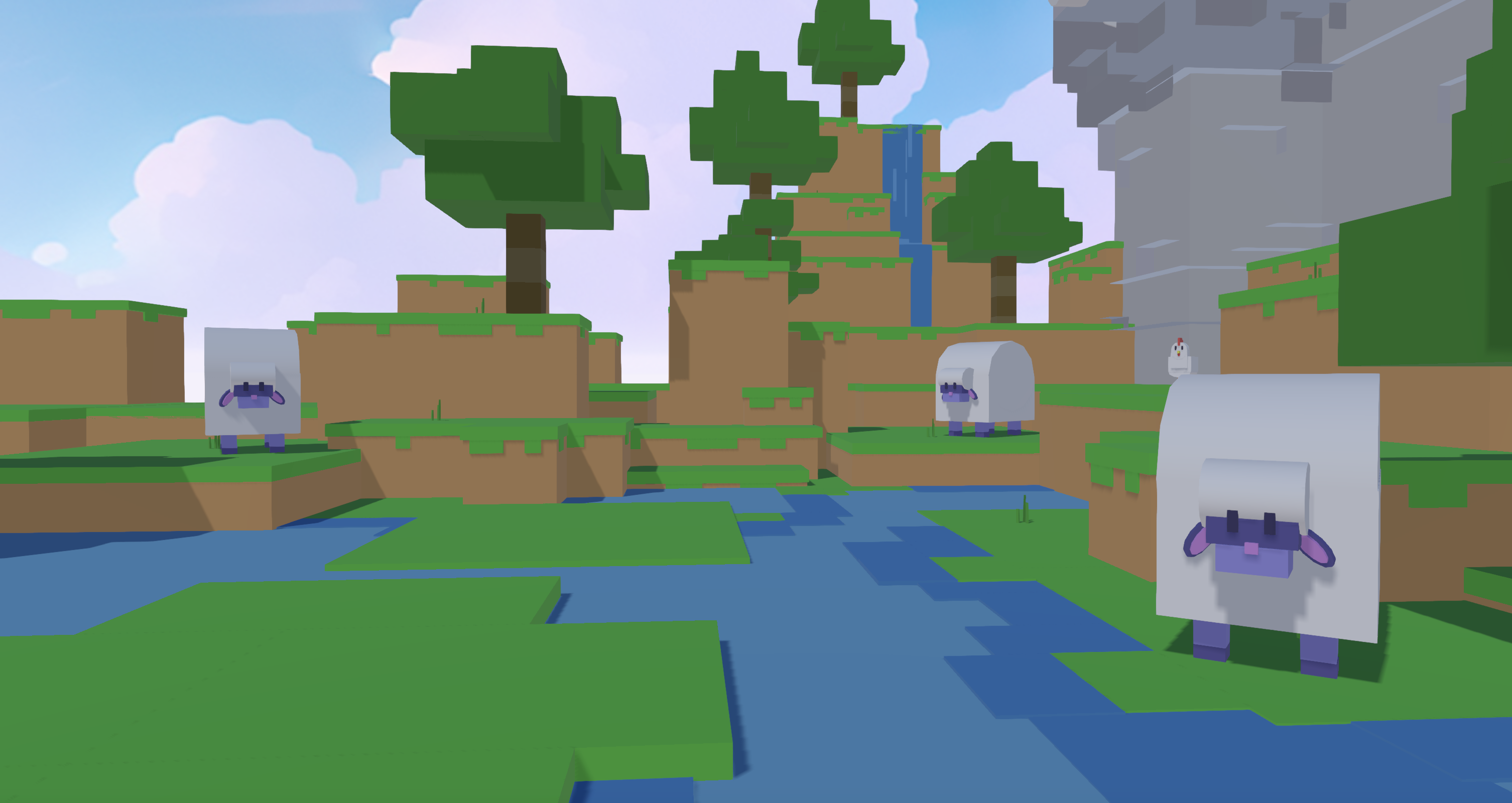
This difference matters a lot if you build for Roblox. Rosebud AI generates a full game around your prompt. Nilo drops you inside a 3D world where you build, play, and iterate in real time.
Try Nilo’s open beta and start building and playing in your browser.
The Problem: Prompt-Based Game Tools Slow Your Creative Flow
Moving from playing games to creating them feels exciting. You already know what fun games feel like. You just need tools that keep up with your ideas.
Prompt-based tools like Rosebud AI solve the blank-page problem fast by generating a working prototype from a short description. That speed introduces a different kind of friction, which is the revision loop. Because the AI generates everything at once, tweaking one element often breaks others. Changing a character’s movement might reset your level layout, and fixing a mechanic might introduce new bugs.
You re-prompt, wait for the new output, review what changed, then re-prompt again when something else breaks. This cycle kills creative flow instead of supporting it. Fully AI-generated games often feel shallow, with simple loops, bugs that multiply as complexity grows, and little of the testing or polish that makes games feel real.
This hits new builders, hobbyists, and small teams in the same way. Many game developers worry that AI can increase bugs or unpredictable behavior, such as broken dialogue trees, strange character actions, or logic loops that trap players. If you want to design worlds instead of debugging AI output, that friction becomes a serious barrier.
Rosebud AI Pricing and Credit System for Builders
Rosebud AI uses a credit-based model. The free tier gives you 20 prompts per week. Paid plans start at $19.99 per month for the Pro Creator tier, which adds commercial rights and higher usage limits.
For simple prototypes, 20 prompts per week feels workable. Complex projects with many revisions, such as changing a character’s movement, adjusting a level layout, or fixing a broken mechanic, burn through that limit quickly because each change needs a new prompt. That is where credit-based pricing becomes a real constraint. Every re-prompt costs a credit, every fix costs a credit, and the more ambitious your project, the faster you hit the wall.
Nilo takes a different approach. You get 1,000 Nilo Bits per month on the free tier, and many core building features do not use Bits at all. You can earn more Bits through Nilo Rewards by referring friends and building with the community.
Start building with 1,000 free Bits in Nilo’s open beta.
Where Rosebud AI Works Well for Rapid Prototyping
Rosebud AI shines when you want to see a simple playable concept quickly. If you want to test whether a mechanic feels fun before you invest hours, a prompt-generated prototype removes most barriers. You avoid setup, code, and 3D modeling skills.
The conversational interface feels approachable. You describe what you want in plain English, and the tool handles the rest. For game jams, school projects, or early idea checks, that speed has real value. No-code AI builders like Rosebud accept prompts such as “make a space shooter with asteroids and power-ups” and then generate a playable browser game in seconds.
If your goal is to see an idea move on screen, Rosebud AI delivers that quickly.
Where Rosebud AI Struggles on Complex Projects and Revisions
That speed comes with trade-offs once you go deeper. No-code AI builders rely on template-based mechanics and cannot create truly custom systems or tuned code. You can describe what you want, but you cannot grab the 3D scene directly, adjust a mesh, or fine-tune a physics interaction without re-prompting and hoping the new output lands correctly.
Rosebud AI is also not a full game engine. You never stand inside a 3D environment as a builder. AI agents in game development usually work through small steps, and slow build and test cycles can stretch each revision to many minutes. If you want to stay in creative flow, placing objects, testing physics, and iterating in real time, a prompt-and-wait loop works against you.
Complex scenes, custom characters, and multi-system games push these limits very hard.
Rosebud AI Export and Roblox Integration in Practice
Rosebud AI generates browser-playable games, but its export story for Roblox builders needs careful checking. The tool is not designed around Roblox’s strict asset requirements, especially the 10K–20K polygon caps that Roblox uses for performance.
Most AI-generated 3D assets need extra work before they are ready for engines. You often have to do retopology, clean up UVs, and verify PBR channels so the mesh deforms and renders correctly. If you want to move assets from Rosebud AI into Roblox Studio, you will probably need to verify polygon counts and topology by hand or pass them through a tool like Blender first.
Standard 3D formats such as FBX, GLB, OBJ, STL, and BLEND appear across many browser-based AI tools. Format support alone does not guarantee Roblox readiness. You still need to confirm polygon limits, rig structure, and texture resolution before the asset behaves cleanly in Roblox Studio.
How to Evaluate AI Game Creation Tools Yourself
You can compare tools like Rosebud AI and Nilo by testing a few clear criteria in your own projects:
- Onboarding speed: Measure how quickly you go from sign-up to a working prototype. Favor tools that skip installation and complex setup.
- Output quality after revisions: Generate something simple, then change one detail. See whether the revision works cleanly or breaks other parts.
- Export compatibility: Export an asset and import it into Roblox Studio. Check polygon count, texture resolution, and rig structure before you trust it.
- Browser performance: Test on the device you actually use. Some browser tools run smoothly on desktop but struggle on mobile.
- Collaboration: Check whether you can build with a friend in real time and share a link so someone else can join your world instantly.
- Learning value: Look for tools that teach real game development ideas such as rigging, polygons, mesh topology, and physics instead of hiding everything in a black box.
Test these criteria yourself in Nilo’s open beta.
Rosebud AI vs Nilo: What Matters for Roblox Builders
Nilo is a browser-based, AI-native game creation platform built for Roblox builders. Rosebud AI generates a game from a prompt and hands it to you. Nilo puts you inside a playable 3D world where you generate assets, clean them up, rig and animate with one click, and export directly to Roblox Studio without leaving the browser.

Nilo’s LOD system adjusts polygon counts on the fly, keeping assets within the Roblox caps mentioned earlier without manual cleanup. Its natural language code editor lets you vibe code by typing, talking, or sending an image to the AI, and you see the logic run in your 3D world in real time. Real-time multiplayer lets you build with friends just by sharing a link.

In Nilo’s February 2026 survey with builders, 93% said they would recommend Nilo to a friend, and 82% rated their experience as “Awesome” or “Good.”
The table below highlights the key differences in pricing, export options, and collaboration that matter when you choose between these tools:
| Feature | Rosebud AI | Nilo |
|---|---|---|
| Free tier | 20 prompts/week | 1,000 Nilo Bits/month, with many features free and not tied to Bits |
| Export formats | Browser game output, 3D export needs checks for Roblox compatibility | FBX, OBJ, STL, glTF, tuned for Roblox with automatic LOD |
| Roblox polygon optimization | Manual verification required | Automatic real-time retopology to Roblox’s polygon caps |
| Real-time multiplayer creation | Not available | Build with friends via shared link on desktop and mobile |
As one survey respondent put it, “I like how it feels like a good game engine rather than a vibe coding tool, with easy building and a good focus on being able to export and import content.”

Build a shared Roblox-ready world with friends in Nilo’s open beta.
Who Rosebud AI Fits and When You Should Look at Nilo
Rosebud AI works as a starting point if you want to see a simple game concept come to life in minutes, do not care about Roblox export, and do not plan to iterate heavily on complex scenes. It gives you a low-barrier entry into game creation.
If you are a Roblox builder who wants to generate, clean up, rig, and export game-ready 3D assets without fighting polycounts or jumping between tools, Rosebud AI’s prompt-only workflow will slow you down. You will hit credit limits during revision cycles, face manual cleanup before Roblox import, and miss the hands-on 3D building that keeps your creative momentum going.
Nilo stands out if you want to stay inside a playable 3D world, generate Roblox-ready assets with automatic optimization, and build with friends in real time without touching Blender or daisy-chaining tools.

Frequently Asked Questions
Is Rosebud AI a game engine?
No. Rosebud AI is a prompt-to-game tool that generates browser-playable prototypes from text descriptions. A game engine gives you a full development environment where you place objects, write or generate scripts, test physics, and build scenes interactively. Rosebud AI does not offer that kind of hands-on 3D environment. Nilo is built as a game engine first, so you stand inside a playable 3D world as you create instead of waiting for a prompt to generate one.
Do I need coding skills to use Rosebud AI or Nilo?
You can start in both tools without traditional coding skills. Rosebud AI uses natural-language prompts to generate game logic automatically. Nilo’s vibe coding editor lets you type, talk, or send images to the AI to create working game logic, and you see the results in your 3D world in real time. You can also view and tweak real code variables directly, which helps you learn programming concepts without writing everything from scratch.
Can I export Rosebud AI assets directly to Roblox Studio?
Rosebud AI is not designed specifically for Roblox export. If you want to move assets into Roblox Studio, you need to verify polygon counts, topology, and texture resolution manually. Roblox enforces strict performance limits of 10K–20K polygons per mesh. Nilo handles those limits automatically with its real-time LOD system, so your exports arrive Roblox-ready without extra cleanup.
What makes Nilo different from other prompt-to-game tools?
Most prompt-to-game tools, including Rosebud AI, generate a game and hand it to you. Nilo works as a game engine first. You stand inside a playable 3D world where you build, iterate, and play in real time. AI acts as your co-pilot instead of replacing your creative choices. You can generate 3D assets from text, sketches, or images, rig and animate with one click, keep polycounts under control automatically, and export directly to Roblox Studio. Real-time multiplayer lets you build with friends by sharing a link. Nilo is backed by Supercell and is currently in open beta.
Is Nilo free to use?
Yes. Nilo’s free tier includes 1,000 Nilo Bits per month for AI generation, and many core building features do not use Bits. You can also earn more Bits through Nilo Rewards by referring friends and building in the community. Like Rosebud AI, Nilo runs entirely in the browser, and it also removes the need for high-performance hardware.
Conclusion: Match the Tool to Your Roblox Goals
Rosebud AI gives you a fast way to get a simple game concept moving. If you want to validate an idea in minutes without setup, it does that job. The trade-offs, such as credit limits during heavy revision, no hands-on 3D environment, and manual work before Roblox export, matter more as your projects grow.
For Roblox builders who want Roblox-ready assets, steady creative flow, and real-time collaboration without fighting polycounts or switching between tools, Nilo stands out as an engine-first alternative. As one survey respondent said, “There are no limits on what you can create, just type, draw or add in an image and you can generate, rig, customise and place a fully 3D model within minutes.”
The right tool depends on your goals, your workflow, and how deep you want to go. If you feel ready to build full worlds instead of only prototyping them, Nilo is worth a try.
Explore Nilo’s open beta and start building your next Roblox world.