Written by: Nuno Leiria, Founder & CEO @ Nilo
Key Takeaways
- You face steep barriers when moving from playing Roblox to creating 3D assets because tools like Roblox Studio and Blender take months to learn.
- AI-assisted, browser-based 3D creation platforms reduce that friction by combining generation, cleanup, and export in one place with no downloads.
- When you compare tools, focus on text-to-3D generation, natural-language scripting, real-time collaboration, automatic polycount control, and export formats.
- You should also check onboarding ease, output quality, export compatibility, performance handling, and whether the platform teaches real development concepts.
- Nilo offers a browser-based workflow that generates Roblox-ready assets in seconds and supports real-time multiplayer creation — start building and playing in Nilo’s free open beta.
The Friction Point: From Playing Roblox to Creating 3D Assets
You have spent hundreds of hours in Roblox and you know what a great game feels like. You decide to build your own game and everything suddenly feels complicated.
The moment you try to create a custom 3D asset, you hit a wall. Roblox Studio works like a professional desktop tool. Blender, the 3D modeling software you probably hear about next, takes months to learn. The gap between what you imagine and what you can actually build feels huge.
This friction is real, and it is not your fault. The tools available to aspiring builders or already builders like you are the same tools professionals use. They were not designed for someone who grew up playing Roblox and now wants to start building.
Why These Technical Barriers Burn You Out
Technical barriers do more than slow you down. They break your creative momentum and can push you toward burnout.
Retopology, which means cleaning up a 3D mesh so it has efficient geometry, is one of the biggest time sinks. AI-generated models from tools like Meshy often come out messy, so you spend 30 minutes or more in Blender fixing each asset. Even after that cleanup, Roblox’s polycount limits create a second hurdle. Roblox caps assets at roughly 10,000–20,000 triangles, so a clean model can still fail performance checks.
Every time you jump between tools, from Meshy to Blender to Roblox Studio, you lose focus on the game you wanted to build. As one builder said in Nilo’s February 2026 Survey, “Picture yourself, frustrated because you spent the last 5 hours 3D modeling a shipping container.” That experience reflects the standard workflow when you do not have better tools.
The Solution Category: AI-Assisted, Browser-Based 3D Creation Tools
You now have a different option for this problem. A new category of AI-assisted, browser-based 3D creation platforms helps you move from idea to Roblox-ready asset without juggling heavy desktop software.
Traditional desktop engines like Roblox Studio, Unity, and Unreal Engine are powerful, but they need installation, strong hardware, and serious technical training. Some builders try to shortcut this with fragmented AI workflows, using Meshy for generation, Blender for cleanup, then importing to Roblox Studio. That approach is faster than pure manual modeling, but you still deal with tool-switching and technical steps at every handoff.
Browser-based AI creation tools solve that flow-breaking tool-switching problem by combining generation, optimization, and export in a single environment that runs in your browser. You stay in creative flow from the moment you describe an idea to the moment you export a Roblox-ready asset.
What AI Browser Tools Need To Do For You
3D Asset Generation and Cleanup Speed
Text-to-3D generation should let you type what you want and see a 3D model appear in seconds. This directly replaces those hours you might spend modeling a simple object from scratch. More advanced platforms also support sketch-to-3D pipelines, where you draw in 2D and the AI turns that sketch into a 3D model.
You should pay attention to the trade-off between generation speed and output quality. Some tools give you fast results that still need Blender cleanup. Others focus on clean topology so you skip manual retopology and move straight into building your game.
Natural-Language Logic Creation You Can Actually Use
Scripting blocks many Roblox builders from shipping their ideas. Some browser-based platforms now include a code editor that accepts natural language prompts. You describe game logic by talking, typing, or even sending images to the AI, and the tool writes the code for you.
Many builders call this “vibe coding” because you explain the vibe of what should happen instead of writing Lua. When you compare tools, check how much control you keep over the final behavior and how clearly the tool explains what it generated, so you can learn while you build.
World Building Beyond Single Assets
You probably want more than a single prop. Some platforms let you assemble full 3D environments with physics running in real time. Objects move, bump, and react by default, so you do not wire up every interaction by hand.
This goes further than pure asset generators like Sloyd or Lemonade.gg, which focus on single models. If your goal is a playable Roblox experience, world-building features save you many extra steps later.
Automatic Optimization for Roblox Limits
Roblox’s strict performance limits mean a beautiful model can still break your game. Polygon caps and texture size restrictions create hidden traps if you are new to 3D.
A built-in LOD, or level of detail, system automatically adjusts polygon counts so your models stay within Roblox limits. This removes a huge chunk of manual work and helps you avoid surprise performance issues when you import assets into Roblox Studio.
Real-Time Collaboration With Friends
Real-time multiplayer creation lets you and your friends build together just by sharing a link. You see changes live, give feedback on the spot, and keep everyone in the same scene.
Roblox Studio and Blender focus on single-user editing. Browser-native tools can support simultaneous creation across desktop and mobile, which fits how you and your friends already hang out online.
Export Formats That Keep You Flexible
Export support decides whether a tool becomes part of your long-term workflow. Standard 3D formats like FBX, OBJ, STL, and glTF let you move assets into Roblox, Unity, Blender, VRChat, and Unreal Engine.
Tools that export to multiple formats keep your options open as your skills grow. Tools that only export to a proprietary format lock your work into one platform and limit what you can do later.
How To Judge AI 3D Tools As You Try Them
When you compare AI-assisted 3D creation tools, focus on the factors that decide whether you stay in creative flow or get stuck in technical cleanup. Consider these criteria:
- Onboarding ease: Can you start building without a long tutorial, and does the interface feel playful instead of like a complex editor?
- Output quality: Do generated models drop into Roblox Studio without cleanup, or do you still need Blender to fix them?
- Export compatibility: Does the tool export to the formats your target platform needs right now and the ones you might use later?
- Performance limits: Does the tool handle polygon optimization for you, or do you still manage triangle counts by hand?
- Collaboration needs: Do you usually build solo or with friends, and does the tool support real-time co-creation across devices?
- Learning value: Does the tool teach real game development concepts like rigging, mesh topology, and physics as you use it, or does it hide everything?
Three Scenarios To Test Your Tool Choice
Scenario 1: First-time creator. You have never used Blender or Roblox Studio and you want a custom character for a game. A browser-based tool with text-to-3D generation and one-click rigging gets you from idea to animated character without prior modeling skills. You should check whether the tool explains each step so you learn what rigging and animation actually mean.
Scenario 2: Roblox-focused builder. You already ship Roblox experiences but spend too much time cleaning models in Blender. You need a tool that generates clean topology, respects Roblox’s polygon caps automatically, and exports a file you can drop straight into Roblox Studio. You should confirm that the LOD system reliably keeps assets inside Roblox’s 10K–20K triangle range without manual tweaking.
Scenario 3: Collaborative team. You and two friends want to build a game together. You handle building, while they focus on design and testing. A tool with real-time multiplayer creation and link-based sharing lets everyone contribute without file transfers or version control setups. You should verify that collaboration works smoothly across different devices, including mobile.
Nilo fits all three scenarios well. Nilo is a browser-based 3D creation platform that generates characters, weapons, and props in seconds from sketches or prompts, optimizes polycount for Roblox Studio, and supports real-time multiplayer creation, all without installation. In Nilo’s February 2026 Survey, 93% of builders said they would recommend Nilo to a friend, and 82% rated their experience as “Awesome” or “Good.”
Staying Safe While You Explore AI Roblox Tools
Safety should always guide how you pick AI tools, especially if you are under 18. SuperBulletStudios, the team behind Superbullet AI, works in the Roblox game development space with AI-assisted workflows, and you should apply the same safety checks to it as to any other tool.
Ask yourself a few questions before you trust a platform:
- Does the tool run in your browser, or do you need to download and install software on your device?
- Does it ever ask for your Roblox account credentials or other sensitive logins?
- Does the site include a clear privacy policy that explains how your data and creations are used?
- Can you identify and contact the developer if something goes wrong?
Browser-based tools that require no installation usually carry a lower risk profile because you do not run separate executable files on your computer.
Checking Any AI Roblox Tool For Malware Risk
You should not assume any tool is a virus without evidence, but you should stay careful. Many tools aimed at Roblox builders have required downloads in the past, and some have triggered antivirus warnings.
Before you install anything, walk through a quick checklist:
- If the tool requires a download, scan the file with a reputable antivirus tool before you run it.
- Confirm that the download comes from the developer’s official website or a trusted store.
- Watch for installers that request unusual system permissions that do not match the tool’s purpose.
Browser-native tools remove most of this concern because they run inside the browser sandbox and do not install separate executables.
What Typical AI Roblox Workflows Look Like
Specific step-by-step instructions for Superbullet AI change as SuperBulletStudios updates the product, so their official docs are the best source for exact buttons and menus. Most AI-assisted Roblox creation tools still follow a similar pattern.
You generate an asset using a text prompt or image input. You review and refine the output. You then optimize for Roblox’s performance limits and export to Roblox Studio. The biggest friction points usually appear during manual retopology, polycount management, and format conversion, and different tools handle those steps with very different levels of automation.
Free Usage Limits and How To Read Them
Most AI tools use tokens or credits to cap how many assets you can generate on a free plan. Superbullet AI’s current free tier limits can change, so you should always check SuperBulletStudios’ official pricing page instead of relying on old screenshots.
When you compare free tiers, look at how many assets you can generate each month, what quality levels you can access, and what happens when you run out of credits. For reference, Nilo’s free tier includes 1,000 Nilo Bits per month for AI generation, export, and creation, and many core building features do not consume Bits at all.
Invite Codes, Betas, and Getting In
Some AI tools use invite codes during early access or beta phases to control growth. If Superbullet AI currently requires an invite code, you can usually find details on their official Discord server or website.
Invite-gated access is common and often opens up over time. If you want a tool you can start using right now without a code, Nilo’s open beta is live and free to join.
Frequently Asked Questions
What is the difference between a browser-based 3D creation tool and a desktop tool like Roblox Studio?
A browser-based tool runs entirely in your web browser, so you avoid downloads, installations, and high-end hardware. Roblox Studio is a desktop application built for professional-grade development and needs installation. Browser-based tools work from almost any device, including many phones and tablets, and you can share projects with a simple link. Older browser tools struggled with performance, but modern tech like WebAssembly and WebGPU has closed much of that gap.
Do I need modeling or scripting skills to use AI-assisted 3D creation tools?
You can start without modeling or scripting skills. Text-to-3D generation lets you describe what you want and have the AI build it. Natural language code editors let you create game logic by typing or talking to the AI instead of writing Lua. As you use these tools, you can still learn real concepts like rigging, polygons, and mesh topology by seeing how the tool explains and structures your creations.
What are the real limitations of AI-generated 3D assets?
AI-generated models can show geometric defects, odd symmetry, or strange textures that sometimes look “melted.” Output quality depends on the underlying AI model and how clearly you prompt it. Some tools require several regeneration attempts before you get a usable result. You should check whether the tool lets you refine and edit results directly or whether you just keep re-rolling and hoping for a better output.
Can I use assets I create in these tools commercially on Roblox?
This depends on each tool’s terms of service. For Nilo, any models, skins, or UGC items you create belong to you, and you can publish and monetize them on the Roblox Marketplace or elsewhere. Always read the terms of service for any tool you plan to use for commercial projects, because ownership rules vary.
What should I look for in a tool’s export workflow?
You should look for support for standard 3D formats like FBX, OBJ, STL, and glTF. These formats work with Roblox Studio, Unity, Blender, Unreal Engine, and VRChat. Avoid tools that only export to a proprietary format, because that locks your work into one ecosystem. Also check whether exported files already respect your target platform’s polygon limits or whether you still need to run extra cleanup steps.
Conclusion: Picking the Right Path for Your Roblox Ideas
The core problem for aspiring Roblox builders is clear. The gap between what you imagine and what you can actually build stays wide when you rely only on Roblox Studio, Blender, and fragmented AI pipelines that were never designed for your first projects.
AI-assisted, browser-based 3D creation tools help close that gap by combining generation, optimization, and export in one place with no installation. When you evaluate tools in this category, including Superbullet AI and its alternatives, focus on output quality, automatic handling of Roblox’s performance limits, export compatibility, and how well the tool protects your creative flow.
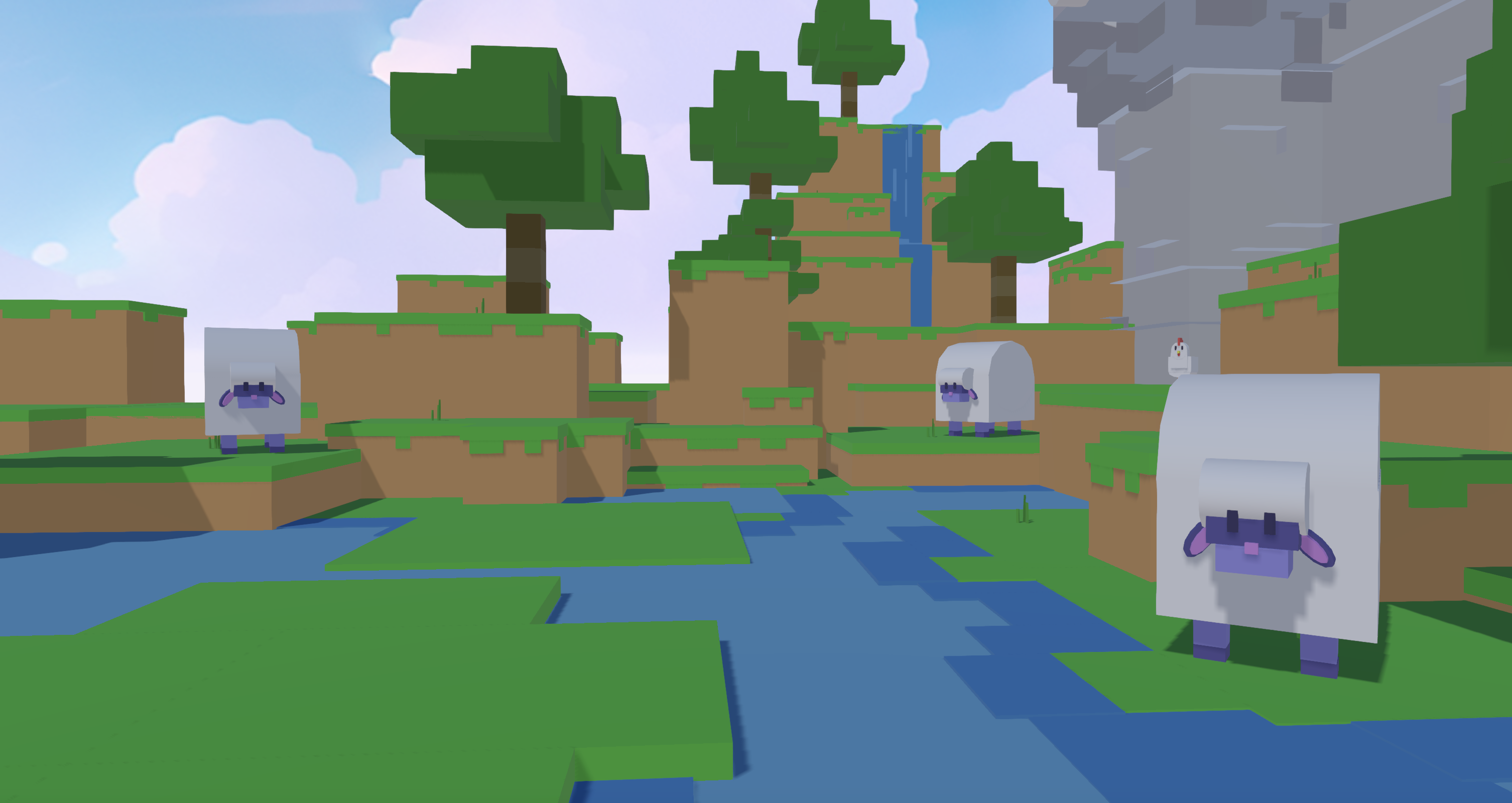
The right choice depends on your goals and how deep you want to go into technical details. If you mainly care about Roblox asset creation and want help with retopology, polycount control, rigging, and export without constant tool-switching, Nilo stands out as a strong option. As one builder said in Nilo’s February 2026 Survey, “I do not have to spend hours on 3D modeling the simplest things. Now I can use Nilo and do it in 15 seconds.”
Join Nilo’s open beta today and see how fast you can bring your next Roblox idea to life.