Written by: Nuno Leiria, Founder & CEO @ Nilo | Last updated: August 14, 2026
Key Takeaways for Roblox and 3D Builders
- Traditional CAD workflows push you through multiple tools like Meshy, Blender, and Roblox Studio, which breaks your creative flow and adds hours of manual cleanup.
- AI sketch-to-3D tools can generate meshes in under 60 seconds, but raw outputs usually need heavy optimization to hit Roblox’s 10,000–20,000 triangle limit and clean topology.
- Browser-based AI platforms remove installation headaches and tool-switching by combining sketch input, mesh generation, automatic retopology, LOD controls, and export in one place.
- Nilo’s real-time LOD slider and automated retopology handle performance optimization for you, so you can ship game-ready assets without Blender or deep technical skills.
- Try Nilo’s open beta to draw a sketch, turn it into 3D, auto-optimize it, and export to Roblox directly in your browser.
Why Tool Switching Slows You Down at Every Level
The tool-switching problem hits you whether you are just starting or already shipping games. A new builder cannot create custom 3D models without learning Blender first. An aspiring builder spends hours on retopology instead of designing new ideas. An expert builder chains Meshy, Blender, and Roblox Studio together in a pipeline that breaks creative flow at every step.
In Nilo’s February 2026 survey with builders, 93% said they would recommend Nilo to a friend, and 82% rated their experience as “Awesome” or “Good.” One builder described the old way: “Picture yourself, frustrated because you spent the last 5 hours 3D modeling a shipping container. All I have to do is open Nilo and do it in 20 seconds.” Another builder said it even more simply: “I do not have to spend hours on 3D modeling the simplest things, now I can use Nilo and do it in 15 seconds.”
The cleanup burden shows up across many tools. Tests of Meshy on game props produced raw meshes that needed roughly 25 minutes of cleanup before they were ready for game engines. Multiply that by every asset in a map and burnout becomes very real.
Manual parametric CAD often takes several months before you feel basically competent. That is not a gentle learning curve. It feels like a wall, whether you are 13 or 30.
Start creating in Nilo’s browser-based environment with no installation.
AI Browser-Based 3D Creation: The New Tool Category
This new category of tools exists to remove that wall. These platforms integrate sketch-to-3D generation, mesh refinement, optimization, and export into a single browser-based environment. Instead of bouncing between Meshy, Blender, and Roblox Studio, you stay in one place from first sketch to final export.
This category differs from traditional desktop CAD tools like Fusion 360, SketchUp, and Blender, and also from prompt-to-game tools like Rosebud AI or Arcade AI that generate a game from text but do not give you hands-on control in a real 3D scene. Strong tools in this space let you draw, generate, refine, optimize, and export without leaving your browser.
When you compare tools in this category, start from the barriers that slow you down most. Browser-based operation removes installation friction and hardware limits, so check whether the tool runs fully in your browser. Input flexibility matters next. You want support for sketches or images, not only text prompts, so you can work from visual ideas. Then look at technical cleanup. The tool should handle retopology and optimization automatically instead of sending you to Blender. Finally, confirm export compatibility so your meshes go straight into Roblox, Unity, or Unreal and keep you in creative flow instead of forcing more tool switches.
Nilo stands out in this category as a browser-based AI platform built for Roblox builders like you. You draw in 2D, refine with AI, drag into 3D, adjust a level-of-detail (LOD) slider, and export directly to Roblox Studio without touching Blender. Nilo’s model-agnostic AI layer connects to providers including Meshy and Tripo behind one interface, so you always get strong output without switching tools.
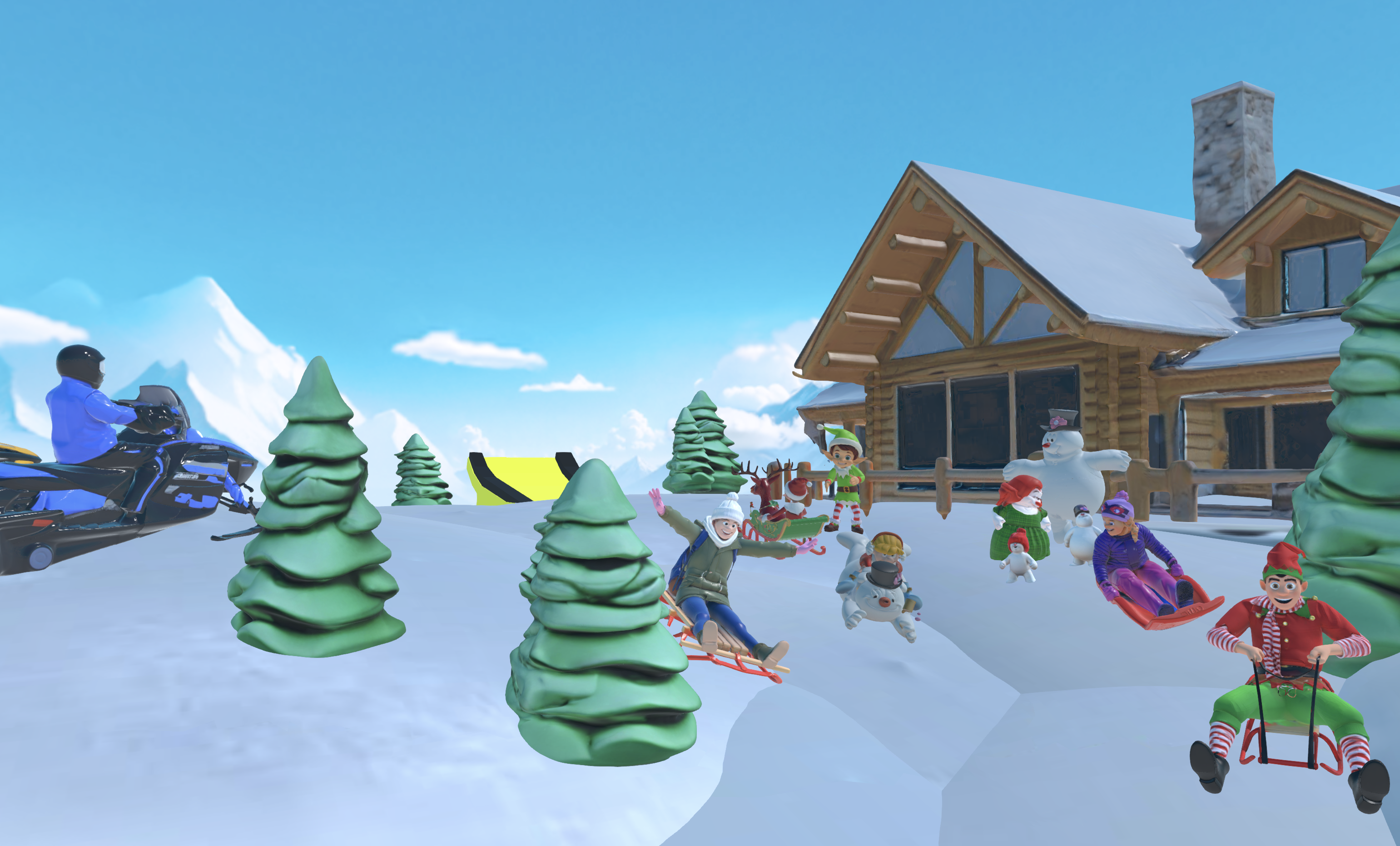
Meshy converts sketches and images into textured 3D meshes with PBR materials and exports to OBJ, GLB, FBX, and STL. It feels fast and accessible, but raw outputs often need cleanup before they match Roblox’s polygon limits.
Autodesk Flow Studio introduced Wonder 3D ahead of GDC 2026, which turns text prompts and reference images into editable 3D characters and props. It focuses on professional animation pipelines and requires a paid subscription.
Vizcom focuses on industrial and product design sketch-to-3D workflows, using AI for early organic form exploration while parametric CAD handles precise parts. It does not target game export or Roblox compatibility.
Try Nilo’s sketch-to-3D pipeline in your browser today.
From Sketch to Clean 3D Asset
Turning a sketch into a clean 3D mesh sounds simple but hides a lot of complexity. AI tools must guess the hidden sides, depth, and topology of your drawing, and that guess is not always accurate. Only about 1 in 10 AI-generated 3D models are client-ready without rework, and the rest need manual topology cleanup before you can use them in a game engine.
The core issue is topology, which means the underlying structure of a 3D mesh. AI-generated 3D models usually need retopology and UV repair before game use because they ship with dense triangulated meshes, uneven edge flow, overlapping faces, and missing UV layouts. UV maps act like a 2D unwrapping of your 3D surface that tells the engine where to place textures. Without clean UVs, your model looks broken in-game.
Different tools solve this in different ways. Automated retopology tools can give AI models a strong base quickly, and then you only refine critical deformation areas by hand. Nilo’s real-time retopology handles this step for you, so you do not need to open Blender to get a clean mesh. One creator in that survey said it this way: “There are no limits on what you can create, just type, draw or add in an image and you can generate, rig, customise and place a fully 3D model within minutes.”
MIT researchers developed GIFT (Geometric Inference Feedback Tuning), presented at the International Conference on Machine Learning in 2026, which teaches vision-language models to convert 2D designs into executable CAD programs with higher accuracy than prior methods while using roughly 20% of the computation. That progress shows how quickly sketch-to-3D AI is improving, and AI-native platforms like Nilo benefit automatically as these models get stronger.
Keeping Roblox Assets Inside Performance Limits
Roblox enforces strict performance limits: assets must stay under 10,000–20,000 triangles, and textures cap at 1024×1024 pixels. AI 3D generators usually output high-density meshes that need serious optimization before they run well in-game. That gap causes most of the frustration you feel when assets look great in previews but lag in Roblox.
Level of Detail systems, or LOD systems, help engines swap in simpler versions of a model as it moves farther from the camera. Exact polycounts for each LOD level depend on the asset and target platform.
Nilo’s built-in LOD slider handles this process for you. You move a slider, watch the polycount drop in real time, and export already tuned to Roblox’s limits. You skip manual LOD authoring in Blender and stop worrying about triangle counts. Another builder from that survey put the speed gain clearly: “You can work 20 times faster than you usually work on models.”
When you evaluate any sketch-to-3D tool for Roblox, check whether it automatically reduces polycount to meet Roblox’s triangle cap, preserves texture quality within Roblox’s texture limits, handles LOD creation without a separate tool, and lets you preview the optimized result before export.
Exporting Game-Ready Assets to Roblox and Beyond
A sketch-to-3D tool only helps you if its output works in your engine. For Roblox, that means exporting in formats Roblox Studio accepts, such as FBX or GLB, with clean topology, correct scale, and textures already optimized to those limits.
Nilo exports to FBX, OBJ, STL, and glTF, which works with Roblox, Unity, Unreal Engine, Blender, and VRChat. The platform does not lock you in. You can treat Nilo as your asset creation pipeline and continue work in any other tool. Another builder in that survey said: “I like how it feels like a good game engine rather than a vibe coding tool, with easy building and a good focus on being able to export and import content.”
Browser-based tools add another advantage here. No installation means no compatibility issues, no version conflicts, and no strict hardware requirements. You open a link, build, and export. That flexibility matters when you are 14 and sharing a family computer.
CAD vs AI Sketch-to-3D: Workflow Comparison
The table below compares traditional CAD workflows with AI sketch-to-3D pipelines across key workflow steps. All data points are cited inline.
| Workflow Step | Traditional CAD (Fusion 360 / Blender) | AI Sketch-to-3D Pipelines |
|---|---|---|
| Learning curve to basic competency | Fusion 360: 1–2 months to basic proficiency | No modeling skill required, generation in under 60 seconds |
| Sketch-to-mesh generation | Hours to days for CAD | AI sketch-to-mesh generation usually finishes in under 60–90 seconds |
| Retopology and cleanup | Manual, required for every AI-generated mesh | Automated in Nilo |
| Polycount optimization for Roblox | Manual decimation in Blender, requires LOD authoring | Automatic LOD slider in Nilo with smart mesh optimization |
| Export to Roblox Studio | Manual format conversion with frequent compatibility errors | One-click FBX or GLB export, Nilo optimizes polycount for direct Roblox Studio compatibility |
Use this short decision guide when you choose your approach. Pick traditional CAD when you need exact dimensions, manufacturing tolerances, or parametric design history. For floor plans, dimensioned parts, or mechanical components that must match measurements, CAD or a specialist modeling tool is the right choice. Pick AI sketch-to-3D when you need game-ready props, characters, or environments fast, especially for Roblox, Unity, or Unreal workflows where iteration speed matters more than dimensional precision. Pick a browser-based AI pipeline like Nilo when you want generation, optimization, and export in one place without installing anything or switching tools.
Experience the full workflow, from sketch to Roblox export, in Nilo’s open beta.
How to Choose Tools at Different Stages of Your Builder Journey
The right tool depends on where you are in your builder journey and what you want to ship next. These three scenarios can help you think through your decision.
Scenario 1: You are making your first custom prop
You have never used Blender and want a custom sword for your Roblox game. You need a tool that generates from a sketch, stays under Roblox’s polygon cap, and exports without a manual cleanup step. Focus on zero-skill onboarding, automatic optimization, and direct Roblox export. Nilo’s sketch-to-3D pipeline and LOD slider cover all three without requiring prior modeling knowledge.
Scenario 2: You are tired of the Meshy-to-Blender cleanup loop
You already use Meshy and know AI generation feels fast, but you spend 25 minutes or more per asset in Blender fixing topology before import. Focus on how much cleanup a tool removes, whether retopology is automatic, and whether the output passes Roblox’s performance checks without manual work. Nilo’s real-time retopology and Roblox-optimized export target this exact pain point.
Scenario 3: You are running a full multi-asset production
You are building a full map with many custom props, characters, and environments. You need consistent topology, reliable export formats, and real-time collaboration with other builders. Focus on output consistency across asset types, export format support such as FBX, GLB, and OBJ, collaboration features, and whether the tool supports rigging and animation in the same environment. Nilo’s model-agnostic AI layer, one-click rigging for bipedal characters in a T-pose, and real-time multiplayer creation support this full pipeline.
Use neutral criteria across any tool you test. Check onboarding by seeing whether you can generate a usable asset in your first session without a tutorial. Check output quality by confirming that the mesh passes Roblox’s performance checks without manual cleanup. Check export compatibility by testing FBX or GLB files in Roblox Studio. Confirm that the tool handles Roblox’s triangle cap automatically. Look for collaboration features so you can build with friends in real time. Finally, notice whether the interface helps you learn real concepts like topology, LOD, and UV maps instead of hiding them completely.
Frequently Asked Questions
What does “sketch to 3D model AI” mean, and do you need drawing skills?
Sketch-to-3D AI means you draw a 2D image on paper, a tablet, or in a browser, and AI converts it into a three-dimensional mesh you can use in a game engine. You do not need professional drawing skills. A rough silhouette or simple concept sketch usually gives the AI enough information to build a usable base mesh. The AI infers depth, hidden surfaces, and texture from your input. In Nilo, you can also combine a sketch with a text prompt or a reference image to get more controlled results.
What AI 3D modeling software should Roblox builders look at in 2026?
The right tool for Roblox builders generates clean meshes within Roblox’s triangle limits, exports in FBX or GLB format, and handles retopology automatically so you do not need Blender. Nilo stands out for this use case because it focuses on Roblox export, includes a real-time LOD slider, and runs entirely in the browser. Meshy and Tripo offer strong generation features but usually require a Blender cleanup step before the output meets Roblox’s performance requirements.
Why choose a browser-based tool instead of a desktop app like Blender or Fusion 360?
Browser-based tools need no installation, no high-end hardware, and no version management. You open a link and start building. If you share a family computer, use a school device, or want to collaborate with friends in real time, browser-based tools remove setup barriers. Desktop tools like Blender are powerful but take months to learn and do not focus on Roblox export workflows. Fusion 360 targets engineering precision, not game asset creation.
What limitations of AI sketch-to-3D tools should you expect?
AI sketch-to-3D tools infer hidden geometry such as the back, underside, and internal structure of your sketch instead of measuring it. Output quality changes based on how clear and complete your input is. Complex or symmetrical objects can be harder to interpret accurately. Most tools produce meshes that still need some optimization before they are game-ready, although platforms like Nilo automate much of that work. AI tools also do not fit engineering or manufacturing use cases where exact dimensions and tolerances matter.
Who owns the 3D models you generate with AI tools?
Ownership depends on each platform’s terms of service. Nilo’s terms let you use, publish, and monetize anything you create, so your models stay yours. For other tools, check whether commercial rights require a paid tier. Meshy’s free-tier outputs use a CC BY 4.0 license, which allows commercial use with attribution. Tripo’s free tier is non-commercial, and commercial rights need a paid subscription. Always review the terms of any tool before you publish or sell assets, since practices in this area continue to evolve.
Conclusion: Choose the Workflow That Keeps You Building
The gap between a sketch and a game-ready 3D asset feels huge, but it does not have to stay that way. Traditional CAD workflows push you to switch tools, clean messy output, and fight polygon counts instead of designing worlds. AI sketch-to-3D pipelines shrink that gap, and browser-based platforms shrink it further by removing installation, hardware requirements, and tool-switching.
If you want to spend your time designing objects instead of debugging polycounts, choose the workflow that keeps you in creative flow. Nilo stands out as an option built for that goal, with sketch-to-3D generation, automatic retopology, real-time LOD controls, and direct Roblox export in a single browser tab, plus a community of 9,000+ builders on Discord who share your goals.
Another builder from that survey summed it up: “It lets my imagination free and let loose instead of having to plan out a whole blueprint on what to make with my past modeling tools.”
Join Nilo’s open beta and try building and playing for free.