Written by: Nuno Leiria, Founder & CEO @ Nilo
Key Takeaways
- OBJ files carry only geometry and UVs. They skip rigging, animation, units, and embedded textures, which often creates scale, orientation, and texture problems when you import into Roblox Studio.
- You can import OBJ files into Roblox Studio with the Import 3D button on the Home tab (or Ctrl+M/Cmd+M). Set the correct Scale Unit in the preview window, then confirm the result appears as a MeshPart.
- You can export Roblox models as OBJ by selecting the model in Explorer, choosing File > Export Selection or Advanced > Export as Obj, then checking that the file opens correctly in your 3D tool.
- Common OBJ issues include wrong scale, missing textures, and export failures after Play Test. Fixes usually involve setting the right Scale Unit, keeping .mtl and texture files together, and reopening Studio when exports fail.
- Nilo sidesteps most OBJ headaches entirely. It generates Roblox-ready assets with textures and attachments already attached, keeps models under the 20,000-triangle limit automatically, and exports directly as .rbxmx.
Join Nilo’s open beta and skip the OBJ cleanup.
Before You Start: Core Roblox And OBJ Basics
This guide speaks to you as a builder who already has Roblox Studio installed and an .obj file ready. You might also want to send a Roblox model out as .obj for renders or other tools. Before you jump in, lock in a few key terms:
- .obj – a geometry-only 3D file format that stores shape and UVs but not rigging or animation.
- .fbx – a format that carries rigging, animation, and scene hierarchy alongside geometry.
- MeshPart – the Roblox object type that holds a 3D mesh inside your place.
- MeshId – the asset ID that points a MeshPart to its uploaded mesh.
- Import 3D – Roblox Studio’s built-in importer for 3D model files.
- .rbxmx – Roblox’s native file format that packs textures and attachments into a single file.
Roblox Studio’s 3D model import lives behind several entry points, including the Import button in the Studio Ribbon, File > Import, the Ctrl+M/Cmd+M shortcut, and the Import 3D button on the Home tab. Drag-and-drop does not trigger the Universal Importer. Studio also enforces a hard cap of 20,000 triangles per mesh, so oversized OBJ files need cleanup before or after import.
Generate Roblox-ready assets without the OBJ cleanup.
How To Import An OBJ File Into Roblox Studio
Use Studio’s Universal Importer to bring an OBJ file into your place:
- Open Roblox Studio and open your place.
- Go to the Home tab and click Import 3D, or press Ctrl+M on Windows or Cmd+M on Mac.
- Select your .obj file from the file picker.
- Preview the model in the import window. Check scale and orientation. Under File Geometry, set the Scale Unit to the unit your file used (Stud, Meter, CM, MM, Foot, or Inch).
- Click Import to place the model in Workspace.
- Confirm the model appears as a MeshPart and review its properties.
Manual MeshPart and MeshId Route. You can also insert a MeshPart into your place and paste the mesh’s asset ID into the MeshId property. This route helps when Import 3D fails or when the mesh already lives on Roblox as an asset.
Key Trade-Off. Import 3D is faster and gives you a scale preview before you commit. The MeshPart and MeshId route gives more control but requires an existing Roblox asset.
Skip the import step and create Roblox-ready assets in your browser.
How To Export A Roblox Model As An OBJ File
You might also want to move a model out of Studio as an OBJ file for icons, external renders, or another pipeline. Follow these steps:
- Select the model in the Explorer window, not just in the viewport.
- Use the File menu and choose an export option such as Export Selection, Export, or Advanced > Export as Obj, depending on your Studio version.
- Choose .obj as the file format in the save dialog.
- Save the file and open it in another 3D tool to confirm the geometry looks correct.
If the glTF export option is greyed out, check that the model is selected in Explorer, not only highlighted in the viewport. Exporting from Explorer requires a selection there before you right-click Save / Export > Export as glTF. Also confirm you have write permission to the save location.
If an OBJ export looks geometrically wrong, try the newer glTF exporter instead, which Roblox staff say should help with several OBJ export issues. If your export produces no file at all or opens blank, see the Troubleshooting section below for known Studio bugs and workarounds.
Is OBJ Or FBX Better For Roblox Workflows?
Different formats carry different kinds of data. OBJ stores geometry and UVs only. FBX carries rigging, skinning, blend shapes, animation clips, and scene hierarchy in one file.
Use OBJ for static props and environments such as crates, furniture, or terrain pieces. Use FBX for characters, rigged models, or anything animated. Roblox Studio imports both formats, and FBX is the recommended choice for rigged models because it preserves rigging, hierarchy, bone data, and animation.
The table below shows why OBJ is the weakest of the three for Roblox work. It is the only format here that skips rigging, embedded textures, and unit information:
| Format | Carries Rigging & Animation | Embeds Textures | Carries Unit Information |
|---|---|---|---|
| .obj | No | No, references external .mtl and image files | No |
| .fbx | Yes | Yes (optional, increases file size) | Yes (exporter-dependent) |
| .rbxmx | Yes (as Roblox instances) | Yes, textures and attachments packed in one file | Yes (Roblox studs) |
.rbxmx is Roblox’s native format. It packs textures and attachments into a single file, which avoids the OBJ limitation described above. .rbxmx files can also carry Roblox animation data as instances such as KeyframeSequence objects. For more on FBX imports, see How To Import an FBX Into Roblox Studio.
Fixing OBJ Scale, Orientation, And Texture Issues
Scale. OBJ files do not carry unit information, so they often import at the wrong size. In the import window, set the Scale Unit to the unit the file used originally. Roblox’s importer exposes a Scale Unit setting and a Scale Factor field. Setting the correct unit fixes most scale problems before you click Import. If you already imported at the wrong scale, re-importing with the correct Scale Unit works better than resizing the MeshPart, because collision and rig proportions stay consistent.
Orientation. OBJ files can come in rotated or facing the wrong way. You can fix orientation in Roblox Studio with the Rotate tool or by adjusting the CFrame or Orientation property on the MeshPart, but a more reliable fix is to set Blender’s export axes to Forward Axis Z and Up Axis Y. That way the object keeps the right orientation when you bring it into Studio. For more detail, see How To Export GLB to Roblox Without Breaking Your Model.
Textures. OBJ references texture files through a companion .mtl file instead of embedding them. If the .mtl and texture images are not in the same folder as the OBJ when you import, textures will not appear. You can reapply textures in Studio by uploading PNG or JPG files and assigning them to the MeshPart’s TextureID, or by placing them in a SurfaceAppearance object for PBR sets. For a full walkthrough, see Export Texture Maps to Roblox: Nilo’s One-Click vs Blender.
Create assets with textures already attached — join Nilo’s open beta.
Troubleshooting: Export As OBJ Not Working
Several export failures come from active Studio bugs. Start with the symptom you see and match it to the likely cause and fix:
- Export produces no file after Play Test. “Unable to Export as Obj after Play Test” (thread 4707600) links this to a Studio session state bug triggered by entering and exiting Play Test. Export from inside the Play Test session on the Server side, or fully reopen Studio before exporting again.
- Export produces a blank file with no geometry. “Can’t Export as Obj File” (thread 4658564) ties this to a mesh-ownership restriction on meshes you did not upload. Copy the model into a new, unsaved place and export from there.
- Export option is greyed out. This usually means nothing is selected in Explorer. Select the model in Explorer, not just in the viewport, then try again.
- Exported file will not open in another tool. The file may be incomplete or contain unsupported geometry. Check that the file size is non-zero and try exporting as FBX instead.
- Import fails or the model appears empty. Flat 2D geometry with zero size on one axis often causes this. Roblox staff suggest exporting as FBX for these meshes. See How To Optimize a Model for Roblox Export for cleanup steps.
Build Roblox-ready assets without fighting export bugs.
If You Want To Skip OBJ Headaches Entirely
Every failure above, from wrong scale to missing textures to blank exports, traces back to the same OBJ limitations described earlier. The format simply does not carry rigging, embedded textures, or unit information, so Studio has to guess or rebuild that data.
Nilo is a browser-based 3D creation platform that generates game-ready assets and manages polycount so models work directly in Roblox Studio. Nilo exports to standard formats including OBJ, FBX, STL, and glTF. It also exports as .rbxmx, Roblox’s native format that packs textures and attachments into a single file. You can connect your Roblox account and send assets straight into your experience with an API key.
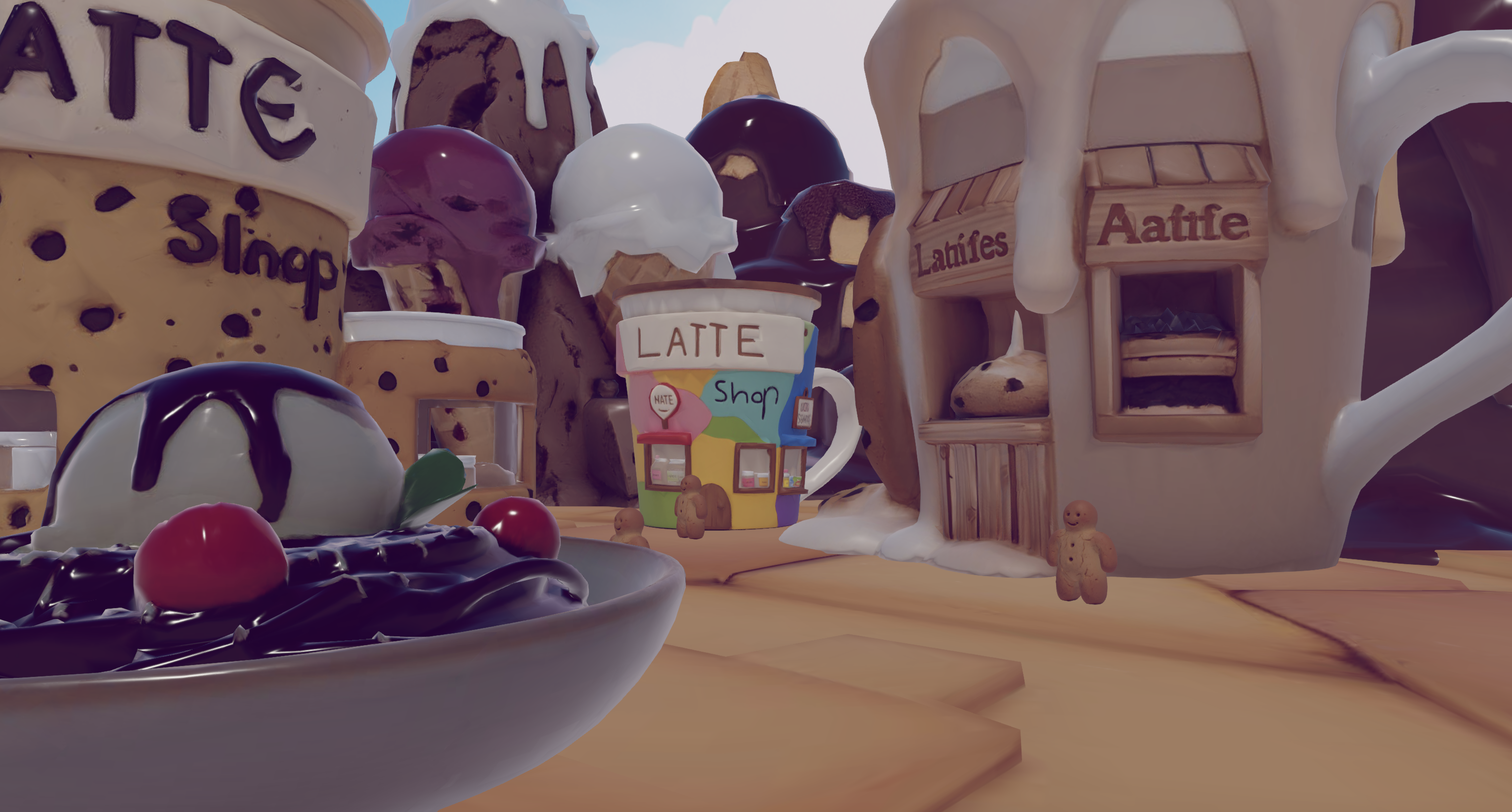
Nilo stands out if you want to skip manual cleanup and start with Roblox-ready assets. Its level of detail (LOD) system adjusts polygon counts on the fly, which means it handles that 20,000-triangle cap automatically. You spend more time building and less time decimating meshes. As one builder said in Nilo’s February 2026 survey, “I do not have to spend hours on 3D modeling the simplest things. Now I can use Nilo and do it in 15 seconds.”
Where OBJ often loses textures and attachments in transit, RBXMX keeps everything together. That difference matters when you care about Roblox-specific workflows. Nilo is in open beta today and focuses on asset creation done right, with full game creation and publishing on the roadmap.
Join Nilo’s open beta and try building and playing for free.
Frequently Asked Questions
What Is The Difference Between Importing And Exporting OBJ In Studio?
Importing brings an OBJ from your computer into Studio as a MeshPart. Exporting sends a model out of Studio to a file on your computer, using formats such as OBJ depending on your Studio version. You use the Import 3D entry points to bring files in and the File menu’s export options to send models out.
How Do I Import An OBJ File Into Roblox Studio?
The detailed steps sit in the import section above. In short, open your place, use Home > Import 3D (or Ctrl+M/Cmd+M), pick your OBJ file, set the Scale Unit to match your modeling units, preview, then click Import.
How Do I Export A Roblox Model As An OBJ File?
Select the model in Explorer, then use the File menu to choose an export option such as Export Selection, Export, or Advanced > Export as Obj. Pick .obj in the save dialog. If the export produces no file, check the troubleshooting section for the Play Test bug and other causes.
Is OBJ Or FBX Better For Roblox?
OBJ carries geometry and UVs only. FBX carries rigging and animation. Use OBJ for static props and environments. Use FBX for characters, rigged models, or anything animated. For Roblox-specific work, RBXMX is worth using whenever you want textures and attachments to travel with the model.
Why Does My OBJ Import At The Wrong Scale?
OBJ files skip unit information, so Studio cannot tell whether you modeled in meters, centimeters, or inches. In the import window, set the Scale Unit to the unit you used. Roblox’s importer also exposes a Scale Factor field for fine-tuning. Setting the correct unit before you import fixes most scale issues.
Why Are My Textures Missing After Importing An OBJ?
OBJ references textures through a companion .mtl file instead of embedding them. If the .mtl and texture images are not in the same folder as the OBJ, textures will not come through. Reapply them in Studio by uploading the images and assigning them to the MeshPart’s TextureID, or use a SurfaceAppearance object for PBR sets. Alternatively, export from your source tool as GLB or FBX, which can embed textures inside the file.
Why Is Export As OBJ Not Working In Roblox Studio?
Common causes include nothing selected in Explorer, no write permission to the save location, mesh-ownership limits on meshes you did not upload, or the Play Test export bug. Try the glTF exporter, copy the model into a new unsaved place, or fully reopen Studio before exporting again.
What Is .rbxmx And When Should I Use It Instead Of OBJ?
.rbxmx is Roblox’s native file format. It keeps textures and attachments in one file, instead of spreading them across separate files the way OBJ does. For Roblox-focused workflows, RBXMX is the more reliable choice whenever you want everything to stay together.
Ready to skip the OBJ cleanup? Start building in Nilo’s open beta.