Written by: Nuno Leiria, Founder & CEO @ Nilo | Last updated: July 20, 2026
Key Takeaways
- Roblox Studio’s steep learning curve with services, Luau scripting, and Blender cleanup stops many builders before they ship anything.
- Browser-based AI tools remove installs, scripting, and manual cleanup by generating and exporting game-ready assets from simple prompts.
- Nilo’s real-time LOD system automatically meets Roblox’s 10,000-triangle and 1024×1024 texture limits, turning hours of modeling into seconds.
- Vibe coding lets you describe game logic in plain language while still showing editable variables so you can learn real concepts.
- Browser-based AI tools like Nilo remove installation, scripting, and cleanup barriers, so you can start building from any device right away.
AI Browser Tools That Help You Skip Installs and Start Building
A new category of tools now removes the install, the scripting requirement, and the Blender detour entirely. These AI-assisted, browser-based 3D creation platforms run in a tab, use AI to generate and clean up assets, and export directly to platforms like Roblox.
The core promise stays simple. You describe what you want to build, the AI generates it, the platform cleans it up automatically, and you export a game-ready file. No downloads, no retopology, no Lua.
WebGPU reached default support in all major browsers by November 2025. That timing means the technical foundation is stable even though the W3C specification remained in Candidate Recommendation Draft status as of June 2026. That stability matters because all major desktop browsers now support it by default, including Chrome (113+), Edge (113+), Safari (26+), and Firefox (141+). Mobile support followed on Android Chrome (version 121+) and iOS Safari 26. This broad adoption lets browser-based 3D tools deliver real game-engine performance without a native install.
Nilo stands out in this category because it combines several pieces that many tools split apart. You get browser access with no installation, AI asset generation from text, sketches, or images, real-time retopology that meets Roblox’s polygon limits, vibe coding where you describe what you want your game to do, and direct Roblox export. In Nilo’s February 2026 survey, 93% of builders said they would recommend Nilo to a friend, 82% rated their experience as “Awesome” or “Good,” and 72% said Nilo makes their creative process easier “by a lot.”
Faster 3D Asset Creation Without Living in Blender
The traditional path to a game-ready 3D asset feels slow and technical. You sculpt in Blender, manually retopologize the mesh, unwrap UVs so textures apply correctly, then import everything into your game engine. That process can take 20–40 hours of skilled artist time for a single character.
AI generation tools shrink that timeline dramatically. Meshy generates low-poly assets in roughly 10–60 seconds. The output often still needs manual topology cleanup before it feels truly engine-ready. One Meshy-generated sci-fi helmet at around 42,000 triangles needed about 25 minutes of retopology and UV work in Blender to hit a usable poly budget for Unity.
When you evaluate AI asset generation tools, focus on a few concrete points.
- Generation speed: How long do you wait before you see a usable mesh from a text or image prompt?
- Topology quality out of the box: Does the mesh drop straight into a game, or do you still need to clean it up?
- Polycount control: Can you set a target triangle count before generation, or do you have to decimate afterward?
- Roblox compatibility: Does the tool automatically meet Roblox’s 10,000-triangle and 1024×1024 texture limits?
- Export formats: Does it output FBX, OBJ, or GLB, which Roblox Studio accepts?
Nilo stands out here because its real-time LOD system handles optimization without any manual decimation or cleanup work. You adjust a slider and the platform keeps your asset within platform limits. Builders reported in Nilo’s February 2026 survey, “I do not have to spend hours on 3D modeling the simplest things. Now I can use Nilo and do it in 15 seconds.” The platform also hides the complexity of multiple AI model providers such as Meshy, Tripo, Nano Banana, Cartwheel, and others behind one interface, so you always get a strong result without switching tools.

Natural-Language Logic Creation (Vibe Coding)
Once you have game-ready assets, the next barrier appears: making them interactive. Scripting is often the single biggest gap between building a scene and shipping a playable game. In Roblox Studio, every interactive element needs Luau, and even experienced developers report spending weeks on systems that still do not work correctly.
Natural-language logic creation, or vibe coding, flips that experience. Instead of writing code, you describe what you want to happen. You might say “make the player jump when they press space,” “add a door that opens when a player walks near it,” or “give this enemy a patrol route.” The AI writes the working code, and you see the result instantly in your 3D world.
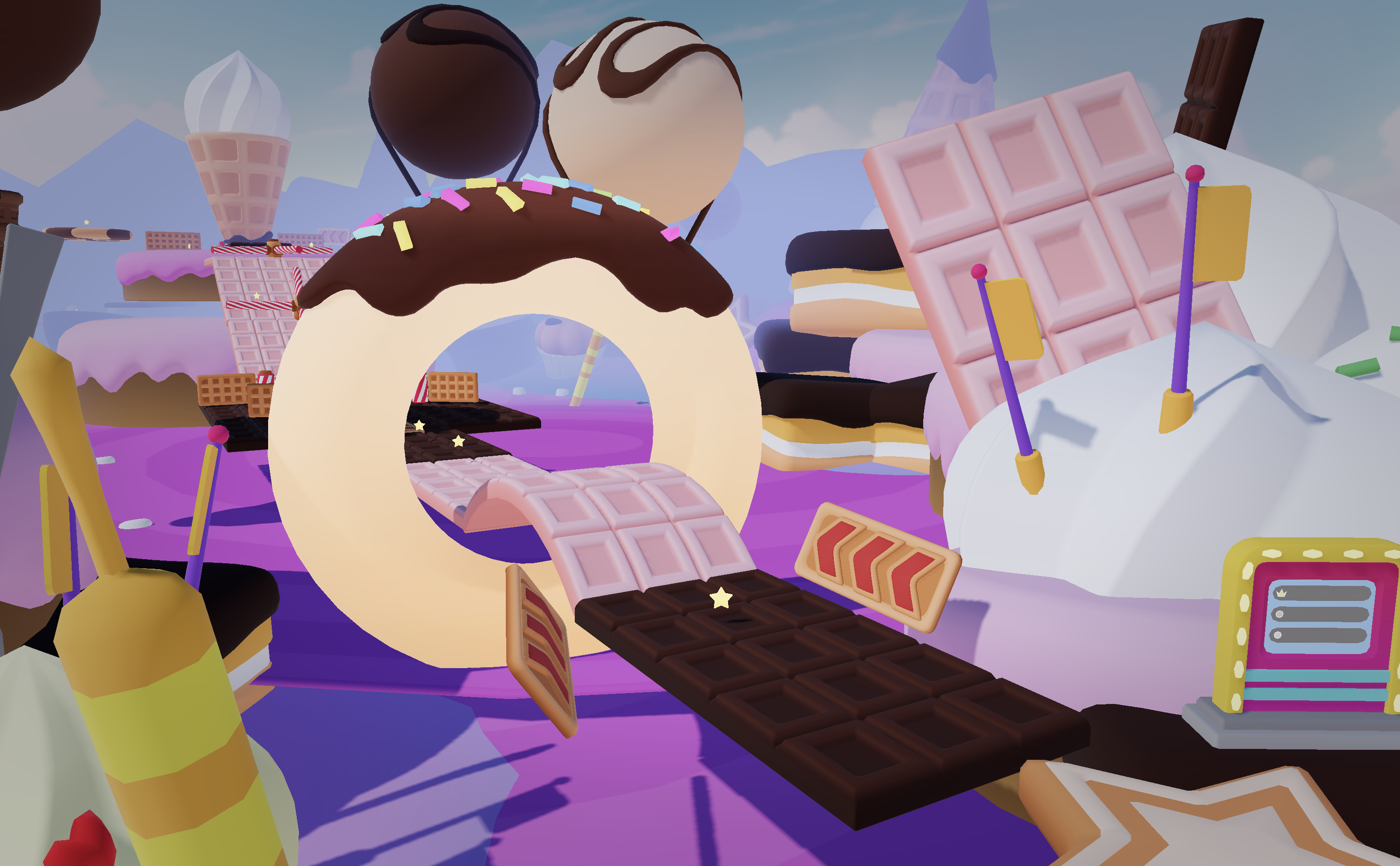
You still need to understand some trade-offs. Multiplayer networking and complex AI behaviors push the limits of natural-language tools, so advanced projects still benefit from traditional coding knowledge. The strongest documented natural-language successes appear in 2D arcade, puzzle, idle, and procedural-generation games. Real-time multiplayer netcode remains more complex. For most projects like obbies, tycoons, roleplay environments, and showcase worlds, vibe coding handles the logic without any scripting knowledge.
The way tools expose code also matters. Pure no-code tools that never show code create a hard ceiling. The moment you need a behavior the tool cannot express, you get stuck. Tools that generate real code underneath, which you can inspect and edit, give you a much higher ceiling. Nilo’s code editor shows you actual variables, such as changing “speed = 2” to “speed = 20,” so you can tinker and learn real programming concepts while you build. It feels similar to right-clicking “View Source” on a webpage, but for your game.
World Building, Scene Assembly, and Performance
World building means more than generating individual assets. You still need to assemble scenes, keep performance solid on different devices, and export everything cleanly to your target platform.
The table below compares desktop and browser-based workflows across setup time, polycount management, collaboration, and export compatibility. These four factors show where each approach either slows you down or helps you move faster.
| Factor | Desktop (Roblox Studio + Blender) | Browser-Based (e.g., Nilo) | What to look for |
|---|---|---|---|
| Setup time | Roblox Studio requires a minimum of 3 GB RAM (recommended 8 GB) with a multi-step download and install process, while Blender requires no installation and specifies no RAM minimum | Zero, you open a link and start | Check whether you can start building on any device immediately. |
| Polycount management | Manual decimation in Blender, with a real risk of exceeding Roblox’s 10,000-triangle cap | Automatic LOD slider handles optimization in real time | Look for tools that enforce Roblox limits automatically. |
| Collaboration | Team Create requires account verification and can be restricted for minors | Share a URL and anyone joins on desktop or mobile | Check whether your friends can join without accounts or installs. |
| Export compatibility | FBX, OBJ, GLB with manual scaling needed (1 Blender unit equals 100 Roblox studs by default) | FBX, OBJ, STL, glTF with Roblox-friendly defaults | Confirm that exports pass Roblox’s import checks without fixes. |
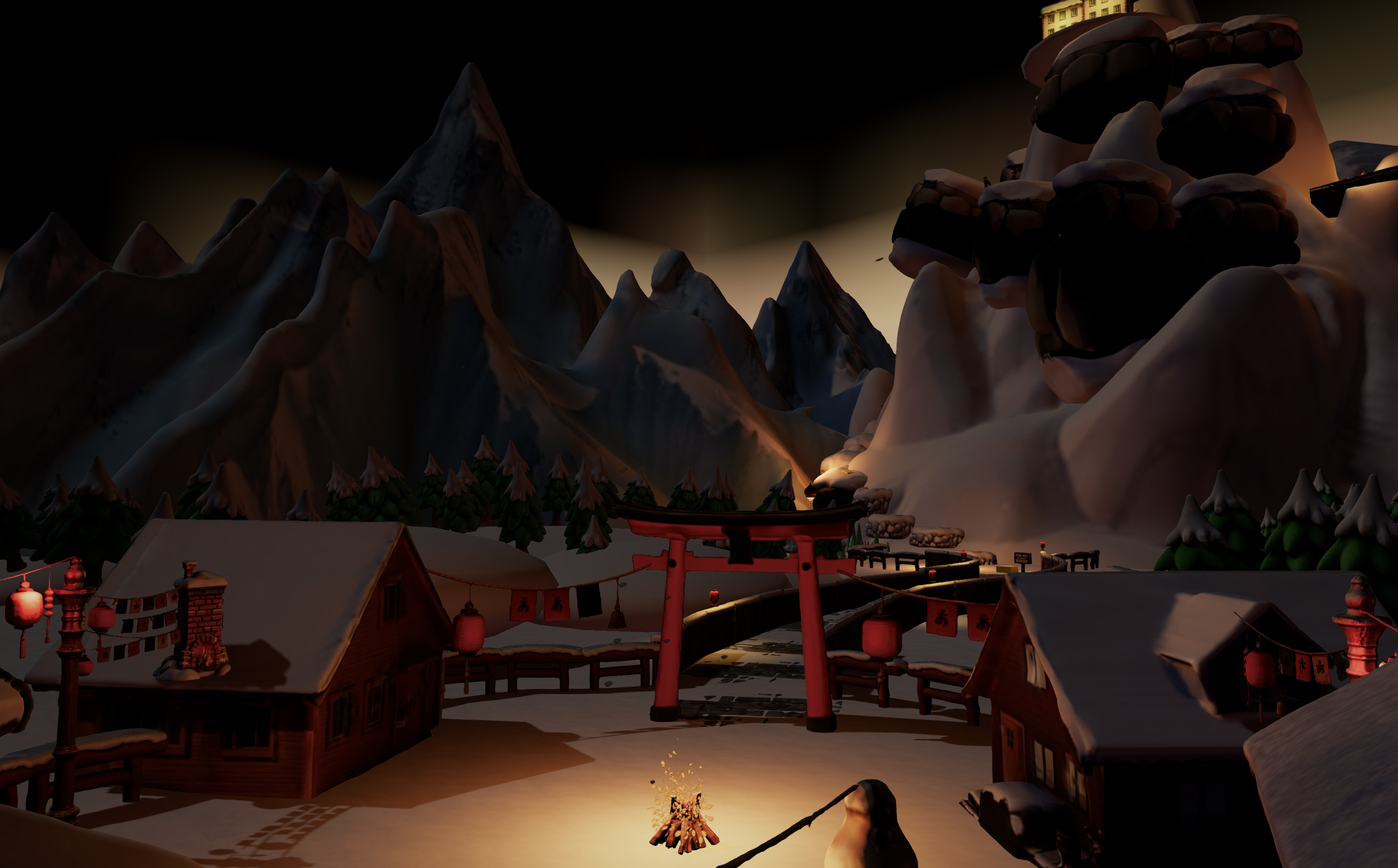
Nilo’s world-building environment runs on a custom game engine with C++ physics compiled to WebAssembly and accelerated by WebGPU. Physics and collisions work in real time by default, so you do not have to wire them up manually. Published worlds appear in a shareable feed, and you can clone and remix other builders’ worlds to iterate quickly.
How to Evaluate Creation Tools with Six Clear Criteria
When you choose a creation tool, the right fit depends on where you are in your journey and what you want to build. These six criteria give you a simple checklist.
- Onboarding ease: Aim to create something in your first session without a long tutorial. Tools that demand hours of setup before you build anything often kill momentum.
- Output quality: Check whether the AI generates assets you can actually use. Test with a specific asset type you care about, such as a character, prop, or environment piece.
- Export compatibility: Confirm that the tool exports in formats Roblox Studio accepts, like FBX, OBJ, or GLB, and that it meets Roblox’s polygon and texture limits automatically.
- Low-end device performance: Try it on your real device, whether that is a school Chromebook, a mid-range laptop, or a phone. Browser-based tools often shine here.
- Collaboration: See whether you can build with friends in real time and whether they need accounts or installs to join.
- Learning value: Look for tools that teach real concepts such as rigging, polygons, mesh topology, and physics instead of hiding everything behind a black box.
Different situations call for different strengths, so match tools to your current scenario.
- First-time creator: If you have never touched a 3D tool, you need zero-install access, AI generation from a text prompt, and a result you can share with friends the same day. Browser-based tools with natural-language generation usually give you that path.
- Roblox-focused builder: If you already build in Roblox Studio but spend too much time in Blender cleaning up AI assets, you need automatic retopology, Roblox-optimized export, and a tool that fits into your current workflow instead of replacing it.
- Collaborative team: If you and a couple of friends want to build a world together, you need real-time multiplayer creation, no install barriers for teammates, and a way to share progress with a simple link.
Nilo stands out for Roblox-focused builders and collaborative teams in particular. As one survey respondent noted, “I like how it feels like a good game engine rather than a vibe coding tool, with easy building and a good focus on being able to export and import content.”
Frequently Asked Questions
What exactly is Nilo, and is it a Roblox plugin?
Nilo is a standalone, browser-based AI platform for 3D creation, not a plugin. You create in your browser, then export directly to Roblox Studio. No plugin, no installation, no Blender required. You generate assets from text prompts, sketches, or images, clean them up with a real-time LOD slider, rig and animate with one click, and export in FBX, OBJ, STL, or glTF format. Nilo is currently in open beta and free to use with 1,000 Nilo Bits per month for AI generation.
How is Nilo different from prompt-to-game tools like Rosebud AI?
Prompt-to-game tools generate a full game from a text description, then usually stop there. If you want to tweak something, you return to a chat window and wait for a regeneration. Nilo behaves like a game engine first. You stand inside a 3D environment, build, adjust, playtest, and collaborate in real time. AI acts as your co-pilot instead of your replacement. You describe what you want, watch it appear in your world, then grab it and move it around yourself. The experience feels closer to playing a game than operating a tool.
Do I need to know how to code or use Blender to get started?
No. Nilo’s vibe coding editor accepts natural language prompts in any language. You describe what you want your game to do in plain English, Spanish, or another language, and it generates working code with real-time feedback in your 3D world. For 3D modeling, you describe what you want or draw a sketch, and Nilo generates the asset, then optimizes it automatically for Roblox’s polygon limits before you drag it into your world. The platform teaches concepts like rigging, polygons, and mesh topology through the interface, but you never need to open Blender or write Lua.
Can I export what I make in Nilo to Roblox and other platforms?
Yes. Nilo exports to FBX, OBJ, STL, and glTF, which Roblox Studio, Unity, Unreal Engine, Blender, and VRChat accept. Nilo’s LOD system automatically ensures exported assets meet these platform limits, so imports work without manual fixes. You can use Nilo as your full creation pipeline or as an asset creation tool that feeds into your existing Roblox Studio workflow. Everything you create is yours to use, publish, and monetize.
What are the real limitations of AI-assisted creation tools?
AI generation tools work very well for characters, props, environments, and stylized assets. They stay less reliable for high-precision mechanical parts that need exact engineering tolerances. For game logic, natural-language vibe coding handles common game types such as obbies, tycoons, roleplay environments, and showcases. Complex real-time multiplayer netcode and large stateful systems still benefit from traditional scripting knowledge for advanced projects. AI tools now handle most of the work that once required years of technical training, and they keep improving. Nilo’s model-agnostic architecture means it improves automatically as AI models get better.
Conclusion: Start Building What Is in Your Head Today
The gap between playing Roblox and creating your own world has always come from the tools. Roblox Studio expects installs, Lua scripting, and manual Blender cleanup, which stops many builders before they ship anything.
Browser-based, AI-assisted creation tools remove those barriers. You open a link, describe what you want to build, and start creating on any device with friends, without touching Blender or writing code.
Nilo stands out in this category because it brings everything into one place. You get AI asset generation from text, sketches, or images, real-time retopology that meets Roblox’s polygon limits, vibe coding for game logic, real-time multiplayer collaboration, and direct Roblox export. As the survey data showed, builders consistently report that Nilo removes friction from their creative process. One builder said, “There are no limits on what you can create, just type, draw or add in an image and you can generate, rig, customise and place a fully 3D model within minutes.”
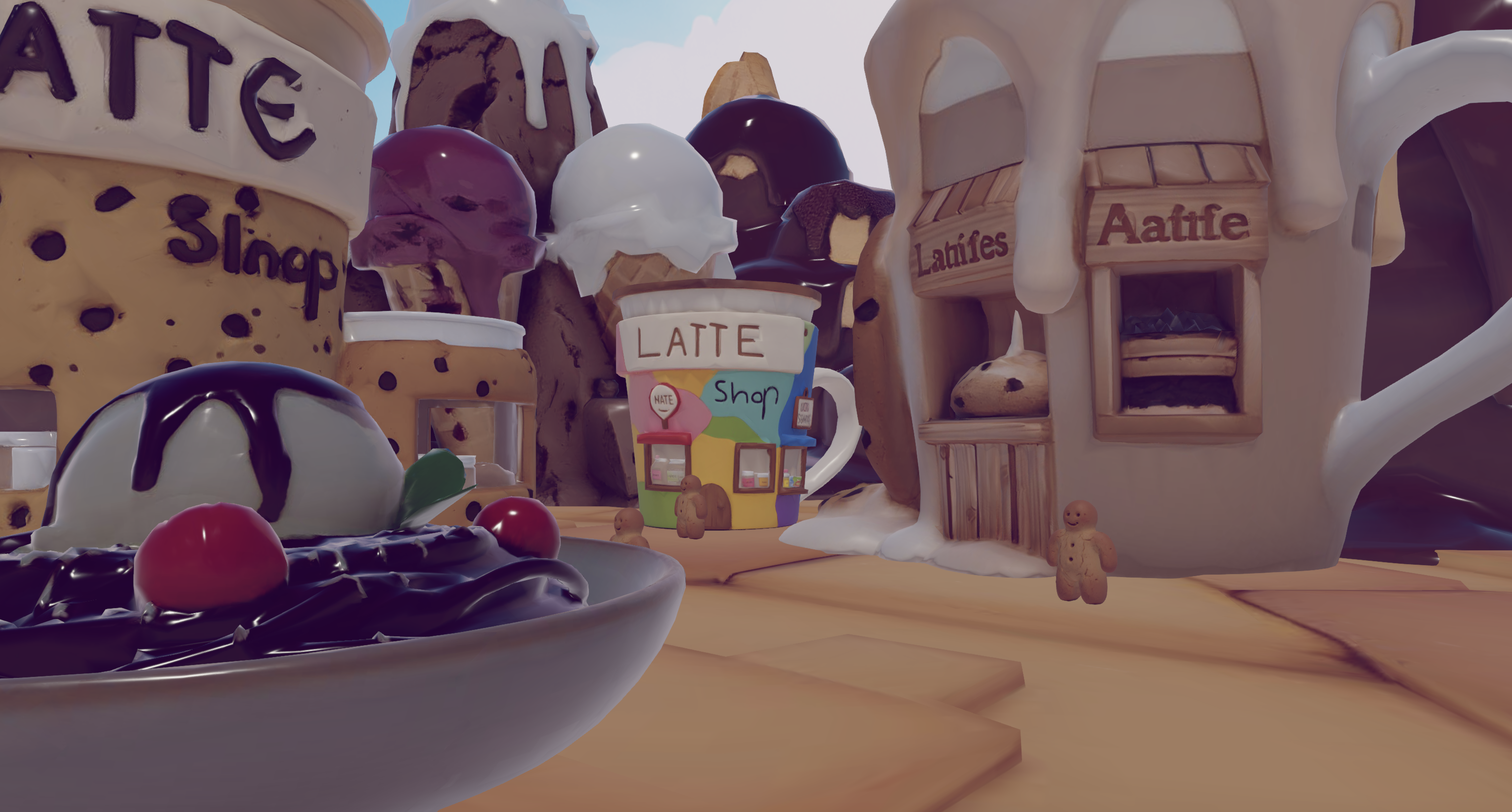
Your ideas deserve smoother tools. The world you have been imagining sits much closer than it used to.
Join Nilo’s open beta and start building the world you have in your head.