Written by: Nuno Leiria, Founder & CEO @ Nilo | Last updated: July 22, 2026
Key Takeaways
- This AI game generator tutorial walks you through a repeatable 4-step workflow: describe, generate, playtest, iterate. You turn a game idea into a Roblox-ready export without writing code or installing tools.
- Most builders get stuck on scripting, mesh work, rigging, and LOD limits. Natural language prompts now let you create playable 3D prototypes directly in the browser.
- The workflow covers writing a clear concept, generating individual assets with specific prompts, using one-click rigging and real-time LOD, and exporting FBX or glTF files that respect Roblox’s triangle cap.
- Browser-based playtesting lets you test the core loop, check 60 FPS performance, invite friends via link, and iterate quickly before exporting to Roblox Studio.
- Nilo handles the full pipeline in one browser environment, from generation to export, so you can join Nilo’s open beta and start building and playing for free.
Why Builders Like You Get Stuck Before You Even Start
You have a great game idea. Maybe it is a floating-island obby, a sci-fi tycoon, or a horror roleplay map. The moment you open Roblox Studio or search “how to make a 3D game,” you hit a wall.
The wall has a few layers. First comes scripting, which means writing code in Lua or another language to make objects move, react, and behave. Then you face mesh work. A mesh is the 3D shape of any object in your game, like the geometry of a sword or a building. Professional tools expect you to build and clean up meshes manually in software like Blender.
After that you reach rigging, the process of adding a skeleton to a character so it can move and animate. Finally, you deal with LOD (level of detail). LOD swaps high-polygon models for simpler versions at a distance so your game keeps running smoothly. Roblox caps assets at 10K–20K polygons, so anything over that limit will not import cleanly.
Most tutorials assume you already know these things. Most tools were built for professionals, not for aspiring builders or already builders like you who grew up in Minecraft and Roblox and just want to make something playable.
Natural language prompts change this picture. You can create 3D games by talking, texting, or even sending images to the AI. You do not need to learn Blender retopology or Lua scripting to build a working prototype today. Here is the exact workflow that makes that possible.
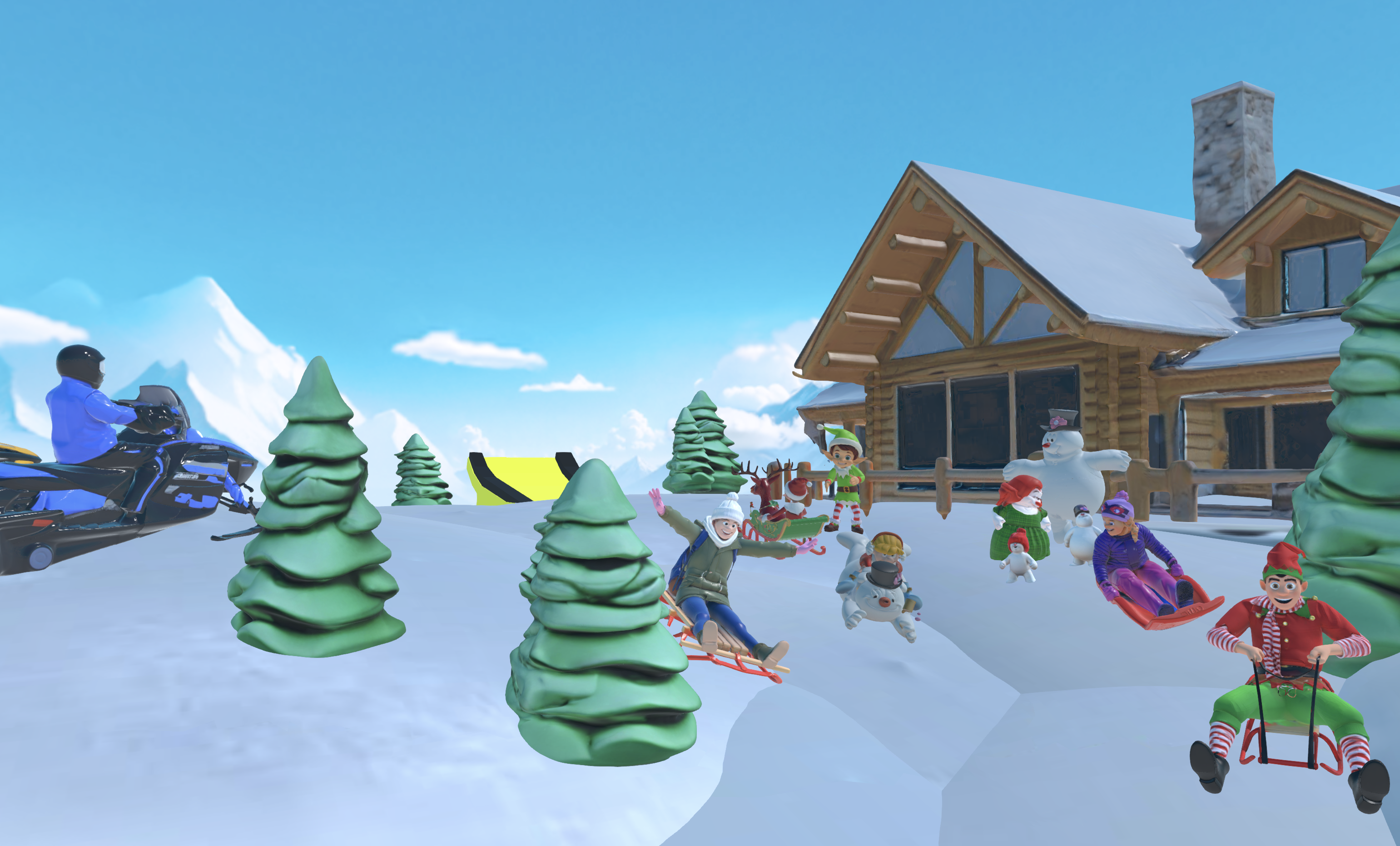
How to Make an AI-Generated Game
The core workflow has four steps: describe, generate, playtest, iterate. Each step builds on the last. You start with words and end with a file you can drop straight into Roblox Studio. Here is how each step works in practice.
Step 1 – Describe Your Game Idea Clearly
- Write a one-sentence concept. Keep it to subject, setting, and goal. Example: “A low-poly fantasy obby where players jump across floating islands and reach a glowing portal at the top.” Specific prompts produce better results than vague ones.
- List the key assets you need. Once you have your concept, break it into objects such as terrain pieces, a character, props, and obstacles. Each asset gets its own prompt later, so this list becomes your generation checklist.
- Choose a visual style. Before you start generating those assets, decide on a consistent look. Low poly, cartoon, sci-fi, horror, and classic or retro all produce different geometry and texture outputs. Locking this in now keeps your assets matching when you bring them together.
- Sketch your layout. Draw a rough top-down map on paper or in a drawing app. Platforms with a sketch-to-3D pipeline, where you draw in 2D, refine with AI, and drag the result into a 3D world, can turn that sketch directly into geometry. This approach skips the blank-canvas problem entirely.
- Note your target platform. If you plan to export to Roblox, your polygon budget per asset is 10K–20K triangles. Write that constraint down now so you do not generate assets you will have to rebuild later.
Step 2 – Generate 3D Assets and Game Logic
- Prompt each asset individually. Use the structure object, style, material, and detail level. Example: “a stylized wooden treasure chest with iron straps, low-poly, game asset.” Meshy’s text-to-3D documentation recommends this format for reliable results.
- Generate multiple variations. Most AI tools produce two to four candidates per prompt. Pick the strongest silhouette, not the most detailed one. You can add detail later, but fixing bad proportions takes much longer.
- Use one-click rigging for characters. Rigging manually in Blender can take hours or days. Platforms that offer one-click rigging attach a skeleton to your character automatically so it is ready for animation. For best results, generate characters in an A-pose or T-pose with arms out and body neutral before rigging.
- Apply real-time LOD. LOD automatically reduces polygon count as objects move farther from the camera. In Nilo, the LOD slider handles this on the fly. You set a target polycount and the system simplifies the mesh to match Roblox’s limits without manual retopology.
- Add game logic with natural language. A natural language code editor lets you type what you want to happen, such as “make the platform move left and right every two seconds,” and generates working code instantly. You can also tweak variables directly, like changing “speed = 2” to “speed = 20,” and learn how the logic works without understanding the full codebase.
- Build your world. Drag generated assets into your scene. Use primitive shapes like cubes, spheres, and ramps as placeholders for anything you have not generated yet. Physics and collisions run in real time, so you see immediately whether a jump feels right.
Step 3 – Playtest Instantly in Your Browser
- Hit play without leaving the browser. Browser-based playtesting means no export, no install, and no waiting. You are inside the world in seconds.
- Test the core loop first. Check whether you can complete the main action such as reaching the portal, collecting the items, or surviving the obstacle. If the core loop does not feel right, extra polish will not save it.
- Check frame rate and performance. Aim for a stable 60 FPS, which means the screen updates 60 times per second. If your game stutters, the most common cause is too many polygons. Use the LOD slider to reduce mesh complexity on heavy assets.
- Invite a friend via link. Share your world URL so anyone can click and play instantly, with no account required. Real-time multiplayer creation lets you and a friend build and test together from different devices.
- Take notes, not just screenshots. Write down exactly what felt wrong, such as “the second platform gap is too wide” or “the chest spawns inside the floor.” Specific notes make the next step faster.
- Test on mobile. Browser-based worlds run on mobile browsers too. If players will use phones, test now before you build dozens more assets.
Start playtesting your own game in the browser by joining Nilo’s open beta for free.
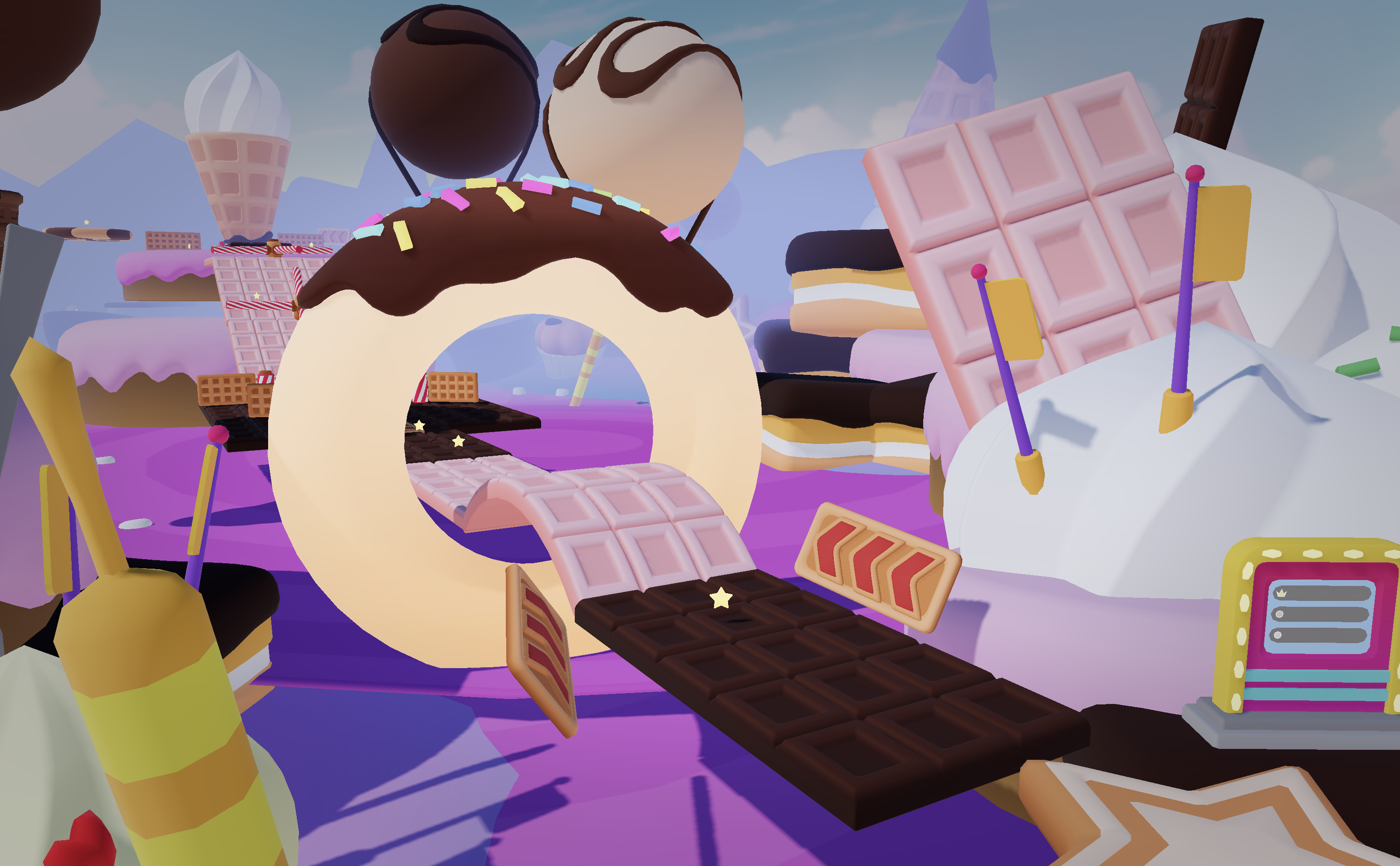
Step 4 – Iterate and Export Roblox-Ready Files
- Fix one thing at a time. Work through your playtest notes in order of impact. Change the platform gap before you change the sky color. Focused iteration moves you forward faster.
- Regenerate weak assets. If a prop looks wrong, re-prompt it with more specific language. Add constraints like “no floating parts,” “clean quad topology,” and “manifold geometry,” which means a mesh with no holes or flipped surfaces, to get cleaner results.
- Confirm polygon counts before export. Every asset going to Roblox should stay under the triangle cap mentioned earlier. Use the LOD system to bring anything over that limit down automatically.
- Export in the right format. For Roblox, export as FBX, which preserves mesh, rig, and animation data, or glTF/GLB, which is a modern compact format for real-time use. Both formats import cleanly into Roblox Studio.
- Import into Roblox Studio and verify. Check that materials, scale, and pivot points, which are the anchor points objects rotate around, look correct. Common issues include objects appearing at the wrong scale or accessories attaching to the wrong position. You usually fix these by adjusting the pivot before export.
- Publish or share your world. In Nilo, one-click publishing makes your world public on the Nilo feed. You can also keep it private as a staging build or clone it to start a new iteration without losing your original.
Export your first Roblox-ready prototype by joining Nilo’s open beta for free.
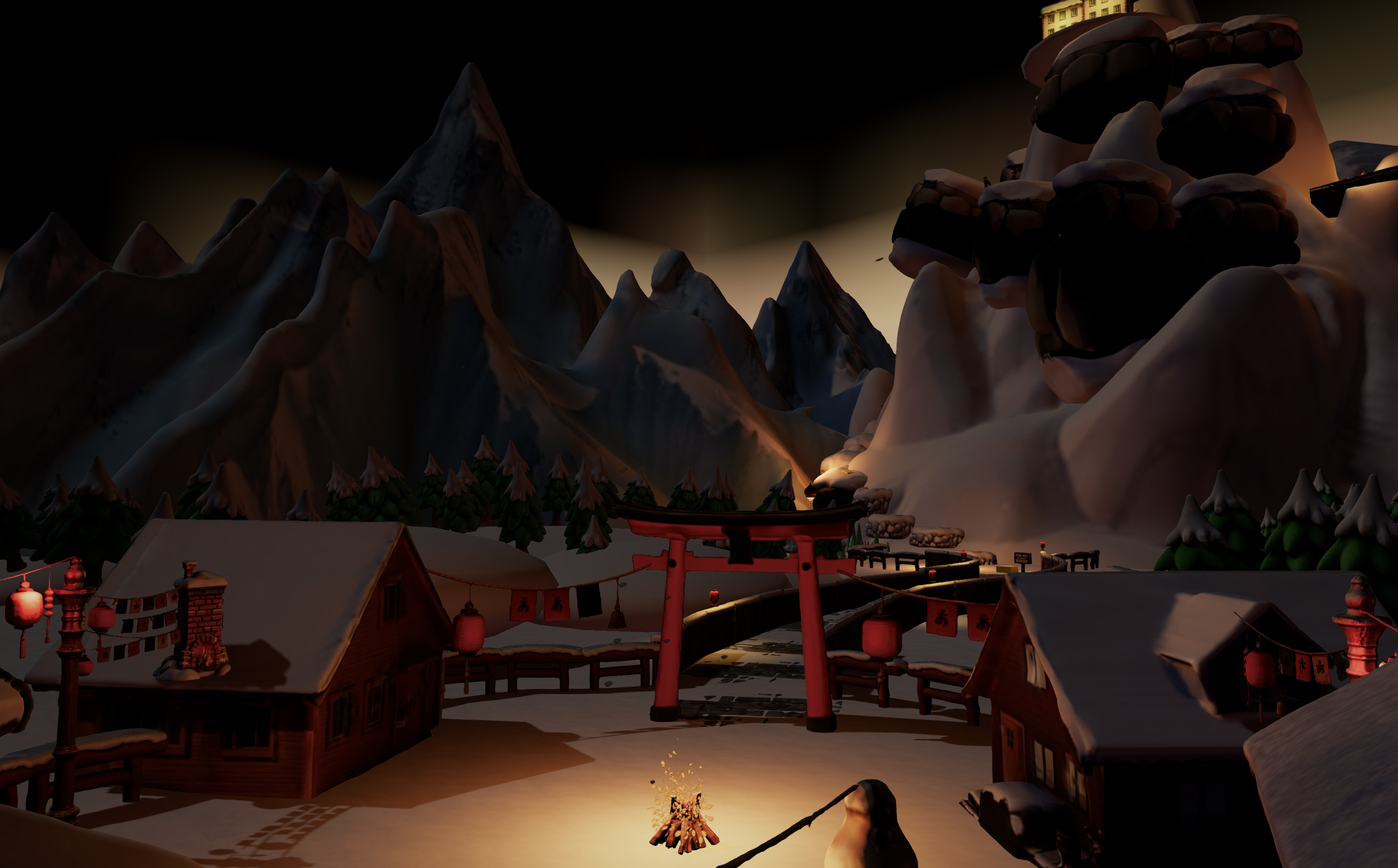
Choosing Tools for Your AI Game Workflow
The full creation model looks like this: ideate → generate → refine → test → export. Each stage has different tool requirements. The right choice depends on three connected factors: your performance budget sets technical limits, your collaboration needs shape whether you use browser or desktop tools, and your target platform decides your export format.
For your performance budget, define polygon and texture limits before you generate anything. Roblox’s triangle cap per asset is strict, and mobile targets are even tighter. Real-time 3D performance is typically limited by polycount, draw calls, and texture memory. A single uncompressed 4096×4096 RGBA texture consumes 64 MB of VRAM, which is too heavy for most mobile targets.
For collaboration, browser-based tools have a structural advantage. You share a URL and anyone joins instantly. Desktop tools like Roblox Studio and Blender require installation and file sharing, which breaks momentum. If you are building with friends, browser-native real-time collaboration removes that friction.
For target platform, your export format determines your workflow. FBX is the safe choice for animation pipelines. glTF or GLB is the modern standard for web and real-time use. Both formats are supported by Roblox, Unity, Unreal Engine, Blender, and VRChat.
Nilo stands out in this framework because it handles the full pipeline in one place. You generate, rig, animate, code, playtest, and export without switching tools. As one builder noted in Nilo’s February 2026 survey, “I like how it feels like a good game engine rather than a vibe coding tool, with easy building and a good focus on being able to export and import content.”
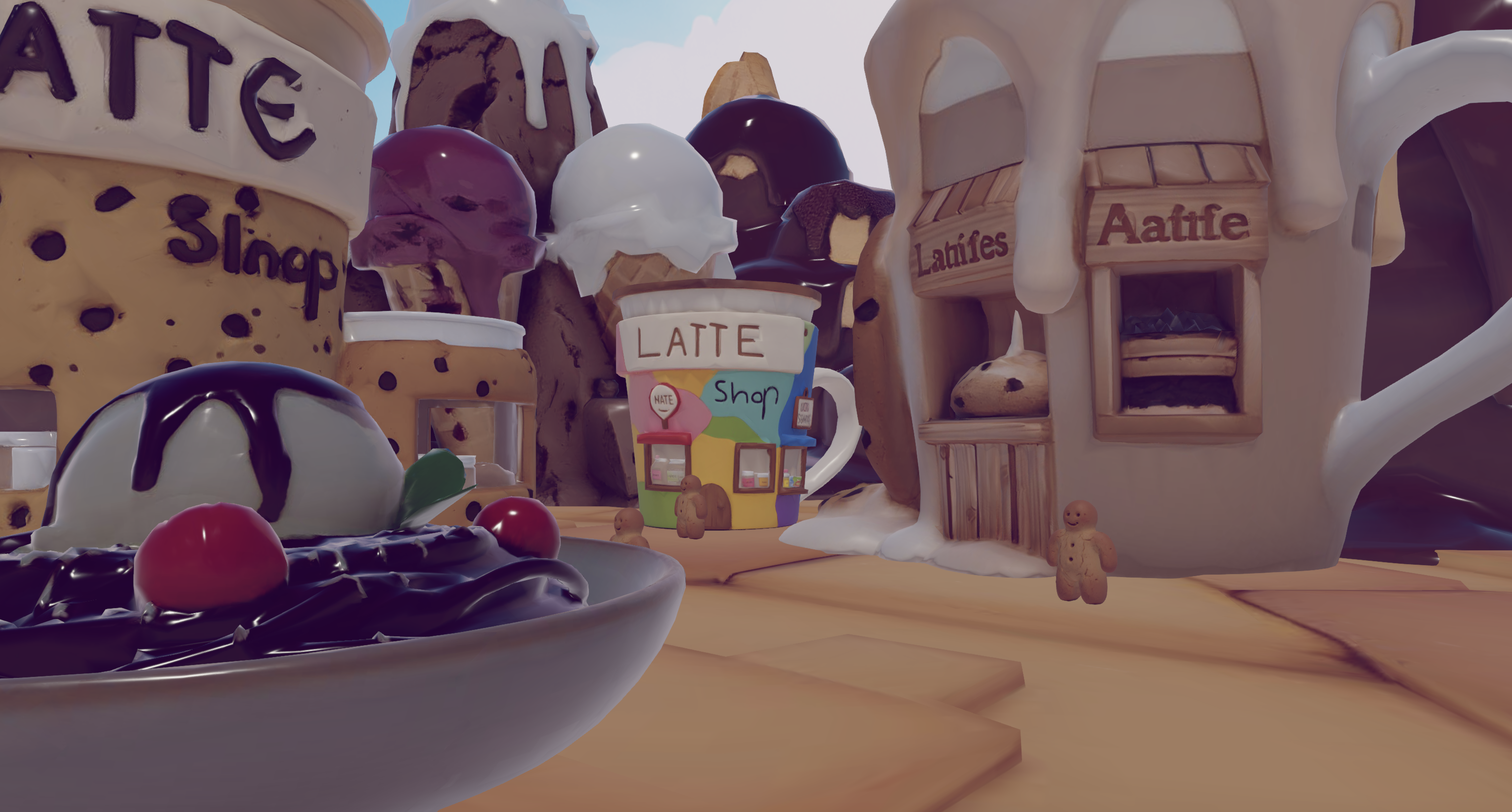
Tools like Meshy and Tripo offer strong text-to-3D generation and auto-rigging, but they sit at the asset-creation stage of the pipeline. You still need to move assets into a separate game engine to playtest and publish. Sloyd generates clean, game-ready props quickly but focuses on individual objects rather than full scenes. Rosebud AI and similar prompt-to-game tools generate a playable HTML5 page from a text prompt and output a web page rather than an editable game project, which limits meaningful iteration and export to platforms like Roblox.
Is It Legal to Make a Game with AI?
Making a game with AI tools is legal. The more specific question is whether your AI-assisted work qualifies for copyright protection.
The U.S. Copyright Office’s January 2025 Part 2 Report on Copyright and Artificial Intelligence confirms that purely AI-generated content is not copyrightable, and that the mere provision of prompts does not establish human authorship. On March 2, 2026, the U.S. Supreme Court denied certiorari in Thaler v. Perlmutter. That decision upheld the ruling that works generated entirely by AI without human creative contribution cannot be copyrighted.
This has a clear practical impact. If you type a prompt and use the raw output without modification, that asset has no copyright owner and competitors could legally copy it. If you make meaningful creative decisions, such as selecting among variants, editing the mesh, arranging assets into a level, or writing original narrative, those human-authored elements are protectable.
Creators should treat AI as an assistive tool by providing source ideas, creating prompts, and defining style parameters, then iteratively modify AI outputs through human editing, selection among variants, and transformation so the final assets reflect human judgment. Keep records as you work. Prompt histories, draft versions, and design notes all help demonstrate meaningful human creative control if ownership is ever challenged.
Can I Sell a Game I Made with AI?
Selling a game made with AI tools is permitted on most major platforms, with disclosure requirements you need to follow.
Valve requires Steam developers to complete an AI content survey disclosing whether games include pre-generated or live-generated AI content, with failure to disclose accurately risking removal from the store. The rules were significantly rewritten in January 2026 to focus on content consumed by players.
Epic’s Fab marketplace requires sellers to apply a “Created with AI” flag to AI-generated assets. Unity’s July 1, 2026 Terms of Service, Section 17.2, prohibit training machine learning models on Unity data without prior written authorization.
For Roblox specifically, any models, skins, or UGC items you create are yours to publish and monetize on the Roblox Marketplace. Roblox already pays over one billion dollars annually to creators, growing more than thirty percent year over year, so the commercial opportunity is real.
Use these best practices to protect your commercial rights:
- Document every creative decision with screenshots and version saves.
- Modify AI outputs rather than using raw generation as final assets.
- Disclose AI use accurately on every platform where you publish.
- Register copyright for human-authored elements while disclaiming AI-generated portions.
How to Pick the Best Free AI Game Generator for You
Instead of ranking tools, evaluate them against the criteria that matter for your workflow. Here is what to look for when you choose.
- Browser access with no install: Check whether you can open it in a tab and start building. Tools that require downloads add friction and exclude school or shared computers.
- 3D depth versus 2D only: Many free tools generate 2D HTML5 games or flat sprites. If you want Roblox-style 3D worlds, confirm the tool runs a real 3D engine, not just a canvas renderer.
- Rigging and animation: See whether the tool handles this automatically or requires a separate step in Mixamo or Blender.
- Real-time LOD and performance controls: Check whether the tool handles polygon reduction automatically or forces you to retopologize manually before export.
- Roblox export compatibility: Confirm that it exports FBX or glTF with clean topology that respects Roblox’s triangle limit.
- Playtesting in the same environment: Make sure you can test your game without leaving the tool and switching to a separate engine.
- Commercial rights on the free tier: Read the terms of service. Some tools restrict commercial use to paid plans.
Nilo stands out for builders targeting Roblox because it covers all of these criteria in one browser-based environment. You generate assets, rig and animate with one click, apply real-time LOD, playtest with friends via link, and export Roblox-ready FBX or glTF files without leaving the platform. Nilo optimizes polycount so models work directly in Roblox Studio and other platforms without extra steps. The survey results mentioned earlier show strong builder satisfaction across the full workflow.
Meshy and Tripo are strong standalone asset generators with auto-rigging and Roblox-compatible exports, but they do not include a game engine or browser playtesting. Sloyd generates clean props quickly but focuses on individual objects. Rosebud AI produces shareable HTML5 games from prompts but cannot support Steam, real 3D, or transferable project files. Evaluate which combination of these capabilities matches your current stage as a builder.
Common Challenges and How to Fix Them
These are the most frequent problems builders run into, with early signs, likely causes, and practical fixes.
Poor output quality, such as melted look, asymmetry, or floating parts: Early sign: the generated mesh looks distorted or has geometry that does not match your prompt. Likely cause: the prompt is too vague or references conflicting styles. Fix: restructure your prompt as subject, style, material, and technical constraints. Add “clean quad topology, manifold geometry, no floating parts” to filter out broken outputs. Generate three or four variations and select the best silhouette rather than the most detailed result.
Polygon count too high for Roblox: Early sign: the asset imports into Roblox Studio with an error or causes lag. Likely cause: AI-generated models frequently contain dense triangulated geometry that can reach tens of millions of triangles compared to the thousands a game engine needs. Fix: use the LOD slider before export to bring the mesh under the triangle limit mentioned earlier. In Nilo, this happens automatically in real time.
Export errors or missing materials: Early sign: the FBX or glTF file imports into Roblox Studio without textures or with incorrect colors. Likely cause: collision masks, material slots, or UV maps were lost during export. Fix: export a simple test asset first, confirm it imports correctly, then export the full scene. Check that PBR maps such as base color, normal, and roughness are embedded in the file rather than linked externally.
Rigging deformation artifacts: Early sign: animating a character causes unintended full-body deformation or pivot errors on accessories. Likely cause: the character was generated in a non-neutral pose, or the auto-rig did not detect the skeleton correctly. Fix: regenerate the character in A-pose or T-pose before rigging. Check pivot points on accessories before export.
Unclear prompts producing random results: Early sign: each generation looks completely different from the last. Likely cause: the prompt lacks specificity. Fix: lock your look with a reference image after the first generation you like, then use image-to-3D for subsequent assets to maintain visual consistency across your world.
Measuring Whether Your Prototype Works
Use these objective indicators to see whether your prototype is on track.
- Reduced creation time: A single asset that used to take hours in Blender should take minutes. Builders in Nilo’s February 2026 survey reported generating assets “in 15 seconds” versus “5 hours” for the same object in traditional tools.
- Clean exports: Your FBX or glTF imports into Roblox Studio on the first attempt, with materials, scale, and pivot points intact.
- Stable FPS: Your game runs at a consistent 60 FPS in the browser playtest and after import into Roblox Studio.
- Successful Roblox import: Assets pass Roblox’s performance checks without manual retopology or extra polycount fixes.
- Friend feedback: Someone who did not build the game can complete the core loop without instructions. If they get stuck, the design needs iteration, not more assets.
Going Further With AI-Assisted Game Building
Once your prototype works, three directions open up.
Scaling your asset library: Use a single reference image to generate a full asset pack, including terrain pieces, props, and characters that share the same visual style. Nilo’s “Create Asset Packs” feature generates a matched set from one image, keeping your world visually consistent without re-prompting every object individually.
Reusing and remixing: Clone your world to create a new version without losing the original. This method is the fastest way to test a major design change. You clone, experiment, compare, and keep the better version.
Moving to multiplayer collaboration: Share your world URL with a collaborator and build together in real time. One builder can work on terrain while another generates props. The GDC 2026 State of the Game Industry survey found that 36% of game professionals use generative AI. Collaborative browser-based tools accelerate that process further by removing the file-sharing and version-management overhead of desktop workflows.
As your skills grow, you can start tinkering with the code variables the natural language editor generates. You change values, add conditions, and learn how game logic actually works. It feels like right-clicking “View Source” on a webpage, but for your own game.
Frequently Asked Questions
Do I need to know how to code to use an AI game generator?
No. Tools with a natural language code editor let you describe what you want to happen in plain language, such as “make the enemy patrol back and forth,” and generate working code instantly. You can also see and edit the variables the AI creates. This approach is a great way to start learning how game logic works without writing code from scratch.
Can I really export to Roblox without using Blender?
Yes, if the tool you use includes real-time LOD and Roblox-optimized export. Nilo’s LOD system automatically reduces polygon counts to meet Roblox’s requirements and exports in FBX or glTF format that imports directly into Roblox Studio. The key is that optimization happens inside the creation tool, not as a separate Blender step.
How long does it take to build a first prototype?
A basic playable prototype with a character, a few terrain pieces, and a simple game loop can be built in under an hour using a browser-based AI workflow. Builders in Nilo’s February 2026 survey reported generating individual assets in 15–20 seconds versus hours in traditional tools. The total time depends on how many assets your concept needs and how much iteration your game loop requires.
What is the difference between Nilo and prompt-to-game tools like Rosebud AI?
Prompt-to-game tools generate a playable HTML5 page from a text prompt. That output is useful for testing whether a game loop is fun, but the result is a web page. You cannot meaningfully edit it, export it to Roblox, or build on top of it. Nilo works as a game engine first. You are inside a 3D environment, building and playtesting in real time, with AI as a co-pilot rather than the sole author. You can export to Roblox, Unity, Blender, and other platforms in standard formats.
Is Nilo free to use?
Yes. Nilo is currently in open beta with a free tier that includes 1,000 Nilo Bits per month, which are credits used for AI generation, export, and creation. Many core building features require no Bits at all. You can sign up, start building, and export to Roblox without spending a bunch of money.