Written by: Nuno Leiria, Founder & CEO @ Nilo | Last updated: June 26, 2026
Key Takeaways for Aspiring Roblox Builders
- Switching between separate modeling and scripting tools breaks your creative momentum and often makes you abandon projects.
- Browser-based, AI-assisted 3D game creation platforms keep everything in one place, so you avoid downloads, installs, and app switching.
- AI text-to-3D with automatic retopology and LOD systems cuts hours of manual cleanup and helps your assets respect Roblox polygon limits.
- Natural language prompts (vibe coding) let you create game logic in plain language while still giving you a real code editor to learn and fine-tune.
- If you want to stay in flow from idea to playable game, try Nilo’s open beta and start building and playing for free.
Why Tool Switching Kills Your Creative Flow
Momentum matters more than most tools admit. When you are in flow, placing objects and watching a world appear, every interruption hurts. You pause to switch apps, relearn a UI, or debug an import error, and your motivation drops fast.
For builders who are still learning, every context switch also hits your confidence. You were building something cool. Now you are stuck on a polygon count error. That moment is where many projects quietly die. According to a February 2026 Nilo survey, builders describe spending hours on tasks like manual 3D modeling that should take seconds. One builder put it plainly: “Picture yourself, frustrated because you spent the last 5 hours 3D modeling a shipping container.”
Across skill levels, from first-time creators to aspiring builders working on full maps, the pattern repeats. The tools are powerful, but the gaps between them are where creativity goes to die.
AI-Assisted Browser Tools That Remove Friction
To eliminate these gaps, a new category of tools has emerged: AI-assisted, browser-based 3D game creation platforms that solve the context-switching problem directly. Instead of juggling a modeling tool, a code editor, and a game engine, you open one browser tab and do everything there. No downloads, no installations, no switching.
When you look at tools in this category, focus on five key dimensions:
- Accessibility, meaning you can start creating immediately on any device without setup.
- Creation flow, meaning the tool keeps you inside one environment from idea to playable world.
- Collaboration, meaning you can build with friends in real time, the same way you play together.
- Performance, meaning the tool handles optimization for you instead of dumping that work on your plate.
- Portability, meaning you can export your work to Roblox, Unity, or other platforms without friction.
Key Capabilities Builders Like You Should Check
Fast 3D Asset Generation and Cleanup
The main challenge is simple: creating a 3D model from scratch usually means months of learning Blender or similar tools. You might have strong ideas but feel blocked because the skill gap is huge.
AI text-to-3D helps close that gap. You type what you want, like a sci-fi weapon, a fantasy prop, or a character, and you get a 3D model in seconds. Most standalone AI tools such as Meshy or Sloyd trade speed for messy output. You often see geometric defects, weird symmetry, or textures that feel off. You then spend 30 minutes or more in Blender doing retopology, which means cleaning up the mesh so it behaves in a game engine.
Nilo stands out here by hiding multiple AI model providers, including Meshy, Tripo, Nano Banana, Cartwheel, and others, behind one interface. You stay in one place while Nilo routes prompts to the right model. Real-time retopology handles cleanup automatically. As one builder noted in the February 2026 Nilo survey, “I do not have to spend hours on 3D modeling the simplest things. Now I can use Nilo and do it in 15 seconds.”

Natural Language Vibe Coding Instead of Raw Scripting
Scripting, which means writing code to make objects move and react, is the biggest barrier for many builders. Roblox Studio expects Lua. Unity expects C#. Learning either from scratch can take months, and tutorials often feel confusing.
Natural language prompts remove that wall. You create game logic by talking, texting, or even sending images to the AI. Instead of writing code, you describe what you want, such as “make this door open when a player walks near it.” The AI generates working code, and you see the result instantly in your 3D world.
This approach, often called vibe coding, trades some precision for speed and accessibility. For aspiring builders who are not professional developers, that trade usually feels worth it. Tools like Rosebud AI focus on code generation but do not include a full game engine underneath. Nilo’s built-in code editor supports vibe coding with real-time 3D feedback, and you can open the actual code and tweak values directly. Changing “speed = 2” to “speed = 20” teaches real programming concepts while you build.
World Building With Physics That Just Work
World building goes far beyond dropping objects into a scene. You need physics that behave correctly, lighting you can tune, and an environment that feels alive. Many browser-based tools offer basic scene assembly but expect you to wire up collisions, animations, and interactions by hand.
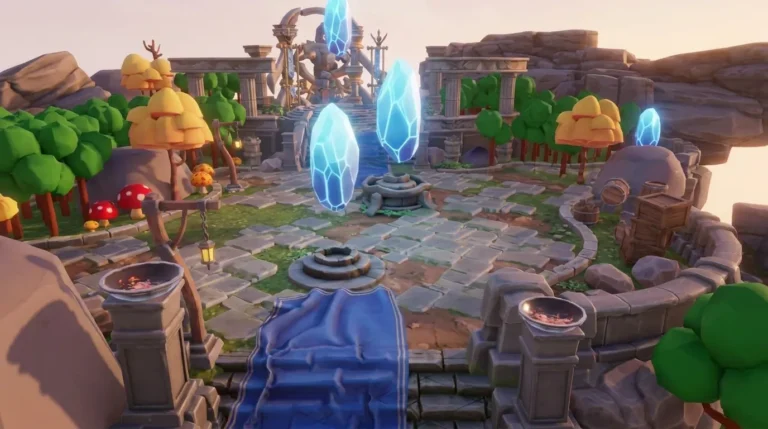
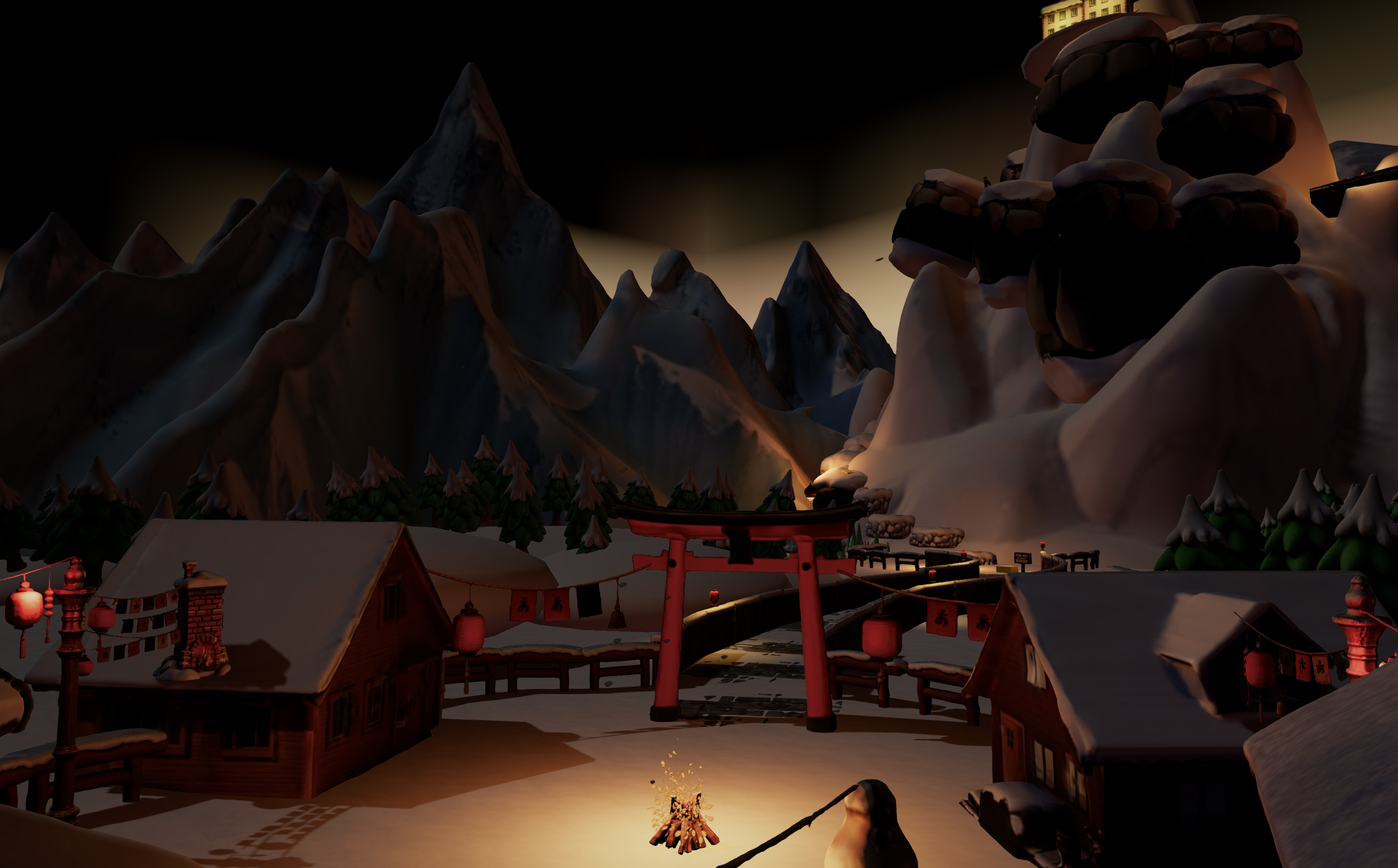
Nilo’s world-building environment runs on a custom game engine built with C++ physics compiled to WebAssembly and rendered with WebGPU graphics. Everything is interactive and dynamic by default. Objects move, bump, and react in real time without extra setup. A radial menu lets you create objects quickly, and an inspector panel gives you detailed control. The whole experience feels closer to playing a game than operating a rigid tool.
Handling Roblox Limits and Performance
Roblox enforces strict performance limits. Models usually need to stay around 10,000 to 20,000 polygons, and textures top out at 1024×1024 pixels. When a model is not built with those limits in mind, you often end up doing manual cleanup in Blender before anything works well in Roblox Studio.
LOD, or level of detail, systems help by adjusting polygon counts based on how close the camera is to an object. Here is how some main options compare on Roblox-focused dimensions:
| Tool | Export Formats | Polygon Limit Handling | LOD System |
|---|---|---|---|
| Nilo | FBX, OBJ, STL, glTF | Auto-optimized to Roblox caps (10K–20K) | Real-time, automatic |
| Vectary | OBJ, FBX, glTF, USDZ | Requires manual optimization | None built-in |
| Sloyd | FBX, OBJ, and glTF (as GLB) | Automatic LOD optimization | Automatic |
| PlayCanvas | glTF, FBX (via import) | Manual, developer-managed optimization | Manual optimization |
Nilo’s LOD system adjusts polygon counts automatically, so you stay focused on building, not counting triangles. As another builder from the same survey noted, “I like how it feels like a good game engine rather than a vibe coding tool, with easy building and a good focus on being able to export and import content.”
Try automatic optimization in Nilo’s free open beta.
Real-Time Collaboration and Sharing With Friends
Game creation feels more fun when you build with friends. Most creation tools still assume solo work. You build alone, then share a finished file later, which feels nothing like how you actually play games together.
Real-time multiplayer creation flips that pattern. You and your friends can build in the same world at the same time by sharing a link. You avoid file transfers and version conflicts. Nilo supports this across desktop and mobile browsers, with Discord and Telegram integration. Nilo’s open beta makes this real-time building available to anyone who signs up for free.
Exporting to Roblox, Unity, and Beyond
A browser-based tool that traps your work inside its own ecosystem does not help much. You need to move your models into Roblox Studio, Unity, Blender, or whatever tool fits your next step.
Standard formats such as FBX, OBJ, STL, and glTF keep your work portable. Nilo exports all four, and the exported files are already tuned for Roblox’s polygon caps, so you avoid late cleanup. Rigged and animated characters export ready to use. You can treat Nilo as an asset pipeline for Roblox Studio or build and publish full worlds entirely inside Nilo.
How To Choose a Browser-Based 3D Tool
When you compare browser-based 3D creation tools, use these criteria as a simple checklist. Each one covers a point where traditional workflows often break.
- Onboarding speed, which answers whether you can create something real in your first session without a tutorial. This keeps you motivated past your first attempt.
- Output quality for Roblox caps, which shows if the tool produces models that meet Roblox’s limits without manual cleanup. Test this by exporting a generated asset and importing it straight into Roblox Studio.
- Export compatibility, which covers whether the tool exports FBX or glTF and whether you can import that file into Roblox Studio, Unity, or Blender without errors.
- Collaboration needs, which matter if you want to build with friends. Check whether real-time multiplayer creation is built in or if you need awkward workarounds.
- Learning value, which decides whether the tool teaches you real concepts like rigging, polygons, and mesh topology or hides everything behind a black box.
Two Browser Workflows You Can Try Today
Workflow 1: Moving From Vectary to Roblox-Ready Assets
Imagine you have been using Vectary to model props and environments in your browser. The modeling feels smooth, but every time you bring something into Roblox Studio, you hit the same wall. You export the file, open Blender to clean up topology, re-export, import into Roblox Studio, see that the polygon count is too high, then go back to Blender and repeat.
You can switch to a different flow. Use Nilo’s AI text-to-3D or sketch-to-3D pipeline to create your prop inside a browser environment that already connects to a game engine. The LOD system handles polygon optimization for you. When you are ready, export with one click. The file is Roblox-ready, so you skip Blender and stay in creative flow from first idea to Roblox import.
Workflow 2: Small Team Building Together in Real Time
Now picture you and two friends building a game together. One focuses on environments, one on characters, and one on game logic. In a traditional setup, you pass files back and forth, merge changes by hand, and wait for each other before you can move on.
A browser-based real-time collaboration flow feels very different. You share a link, and all three of you enter the same world at once. One builder generates a character with a text prompt, another assembles the environment, and the third uses vibe coding to add game logic. Everyone sees changes instantly. When the world feels ready, you publish with one click and share the link with anyone who wants to play.
Frequently Asked Questions
What exactly is a “Vectary alternative” for browser 3D games?
Vectary is a browser-based 3D modeling and design tool that works well for visual assets but does not handle game logic, physics, or interactivity. A Vectary alternative for browser 3D games gives you both modeling and game creation in one browser environment. You build, script, and test in the same place instead of exporting to a separate game engine to make things playable.
What is the real difference between browser-based and desktop tools for game creation?
Desktop tools such as Roblox Studio and Blender need installation, specific hardware, and setup time. Browser-based tools open in a tab on almost any device with no downloads. For collaboration, browser tools make sharing simple because you send a link instead of a file. In the past, performance was the trade-off, but modern browser tech like WebAssembly and WebGPU has closed much of that gap.
What are the limitations of AI-generated 3D assets for Roblox?
AI-generated assets often need refinement. The same quality issues discussed earlier, such as defects, asymmetry, and texture problems, still apply. Many standalone AI tools also require manual cleanup in Blender before assets respect Roblox’s strict limits mentioned above. Tools that include automatic retopology and LOD systems reduce these problems, and you should always test a tool’s output by importing straight into Roblox Studio before you commit to a workflow.
Can I own and sell what I create in browser-based tools?
Ownership always depends on the platform’s terms of service. With Nilo, any models, skins, or UGC items you create are yours to use, publish, and monetize, including on the Roblox Marketplace. You should still read the terms of any tool you use before publishing or selling assets created with it.
Do I need to know how to code to use AI-assisted game creation tools?
You do not need to know how to code before you start. Tools that support natural language prompts, or vibe coding, let you describe what you want in plain language, such as “make this platform move up and down,” and the AI generates working code. You can then learn by tinkering with that code, changing values and watching what happens in real time. This feels like a more approachable entry point than learning Lua or C# from scratch.
Start vibe coding in Nilo’s open beta, no programming experience required.
Next Step if You Want to Stay in Flow
The friction between modeling and scripting slows many builders down, but you can avoid it. Browser-based, AI-assisted 3D game creation tools remove the gaps that break your focus. You skip constant tool-switching, heavy Blender cleanup, and long waits to find a scripter before your game can do anything interesting.
Nilo stands out as an option that keeps everything in one playable environment. You generate assets, rig and animate with one click, vibe code your game logic, collaborate with friends in real time, and export directly to Roblox, all inside your browser. In the February 2026 Nilo survey, 93% of builders said they would recommend Nilo to a friend, and 82% rated their experience as “Awesome” or “Good.”
Your ideas deserve tools that keep up with them. Explore Nilo’s open beta and build your next world for free.