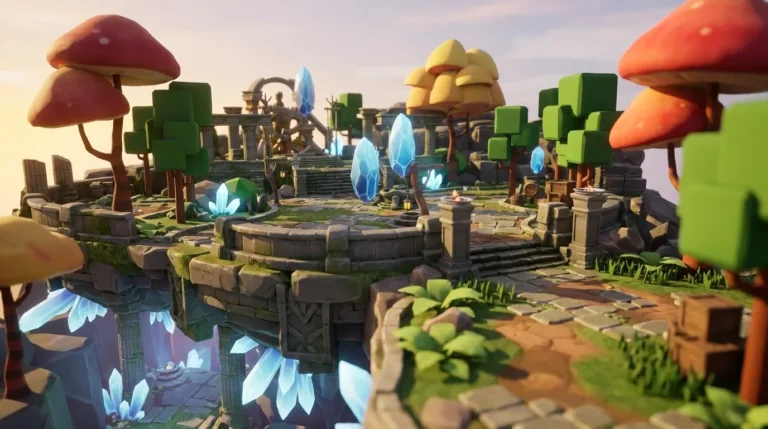
Written by: Nuno Leiria, Founder & CEO @ Nilo
Key Takeaways
- Bitmagic turns text prompts into playable 3D browser games, with no downloads and no coding.
- The platform splits into three tiers: Mini for quick prototypes, Game Lab for creators with IP rights, and the GDK for developers who want editable engine code.
- Many builders hit a “second-iteration problem,” where changing one element breaks others and each regeneration burns Sparks credits.
- Bitmagic works well for fast prototypes and mini-game demos, but export is web-only and you get less precise control than in traditional engines.
- Keep this in mind as you read: the guide ends with what to look for when prompt-to-game stops being enough.
See how an engine-first browser builder compares
How Bitmagic’s Prompt-To-Game Loop Works
Bitmagic follows a simple loop once you start building.
You describe a game in text, and Bitmagic generates it, including code, assets, physics, and animations. The whole thing runs in your browser, so you and your friends play through a link instead of installing anything. After the first build, you type follow-up prompts to tweak the game inside the same browser session.
Bitmagic is a Finnish AI startup founded in 2022, originally called Roleverse, that pivoted from an AI game-master RPG concept to a full prompt-to-game platform. The engine started on Unity. The team later built a custom WebGL engine in TypeScript and Three.js so the AI could freely modify game code on request, changing rules, environments, mechanics, and assets in real time.
The second-iteration problem sits at the center of this loop. The first prompt usually gives you something playable. Then you ask for faster enemies and suddenly the camera breaks, the level resets, or a mechanic disappears. Each regeneration costs Sparks, Bitmagic’s credit currency, and adds waiting time. This pattern shows up in most generation-first tools because the AI keeps rewriting code instead of letting you adjust clear parameters.
Try a browser game maker that runs with no download
Bitmagic Mini vs Bitmagic Game Lab vs Bitmagic GDK
Now that you know how the core loop works, the next step is choosing which Bitmagic product actually fits you. The platform splits into three tiers, and most comparison pages do not map them side by side.
Bitmagic Mini is a lightweight, browser- and mobile-playable WebGL game engine that generates animated characters, NPCs, environments, and a unique mission from simple text prompts. It gives you the fastest path from idea to something you can run around in.
Bitmagic Game Lab is the fuller browser-based creation environment and a selective, application-based creator program where accepted creators can share, play, and monetize their prompt-generated games. Game Lab creators keep full IP rights to their creations and can monetize however they choose. The credit system runs in three tiers: Tier 1 gives 10,000 Sparks worth $100, Tier 2 unlocks 20,000 more Sparks ($200) after you spend Tier 1 and publish on Discord, and Tier 3 adds 70,000 Sparks ($700) for impressive projects, for a total of $1,000 in credits.
Bitmagic GDK (Game Development Kit) is the developer-focused tier. It ships the engine as editable TypeScript source code inside the project and connects to AI coding agents such as Claude Code, Codex, and Cursor. This tier targets builders who want to work with code and agents instead of only prompts.
Bitmagic Pro is required to use the GDK. If a Pro subscription ends, GDK access, Sparks allowance, and engine upgrades all stop, but you keep licenses for engine versions you already acquired. The browser Creator and the GDK stay separate, with different requirements and workflows.
Build in a browser game maker with no tier gate on the engine
What You Can Actually Make With Bitmagic in a Browser
Your first prompt in Bitmagic usually produces a playable 3D scene. It will not feel like a polished commercial game, but you can move, explore, and test ideas. Type “a top-down shooter where you fight robots in a neon city” and you get a generated environment with enemies, movement, and basic combat. Type “a platformer on a floating island” and you get geometry, a character, and jump physics.
Games built on Bitmagic span adventure worlds, combat arenas, puzzle environments, and exploration games, with quality ranging from rough to surprisingly polished. Bitmagic has also shown high-completion AI-generated examples, including logic for a Civilization-style strategy game.
Several reviewers have shipped small commercial titles using Bitmagic exclusively, which shows it can go beyond toy demos. At the same time, Bitmagic’s multi-platform export is limited to web builds shared via a link. If you want mobile or console builds, you usually prototype in Bitmagic and then move to another engine.
When you test what Bitmagic produces, start by checking whether the output matches your prompt. Then count how many iterations it takes before the game feels playable. Finally, check whether you can export it in a format you can use elsewhere. Those three checks tell you more than most reviews.
See what a browser game engine can make when you build hands-on
Bitmagic Pricing, Sparks, and Where Paywalls Start
Once you know what Bitmagic can produce, the next practical question is what it costs to keep generating. Bitmagic has a free entry point, and cost grows with how much you build. The platform uses a credit-based system called Sparks, so usage drives your spend instead of a flat license fee. The GDK currently requires a Bitmagic Pro subscription. Bitmagic Pro’s price appears dynamically on the official Bitmagic page, so always check there for the latest number.
The browser Creator tiers, Mini and Game Lab, sit apart from the GDK. That separation matters for cost. You can use the browser Creator without Pro, but the GDK needs it. Game Lab access also runs through an application process, so not everyone gets in immediately.
On the question of a Bitmagic APK, Bitmagic, the browser-based AI game creation platform at bitmagic.ai, does not have an official Android APK download. It ships games via a shareable link on bitmagic.ai and packages native iOS builds via bitmagic ios, with Android support only announced as planned for the following year. Any Android APK named Bitmagic that you see elsewhere comes from a different source.
Start free in Nilo’s open beta with 1,000 Nilo Bits a month
Bitmagic vs Flowlab vs GameMaker: Picking a Browser Game Maker
Bitmagic, Flowlab, and GameMaker often show up in the same searches, but they feel very different when you start building.
Bitmagic is generation-first. You describe a game and the AI builds it. The result is a 3D browser game you share through a link. You do not write the logic yourself, which speeds up prototyping for aspiring builders or already builders like you who do not code yet, but you give up some direct control.
Flowlab is a browser-based game creator built around visual logic. You connect behaviors to objects using a node-based system instead of writing code. It focuses on 2D games and supports getting started with game design, including classroom use. You author the logic yourself, which takes more time and gives you more control.
GameMaker is a 2D-focused engine with its own scripting language called GML (GameMaker Language) and no true 3D pipeline. It bundles a sprite editor, room editor, object editor, and code editor into a single IDE. You install it on Windows or macOS instead of running it in the browser. GML is proprietary and does not transfer directly to other engines, so your scripting skills stay mostly inside GameMaker.
When you compare these tools, ask yourself four things. Does it run without a download? Is the logic generated by AI or written by you? Does the output export to a format you can reuse? Is it built for 2D or 3D? Your answers point you toward the tool that matches how you want to build right now.
Compare browser game makers by building in Nilo for free
When Prompt-To-Game Stops Being Enough
Prompt-to-game starts to feel limiting once you want stable control instead of constant regenerations. You feel it when you try to change one thing without breaking another. You feel it again when you want to build inside the world instead of re-prompting from outside it. You also feel it when you want precise control over what your game does.
That moment calls for an engine-first platform like Nilo. Nilo is a game engine first. You build hands-on inside a 3D world, and AI helps you as a co-pilot. The philosophy is “Iron Man, not Wall-E,” so you get superpowers while still staying in charge of the build.
Nilo’s custom engine runs C++ physics compiled to WebAssembly. It uses WebGPU graphics, and everything runs in the browser with no install. The same browser technology that lets Figma run rich design tools without an install now applies to 3D game creation.

Nilo is in open beta and free to use with 1,000 Nilo Bits per month for AI generation, export, and creation. In Nilo’s February 2026 survey with builders, 93% said they would recommend Nilo to a friend, and 82% rated their experience as “Awesome” or “Good.” One builder said, “I like how it feels like a good game engine rather than a vibe coding tool, with easy building and a good focus on being able to export and import content.”

Join Nilo’s open beta and build inside the world
Common Challenges and Limits in Browser AI Game Makers
Browser-based AI game makers share a set of real constraints that you should know before you dive in.
Prompt precision. The quality of what you get depends heavily on how clearly you describe it. Vague prompts produce vague games. Starting with a small, specific prompt such as “a top-down game where a knight collects coins and avoids spikes” produces more usable results than “make me an RPG.”
Output inconsistency. Two identical prompts can produce different results. Generated games may have geometric issues, unexpected behavior, or mechanics that do not match what you described. Plan to review and iterate.
The second-iteration problem. As mentioned earlier, tweaking one element can break another. Bitmagic’s documented limits include paid subscriptions, a credits-based system, consumption of generation resources, waiting times for some operations, and the need to review generated results. Each regeneration costs Sparks and time.
Export and lock-in. As noted, export focuses on web builds shared via a link, so creators who need mobile or console builds usually prototype in Bitmagic and then port to another engine. Decide early whether you need export before you invest heavily in any generation tool.
Demo scene vs shippable game. A generated scene gives you a starting point, not a finished product. AI game platforms will first gain traction in mini-game prototypes, interactive narratives, educational creation, and game jams. Treat them as prototyping machines instead of automated game factories.
Build in a browser game maker that exports to standard 3D formats
Frequently Asked Questions
What Is Bitmagic?
Bitmagic is a browser-based AI game maker where you describe a game and get a playable 3D result. See “How Bitmagic’s Prompt-To-Game Loop Works” above for the full flow.
Is Bitmagic Free?
Bitmagic has a free entry point and uses Sparks credits, so cost grows with how much you generate. The GDK needs a paid Bitmagic Pro subscription, and Game Lab access is application-based. Check Bitmagic’s site for current Pro pricing.
Do You Need to Download Bitmagic, or Is It Browser-Only?
The browser Creator, which covers Mini and Game Lab, runs entirely in your browser with no download. The GDK is a separate developer kit that integrates with coding agents and needs more setup. There is no official Bitmagic APK for Android. Games ship via a shareable link on bitmagic.ai, and native iOS builds are packaged via bitmagic ios, with Android support only announced as planned for the following year.
What Is Bitmagic Mini?
Bitmagic Mini is a lightweight, browser- and mobile-playable WebGL game engine that generates animated characters, NPCs, environments, and a unique mission from simple text prompts. It gives you a fast way to get something playable from a description.
What Is the Difference Between Bitmagic Mini, Game Lab, and the GDK?
Mini is the entry-level browser tool. Game Lab is a fuller creation environment with a selective creator program, IP ownership, and a tiered Sparks system. The GDK ships the engine as editable TypeScript source code, connects to AI coding agents, and requires Bitmagic Pro.
Can You Export What You Make in Bitmagic?
Games built in Bitmagic are hosted and shared through a browser link. If you need mobile or console builds, you usually prototype in Bitmagic and then port to another engine.
Is Bitmagic the Same as Flowlab or GameMaker?
These tools work differently. Bitmagic is AI-native and generation-first, so the AI writes the game logic from your prompt. Flowlab is a browser-based visual logic tool where you author behavior yourself. GameMaker is a 2D desktop engine with its own scripting language and no true 3D pipeline.
What Should You Use When You Outgrow Prompt-To-Game?
Once you want to build inside the world instead of re-prompting from outside it, an engine-first platform makes more sense. Nilo is a browser-based game engine with C++ physics via WebAssembly and WebGPU graphics, where AI assists your building instead of replacing it. It is in open beta and free to use with 1,000 Nilo Bits per month.
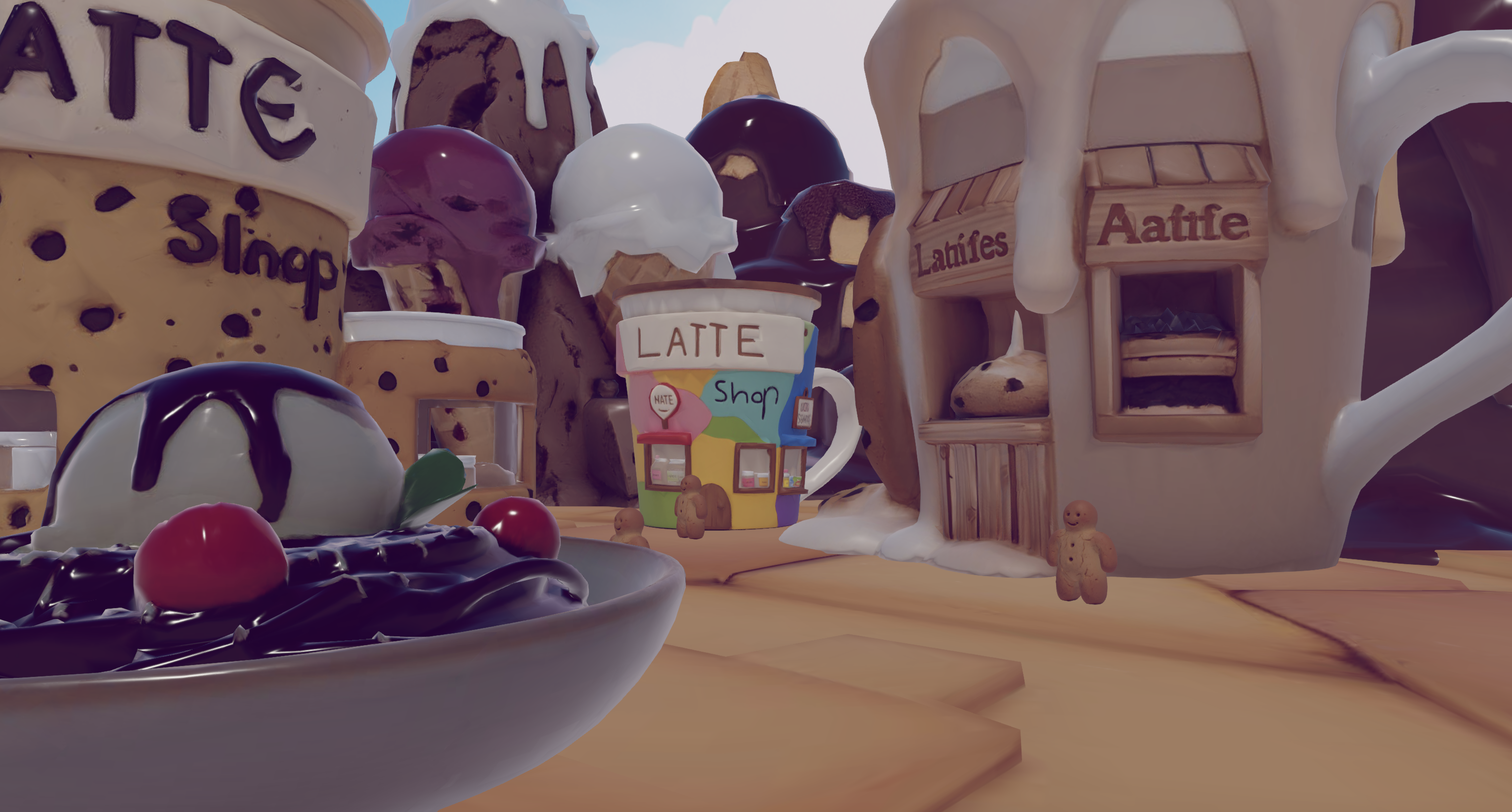
Start building in Nilo’s open beta with no install and no cost
Conclusion: Deciding Your Next Step
Bitmagic is a real browser-based AI game maker with a custom WebGL engine, three clear tiers, and creators who have shipped games with it. You now know what it makes, how pricing works, and where its limits show up.
If you want fast prompt-to-playable scenes and web sharing, Bitmagic is worth trying. If you want to build hands-on inside a 3D world, keep tight control, and export to standard formats, an engine-first browser platform like Nilo fits that next stage.
See what you can build when the engine stays in your hands