Written by: Nuno Leiria, Founder & CEO @ Nilo | Last updated: July 5, 2026
Key Takeaways
- Vibe coding lets you describe game behavior in plain language and get Lua code instantly, while traditional scripting means writing every line yourself for full control.
- AI-generated code feels great for quick prototypes, but it often turns brittle and hard to maintain once your project grows.
- A hybrid workflow that generates a first draft, exposes real variables, and tests in real time gives you both speed and stability.
- Real-time 3D feedback and built-in LOD systems help you catch edge cases early and keep exports within Roblox’s polygon limits without extra cleanup.
- Nilo combines natural-language code generation with instant 3D feedback and Roblox-ready exports, so you can start building and playing in the free open beta right in your browser.
Plain-Language Vibe Coding vs Lua Scripting
Vibe coding is a term coined by AI researcher Andrej Karpathy in February 2025. You describe what you want in plain language and an AI generates the code. You focus on the feel, the behavior, and the result, while the AI handles syntax. In game creation, you might type “make a jump pad that launches the player upward when touched” and get working code back almost instantly.
Scripting works differently. You write explicit instructions yourself in Lua for Roblox. You define every variable, every condition, and every function. You decide exactly what happens and why, line by line.
Two other terms matter here. LOD (level of detail) is a system that automatically reduces a 3D model’s polygon count, which is the number of triangles that form its surface, when the model is far from the camera. This keeps your game running smoothly. Retopology is the process of rebuilding a 3D mesh with cleaner, more efficient geometry, which you often need after AI tools generate models with messy or overly dense surfaces.
Why Vibe Coding vs Scripting Matters for You in 2026
Vibe coding went mainstream in 2025, and AI tools now generate full browser-based games from plain English descriptions. A 2025 Google Cloud survey found that 90% of game developers already use AI in their workflows. As an aspiring builder or an already active builder like you, this means you can move from idea to playable prototype much faster than before.
Speed still does not solve everything. Vibe-coded projects often hit a wall around the three-month mark when the codebase grows beyond anyone’s ability to understand it. That wall appears because no one remembers why the AI wrote certain parts, so small changes break unrelated features. Production games that you want to ship and maintain need readable, structured code that humans can reason about.
This reality shifts the question. You are not choosing which approach is better forever. You are deciding when to use fast AI generation and when to slow down and script by hand for long-term control.
Browser engines and AI tools now collapse the gap between imagination and a working prototype, which feels exciting when you are experimenting. Builders who actually ship games understand where AI-generated code should stop and where your own judgment needs to take over. If you want to try this hybrid style yourself, Nilo’s open beta lets you start building and playing in your browser for free.
Speed vs Control for Roblox Builders
Here’s a side-by-side look at how each approach affects your Roblox workflow:
| Dimension | Vibe Coding | Scripting | Hybrid Approach |
|---|---|---|---|
| Iteration speed | Fast, generate and test in minutes | Slower, write, test, debug manually | Fast generation with instant 3D feedback |
| Code maintainability | Low, intent gets lost, logic becomes tangled | High, you wrote it, you understand it | Readable output you can inspect and tweak |
| Learning curve | Low entry, no Lua knowledge required | Steep, requires Lua syntax and logic | Low entry, with real variables you can learn from |
| Real-time feedback | Depends on the tool | Requires manual testing in Roblox Studio | Instant 3D feedback in the browser |
| Export compatibility | Varies, may need cleanup for Roblox | Full control over Roblox-specific APIs | Roblox-optimized exports with LOD built in |
| Collaboration | Prompt-based, hard to share logic | Requires shared codebase and version control | Real-time multiplayer creation via shared link |
Vibe coding gives you speed, scripting gives you control, and a hybrid approach aims to combine both. Your job is to match the approach to the task in front of you.
Roblox Obby and Asset Scripts in Practice
Obby jump pad with vibe coding: You type “create a jump pad that launches the player upward with a force of 100 when they touch it” into a natural language code editor. The AI returns a LocalScript with a Touched event, a BodyVelocity instance, and a short cooldown. It works on the first test. You never touch a line of Lua.
Obby jump pad with scripting: You open Roblox Studio, create a Script inside the part, define a Touched connection, instantiate a BodyVelocity with explicit X, Y, Z values, set MaxForce, and add a debounce table to prevent repeated triggers. You control every parameter and understand what each line does.
The vibe-coded version appears faster at first. The scripted version becomes easier to debug six weeks later when a player reports that the jump pad stops working after they respawn.
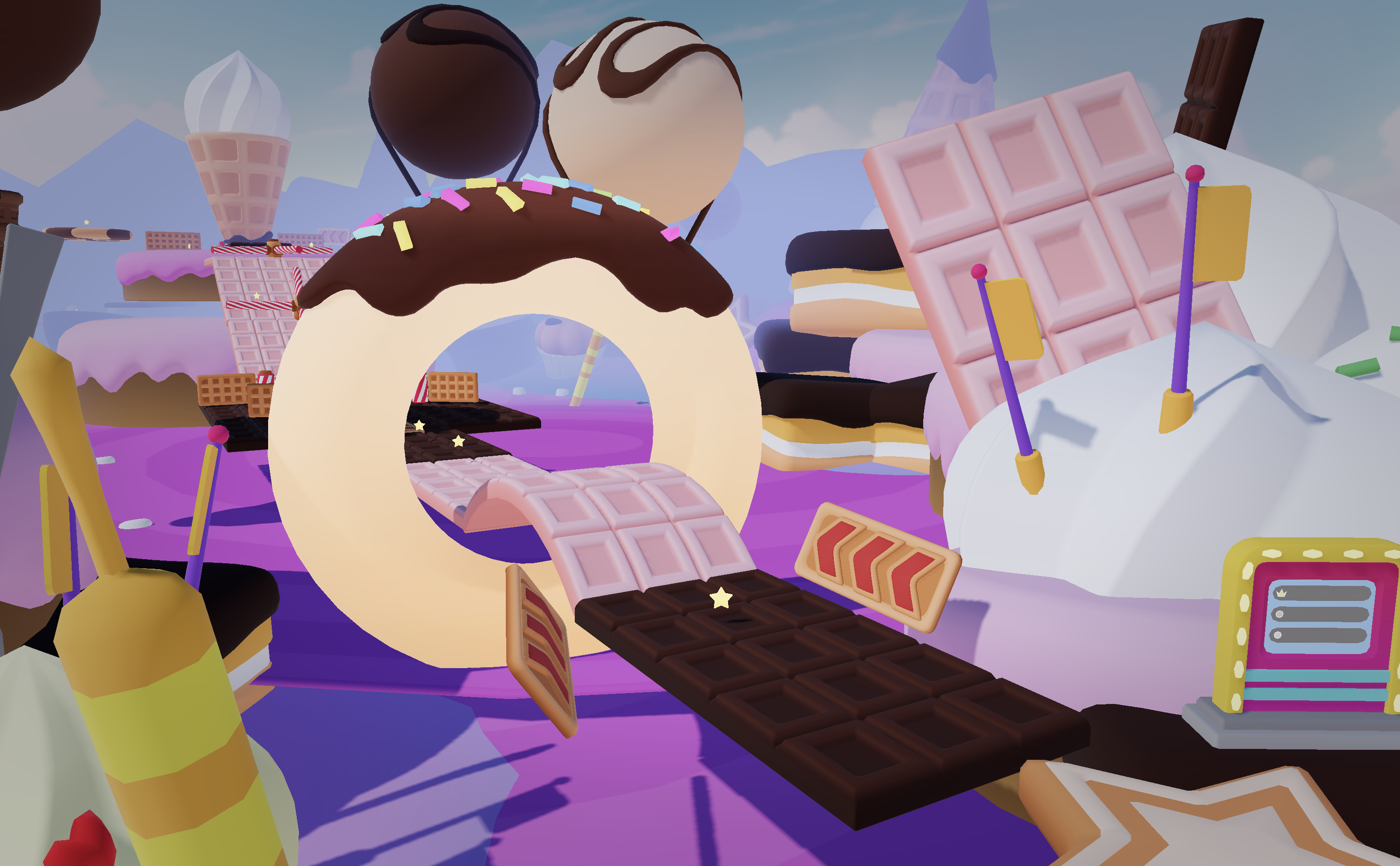
Asset placement script: Spawning props at set positions is a common Roblox task. A vibe-coded prompt such as “place a chest at position (10, 0, 10) and make it glow when a player is within 5 studs” can generate this behavior in seconds. Builders with no prior Lua experience have used this approach to build full RPG prototypes with XP systems, quest NPCs, and combat mechanics in roughly two hours. Follow-up prompts still needed to fix missing animations, incorrect aggression ranges, and quest progress that did not update correctly.

Common Vibe Coding Failures and How You Can Avoid Them
AI coding agents lack persistent memory of project constraints across sessions and often rewrite working components when you give them broad control. AI-generated code can also feel inconsistent, unbalanced, or disconnected from player agency, especially when your systems grow more complex.
The three most common failure points for pure vibe coding in Roblox look like this:
- Brittle logic: Changing one small thing can break four other features. Fix this by keeping AI-generated scripts short and self-contained. Avoid letting one script control your entire game.
- Missing edge cases: AI does not know your exact game rules. A jump pad script might ignore players in vehicles or with custom character sizes. Fix this by testing every generated script against your real game conditions before you ship.
- Unreadable code: Excessive flags and nested functions make AI output hard to modify later. Fix this by using a tool that shows you the actual variables, so you can change
speed = 2tospeed = 20directly and stay in control of the logic.
Real-time 3D feedback gives you the quickest way to catch these problems early. When you see the result of your script the moment it runs, you spot broken behavior before it hides inside a complex codebase. To feel this difference yourself, you can try Nilo’s free open beta and watch your changes update live.

Hybrid Roblox Workflow That Helps You Ship
Builders who finish games rarely pick only vibe coding or only scripting. They mix both at the right moments. You prompt for the first draft, inspect the output, tweak the variables, test in real time, then export when it feels ready.
Nilo stands out because its natural-language code editor, real-time 3D feedback, LOD system, and Roblox-focused exports bring both approaches into one browser-based workflow. You create game logic by talking, texting, or even sending images to the AI, and you do not need to install extra software or juggle multiple tools.
Here is how that looks step by step: You open Nilo in your browser. You type “add a jump pad that launches the player upward when touched.” The code generates and your 3D world updates right away. You run your character into the pad and test the force on the spot. If it feels too strong, you find the force variable and lower the value. When the obby section feels right, you export it as an FBX or glTF file that respects Roblox’s polygon caps automatically because of the built-in LOD system.
Builders in Nilo’s February 2026 survey described this experience in simple terms. One said, “I like how it feels like a good game engine rather than a vibe coding tool, with easy building and a good focus on being able to export and import content.” Another said, “You made me enjoy vibe-coding. The code assistance works almost flawlessly, other experiences have just been frustrating at best.”
How You Can Evaluate Vibe Coding and Hybrid Tools
You should evaluate vibe coding tools, scripting environments, and hybrid platforms for your next Roblox project with a few clear questions in mind.
- Can you see the result of your code immediately in 3D, or do you need to switch to another tool to test it?
- Can you read and edit the generated variables, or does the output feel like a black box?
- Does the tool export files that respect Roblox’s polygon limits in the 10K–20K triangle range without manual cleanup?
- Can you collaborate with friends in real time, or do you have to pass files back and forth?
- Does the tool run in your browser, or does it require a download and a powerful computer?
If most answers lean toward “no,” you will spend more time wrestling with the tool than actually building your game. When you want to test these criteria directly, you can join Nilo’s open beta and start building in your browser without spending a bunch of money.
FAQ
What exactly is vibe coding, and do I need to know how to code to use it?
Vibe coding means you describe what you want in plain language, by typing or speaking to an AI, and you get working code back without writing it yourself. You do not need to know Lua or any other programming language to start. Being able to read and tweak the output, such as changing a speed variable from 2 to 20, makes your games more reliable and helps you learn real scripting concepts while you build.
Is vibe-coded Lua safe to use in a Roblox game I want to publish?
Safety depends on how complex your game becomes. For simple mechanics such as jump pads, checkpoints, and basic tycoon logic, AI-generated Lua can work well if you test it carefully. For complex systems like combat, leaderboards, or data persistence, pure vibe coding often creates brittle code that breaks when you expand it. A hybrid approach where you generate a first draft, inspect the variables, test in real time, and adjust usually gives you more reliable results for anything you plan to ship publicly.
What is the difference between vibe coding in Nilo and using ChatGPT or Claude to generate Roblox scripts?
ChatGPT and Claude give you code as plain text. You copy it into Roblox Studio, run it, find a bug, return to the chat, explain the bug, get new code, copy it again, and repeat that loop. Nilo’s code editor generates the script and shows you the result instantly in your 3D world. You test, tweak, and iterate without leaving the browser or switching tools. This tighter feedback loop helps you catch problems faster and stay in a creative flow.
Can I export what I build in Nilo directly to Roblox Studio?
Yes. Nilo exports to FBX, OBJ, STL, and glTF formats, all compatible with Roblox Studio. The built-in LOD system automatically adjusts polygon counts to match Roblox’s performance limits in the 10K–20K triangle range mentioned earlier, so you do not need to retopologize or run assets through Blender first. You can also export rigged and animated characters, not just static props.
When should I learn traditional Lua scripting instead of relying on vibe coding?
Vibe coding gives you a strong starting point for prototyping and for builders who want to make playable games without a scripting background. Traditional Lua scripting becomes more valuable when you need precise control over complex systems such as custom combat logic, server-client architecture, anti-cheat measures, or performance-critical code. Using a hybrid tool like Nilo, where you see and edit generated variables directly, offers a natural path into scripting concepts without forcing you to learn everything from scratch on day one.