Written by: Nuno Leiria, Founder & CEO @ Nilo
What You Will Get From This Guide
- ForgeGUI generates Roblox meshes quickly but often creates dense, messy geometry that breaks Roblox triangle limits and needs Blender cleanup.
- You usually spend 30 minutes or more fixing ForgeGUI models before they import cleanly and run well in Roblox Studio.
- Nilo removes that cleanup step by automatically reducing polycount, handling LOD, and exporting Roblox-ready FBX or GLB files from your browser.
- Compared with ForgeGUI, Nilo also gives you one-click rigging, real-time collaboration, and no-install access on desktop or mobile.
- Start creating Roblox-ready assets in your browser with no cleanup step.
How to Check If ForgeGUI Is Safe for Your Roblox Projects
Search results for ForgeGUI mix hype pages with community scam warnings, so you should look at safety first.
ForgeGUI is a third-party tool, not an official Roblox product. With any third-party generator, you should check a few basics. It should never ask you to log in with your Roblox credentials. It should not demand payment information before you even try it. It should export standard formats like FBX, OBJ, or glTF that you can inspect before import. Standard mesh files contain no executable code, so they cannot touch your Roblox account by themselves.
The bigger problem for you is usually not security, it is output quality. ForgeGUI models look usable at first glance but the geometry is messy. They need cleanup before they pass Roblox performance checks. That is why so many ForgeGUI threads end with “how do I fix this in Blender?” instead of “it worked first try.”
Import ForgeGUI Models into Roblox Studio in 6 Steps
That Blender detour starts with getting the mesh into Roblox Studio in the first place. Here is the standard workflow you follow before you even start cleanup.
- Choose the right file format. Roblox Studio’s 3D Importer accepts FBX, OBJ, and glTF files. Use FBX or glTF when your model includes PBR textures, a rig, or multiple objects. Use OBJ for simple static props with no hierarchy.
- Check your triangle count before importing. Roblox Studio limits individual imported meshes to a maximum of 20,000 triangles. Aim for a lower count so your game runs smoothly. If your ForgeGUI mesh blows past that budget, you need to reduce it in Blender or a mesh optimizer before you continue.
- Fix scale in Blender before exporting. A common import issue gives you a 500-stud giant or a tiny speck because units do not match. In Blender, select your model, press Ctrl+A, and apply all transforms so the scale reads 1.0. Then export as FBX with scaling set to “FBX All.”
- Open the 3D Importer in Roblox Studio. Go to the Avatar tab and choose Import 3D, or right-click Workspace and insert a MeshPart. Pick your FBX, OBJ, or glTF file to open the preview panel.
- Set collision and anchor options. In the 3D Importer, choose a CollisionFidelity setting. Box is the cheapest option. Hull works for most props. PreciseConvexDecomposition fits complex shapes that players stand on. Turn the anchored checkbox on or off depending on whether the object should move.
- Assign textures after import. If your model appears grey, the texture did not travel with the geometry. Add a SurfaceAppearance child to the MeshPart. Then assign your PBR maps such as ColorMap, NormalMap, RoughnessMap, and MetalnessMap using uploaded texture asset IDs. Keep texture files in the same folder as your mesh file before import to reduce this issue.
Why Manual Retopology Still Slows You Down
Even after a clean import, ForgeGUI meshes often slow down a live Roblox experience. The geometry causes the problem.
AI-generated meshes often use dense triangulation instead of clean quad loops, which hurts edge flow and makes rigging and editing harder. Even worse, this messy triangulation often creates non-manifold geometry, such as edges shared by more than two faces, internal faces, and zero-thickness walls, which breaks Boolean tools, UV workflows, and can trigger import errors.
Most AI 3D generators also push out high-polygon meshes that you must shrink to fit real-time performance budgets. Retopology is the usual fix. You rebuild the mesh surface with clean, efficient geometry that follows the original shape while cutting polygon count. That work takes time, skill, and a desktop copy of Blender.
If you mainly want to design objects and ship games, spending an afternoon on that step feels like the wrong trade.
Nilo for Roblox Builders Who Want to Skip Cleanup
Nilo is a browser-based 3D creation platform built for Roblox builders like you. You create assets from text prompts, sketches, or reference images. Nilo then handles the heavy lifting and optimization before you export. You skip the Blender detour and avoid retopology headaches.
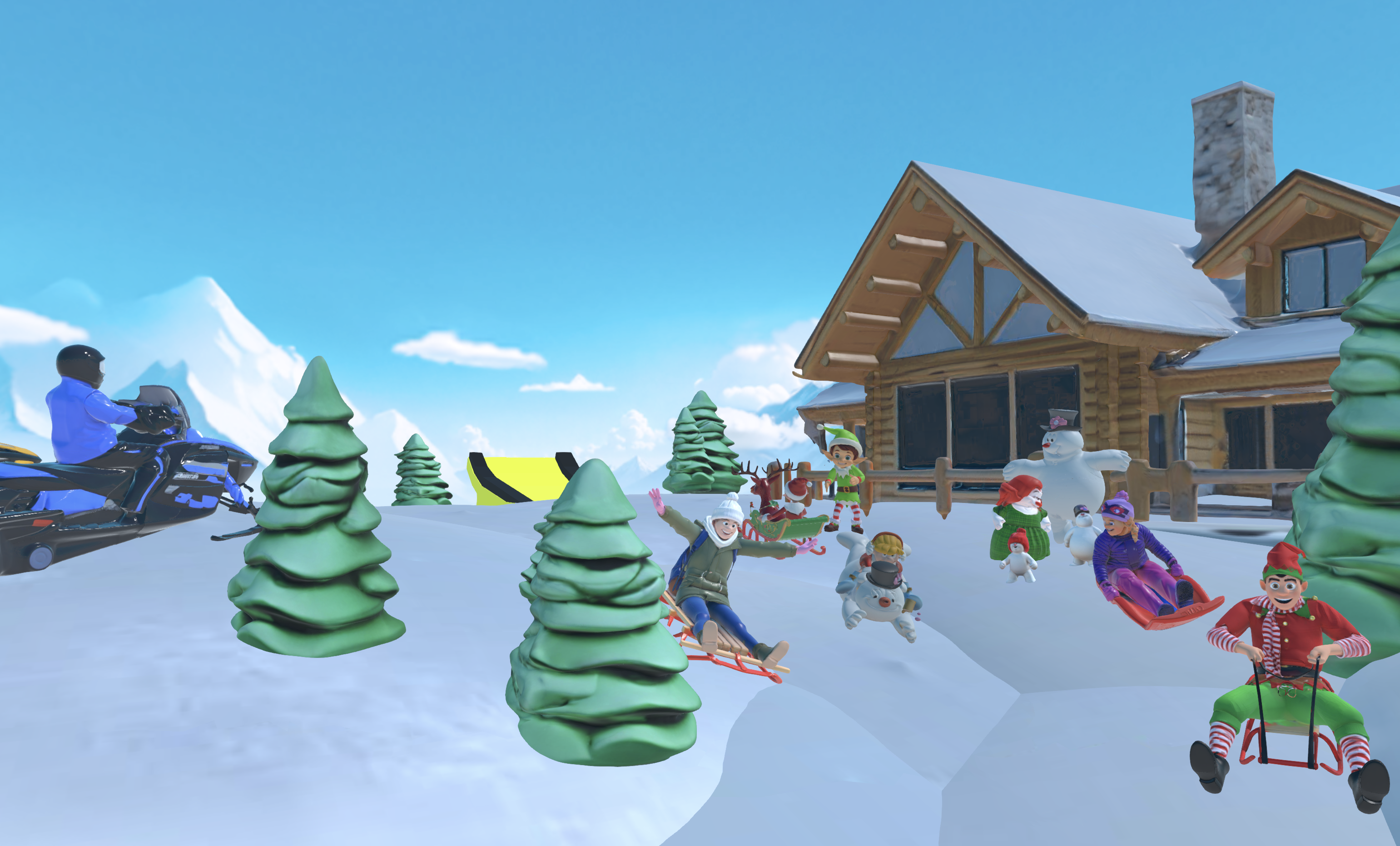
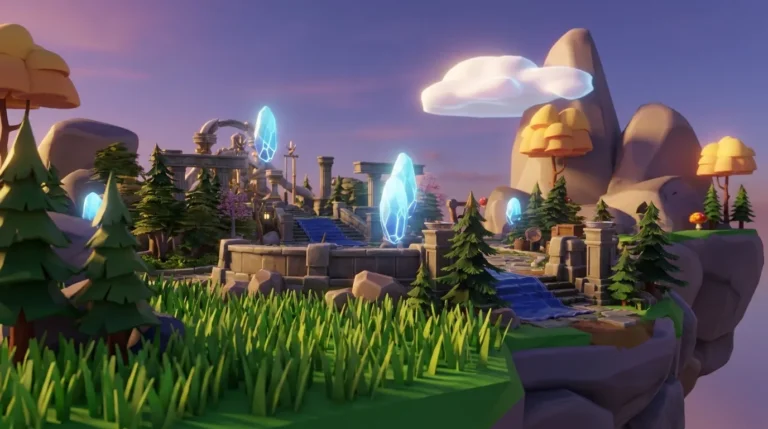
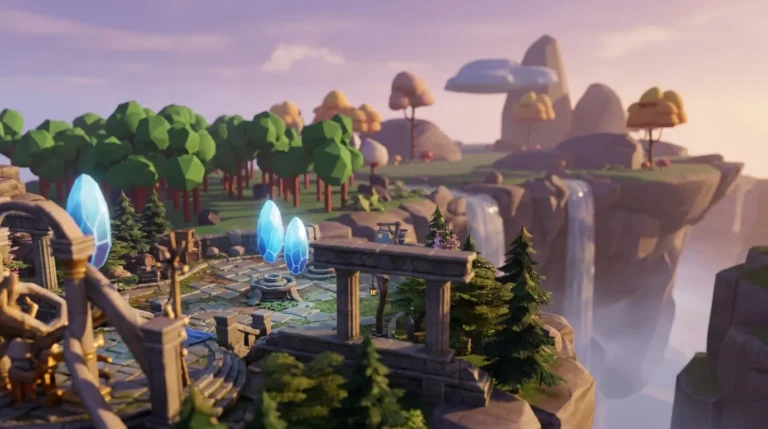
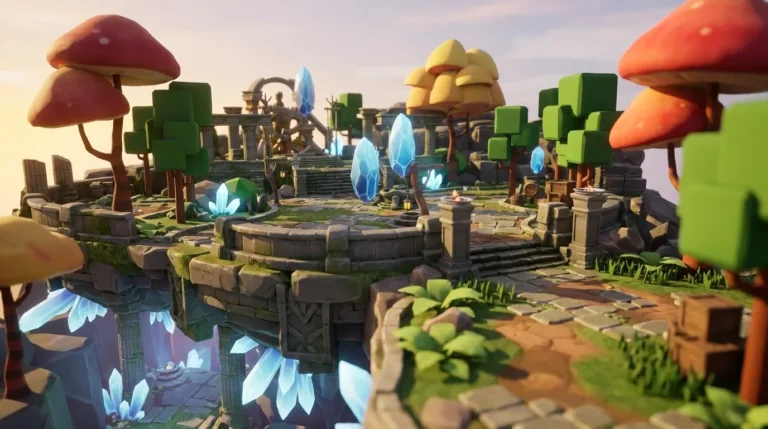
Nilo reduces polycount so models work directly in Roblox Studio and other platforms without extra steps. Its real-time LOD system automatically adjusts polygon counts while you work and keeps your assets inside Roblox limits without you counting a single triangle. You can rig humanoid characters in a T-pose with one click and generate animations from a short text description.
Builders in Nilo’s February 2026 survey described the shift clearly: “I do not have to spend hours on 3D modeling the simplest things, now I can use Nilo and do it in 15 seconds.” Another builder said, “Picture yourself, frustrated because you spent the last 5 hours 3D modeling a shipping container. All I have to do is open Nilo and do it in 20 seconds.”
Most builders surveyed in February 2026 said they would recommend Nilo to a friend. They also rated their experience as positive overall.
Nilo is model-agnostic and connects to several AI providers, including Meshy and Tripo, through one interface. You get strong outputs without juggling tools. Because everything runs in the browser, you install nothing. Share a link and start building with friends in real time.
ForgeGUI vs Nilo for Roblox: Quick Comparison
| Feature | ForgeGUI | Nilo |
|---|---|---|
| Topology quality | Dense triangulation and non-manifold geometry are common in AI-generated outputs. | Automatic polycount reduction so models work in Roblox Studio without extra cleanup. |
| Roblox export readiness | Often needs manual retopology or decimation to fit Roblox triangle budgets. | Real-time LOD system keeps assets inside Roblox limits automatically, with one-click FBX or glTF export. |
| Browser access | Third-party web tool whose output usually needs Blender cleanup before Roblox import. | Fully browser-based with no installation, no downloads, and support for desktop and mobile. |
| Real-time collaboration | Not available. | Real-time multiplayer creation where you share a link and build together instantly. |
Frequently Asked Questions About Nilo and Roblox
What export formats does Nilo support for Roblox?
Nilo exports to FBX, OBJ, STL, and glTF formats. For Roblox Studio, FBX and GLB are the formats you will use most. FBX carries rig data and PBR textures, so it fits characters and animated props. OBJ works for simple static meshes. Every export passes through Nilo’s LOD system before download, so the file already fits Roblox polygon limits.
Is Nilo compatible with Roblox Studio?
Yes. Nilo is a standalone browser platform, not a Roblox plugin. You create and optimize your asset in Nilo, export it as an FBX or GLB file, then bring it into Roblox Studio with the built-in 3D Importer. Nilo’s automatic polycount reduction helps the mesh pass Roblox performance checks without extra cleanup. You can also generate flat Roblox character textures, such as Torso and Leg for R15, directly in Nilo’s Workbench.
When should you use ForgeGUI versus Nilo?
ForgeGUI works as a fast text-to-3D starting point if you feel comfortable doing manual retopology in Blender and you have time to clean meshes before import. Nilo stands out when you want the full flow in one place. You generate, clean up, rig, animate, and export without leaving your browser or touching Blender. If you care most about staying in creative flow and shipping Roblox-ready assets quickly, Nilo removes the friction that ForgeGUI leaves for you.
Does Nilo require any coding or 3D modeling experience?
No. You can create assets from a text prompt, a sketch, or a reference image. Nilo’s built-in code editor accepts natural language prompts, so you describe what you want a character to do and it generates working code in real time. The platform introduces ideas like polygons, mesh topology, and rigging through the interface, but you do not need prior experience to start exporting game-ready assets.
How much does Nilo cost?
Nilo is currently free to use in open beta. The Starter tier includes 1,000 Nilo Bits per month, which are credits that power AI generation, export, and creation features. Many core building tools use no Bits at all. You can also earn more Bits through Nilo Rewards by inviting friends and building with the community.
Ready to Skip the Cleanup Step?
ForgeGUI gives you a mesh fast, but messy topology turns that speed into hours of Blender work before your asset feels Roblox-ready. Nilo keeps the fast generation and adds automatic optimization, one-click rigging, and direct Roblox export in your browser, so you avoid manual retopology completely.
As one Nilo Creator said in the February 2026 survey, “There are no limits on what you can create — just type, draw or add in an image and you can generate, rig, customise and place a fully 3D model within minutes.” See what you can create in minutes instead of hours.