Written by: Nuno Leiria, Founder & CEO @ Nilo
What You Will Get From These Rosebud AI Prompts
- Rosebud AI works well for rapid, one-shot prototypes but struggles once you start iterating on physics, collision, or persistent state.
- Strong prompts name a single core action, define a complete loop, set tight scope, specify controls, and request visible feedback.
- Follow-up prompt chains help you refine difficulty, polish visuals, or fix controls without throwing away your whole game.
- Prompt-only tools hit hard limits around state desync, collision accuracy, persistent data, and Roblox export compatibility.
- When you want hands-on control and Roblox-ready exports, try Nilo’s open beta and build and play for free.
The Problem: Where Prompt-Only Workflows Break For You
Prompt-only tools like Rosebud AI help you get something on screen fast. The friction starts the moment you try to go deeper.
A one-shot prompt cannot reliably maintain the dozens of interdependent systems, such as collision, scoring, input, and rendering, that you need for a complete game. Even when individual subsystems exist, integration failures can make the result unusable. In plain terms, you ask for a survival game, you get something that looks right, but the health bar does not update, enemies walk through walls, and restarting the round breaks the score.
Many browser-based AI game generators keep the resulting game trapped on their platform, with limited or no hand-editing, watermarks, restricted commercial use, or blocked exports. That lock-in blocks you if you want to bring your world into Roblox, Unity, or anywhere else.
For Roblox builders like you, the export gap becomes the biggest blocker. Roblox enforces strict polygon caps (10K–20K triangles per mesh) and requires clean topology. Automatic geometry-driven collision mesh generation frequently fails to capture intended interaction behavior, forcing developers to manually edit meshes in 3D software. Prompt-only tools do not handle that work for you.
Try Nilo’s hands-on editor and Roblox export for free.
7 Prompt Habits That Actually Help You Ship Games
- Name one core action. Pick a single verb such as jump, dodge, survive, or collect, and build the prompt around that action. This focus gives the AI a clear target instead of juggling several mechanics at once.
- Define a complete loop. Spell out start, play, win or lose, score, and restart. If your prompt skips any stage, the generator usually skips it too, which leaves you with a prototype that feels unfinished.
- Set a tight scope. Prompts work better when they describe a small playable slice, such as one screen, three short levels, or a 60-second round, instead of a huge open world. This limit keeps the AI from spreading your idea too thin.
- Specify controls. Say exactly how you want to play, such as keyboard, mouse, or touch. Clear controls prevent the tool from guessing and picking something that feels wrong to you.
- Request feedback states. Ask for visible damage, success, failure, and time warnings so players always know what is happening. These cues make your prototype feel like a real game instead of a tech demo.
- Change one variable at a time. Adjusting one or two variables per follow-up prompt makes it easier to see what each change actually did. This habit keeps you from breaking working parts by accident.
- Playtest before the next prompt. Finish one full round, spot the weakest part, then write a focused fix instead of a full rewrite. This rhythm helps you move forward steadily instead of restarting every time.
Survivor Game Prompts You Can Paste Into Rosebud
Survival games fit prompt-based prototyping well because the core loop of staying alive, managing resources, and avoiding threats is simple to describe. Multiplayer 3D co-op or PvP features can grow from prompt-based or vibe-coding projects without a dedicated multiplayer template. Start solo, iterate until the loop feels good, then think about multiplayer.
Prompt 1 — Core loop:
“A top-down 2D survival game. The player manages heat, hunger, and stamina over 5-minute rounds in a snowy forest. Wolves spawn every 30 seconds. Keyboard controls (WASD to move, E to interact). Show heat, hunger, and stamina bars on screen. Game over when any bar hits zero. Display a score based on survival time.”
Prompt 2 — Resource layer:
“A top-down survival game on a desert island. The player collects wood, stone, and food by clicking objects. Craft a shelter by combining 5 wood and 3 stone. Day/night cycle every 90 seconds, and enemies only spawn at night. Mouse controls. Win condition: survive 3 nights.”
Prompt 3 — Roguelite slice:
“A cabin-in-the-snow survival roguelite where the player manages heat, hunger, and wolves over short 10-minute scenarios. Each run starts with random item drops. Keyboard controls. Show a run summary screen with time survived and items used.”
Follow-up chain A — Difficulty tuning:
After Prompt 1: “Wolves are spawning too fast. Reduce spawn rate to every 60 seconds for the first 2 minutes, then increase gradually. Keep everything else the same.”
Follow-up chain B — Polish pass:
After any survival prompt: “Add a screen-shake effect when the player takes damage. Show a red flash on the health bar. Add a restart button on the game-over screen that resets all stats without reloading the page.”
RPG Prompt Examples That Stay Manageable
RPGs challenge prompt-only tools because they rely on persistent state such as quest flags, inventory, and NPC memory. Most generative models keep this state implicit instead of storing it as explicit variables, which creates inconsistencies when non-visual factors change outcomes. Keep your RPG prompts small and focused on a short story so the tool can track what matters.
Prompt 1 — Mystery slice:
“A small-town mystery RPG. The player solves one case over a single in-game weekend. Three NPCs each have one clue. Clicking an NPC opens a dialogue box with two response choices. Collect all three clues to unlock the accusation screen. Keyboard navigation. Show a clue inventory in the corner.”
Prompt 2 — Combat RPG:
“A turn-based RPG battle screen. Player has HP, MP, and three abilities: Attack, Heal, and Magic Blast. One enemy per fight with visible HP bar. Player and enemy alternate turns. Win by reducing enemy HP to zero. Lose if player HP hits zero. Show a victory screen with XP earned.”
Prompt 3 — Exploration RPG:
“A top-down exploration RPG with one small town and one dungeon. The player talks to a shopkeeper to buy a sword, then enters the dungeon to fight one boss. Keyboard controls. Show player HP and gold. Boss drops a key item on defeat that triggers a win screen.”
Follow-up chain A — NPC depth:
After Prompt 1: “Add a fourth NPC who gives a false clue. If the player accuses the wrong person, show a ‘Wrong suspect’ screen and let them try again without resetting the clue inventory.”
Follow-up chain B — Balance pass:
After Prompt 2: “Magic Blast is too powerful and one-shots the enemy. Reduce its damage by 40%. Add a 2-turn cooldown so the player cannot use it twice in a row.”
Follow-Up Prompt Chains That Show Real Iteration
Breaking complex tasks into smaller, iterative prompts, such as defining data structures, then adding validation, then implementing logic, gives more reliable results than asking for entire features at once. These four chains show how you can apply that pattern to your own games.
Chain 1 — Controls fix:
Before: Movement feels slippery and the player slides after releasing keys.
Prompt: “Remove all momentum from player movement. The character should stop instantly when I release the key. Keep the current speed value.”
Chain 2 — Scoring system:
Before: The game has no score.
Prompt: “Add a score counter in the top-right corner. Award 10 points for each enemy defeated. Award 50 bonus points for surviving a full minute. Show the final score on the game-over screen.”
Chain 3 — Visual feedback:
Before: The player cannot tell when they are taking damage.
Prompt: “Flash the player sprite red for 0.3 seconds when hit. Add a brief screen shake. Play a hit sound if audio is available. Do not change any other mechanics.”
Chain 4 — Mobile optimization:
Before: The game only works on desktop.
Prompt: “Add on-screen touch controls for mobile: a virtual joystick on the left, an action button on the right. Make all tap targets at least 60px. Keep keyboard controls working for desktop.”
Where Rosebud AI Prompts Hit Hard Limits
Knowing where Rosebud AI prompts fail saves you hours of trial and error. These four areas cause the most pain for builders like you.
State desync. Prompt-only AI interfaces can desynchronize the logical game state from the visible scene. You see the right visuals, but the underlying logic behaves differently.
Collision and physics. Collision detection systems are complex and often need detailed implementation guidance in prompt-only tools. The collision issues mentioned earlier fall into this category and do not disappear with a single follow-up prompt.
Persistent state across sessions. Effects must remain consistent over long horizons even when objects leave the current view, yet most models retain nothing beyond a recent observation window and cannot reliably handle irreversible changes or off-screen state evolution. Save files, persistent inventories, and multiplayer sync all sit inside this gap.
Roblox export. Rosebud outputs web games, not Roblox-compatible assets. Bringing a Rosebud prototype into Roblox Studio means rebuilding it from scratch, manually retopologizing meshes to meet polygon caps, and rigging characters separately. Prompt-to-browser AI makers like Rosebud generate a playable web game from a text description but keep the result mostly platform-locked with limited off-platform export and ownership options.
Skip the export headache and build Roblox-ready assets in Nilo’s browser editor.
AI-Assisted Browser Tools That Give You Real Control
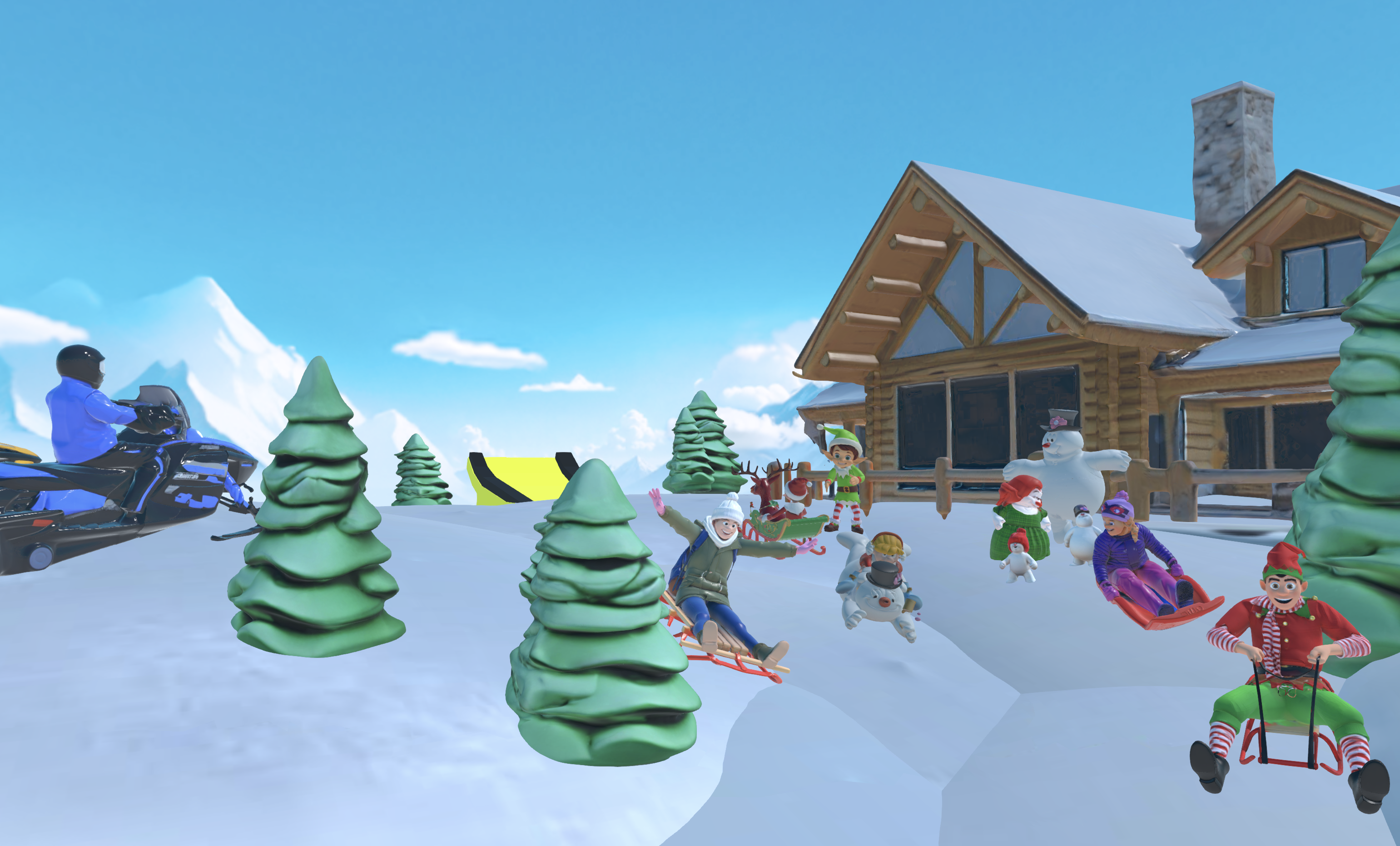
A new group of tools now sits between prompt-to-game generators and full desktop engines like Roblox Studio, Unity, or Blender. These tools are AI-assisted, browser-based 3D creation platforms with no download, no installation, built-in AI, and real hands-on control over what you build.
When you explore tools in this category, focus on these checks:
- Onboarding speed. You should get something on screen in under five minutes without a tutorial.
- Output quality. The 3D assets should be clean enough to use without hours of manual cleanup.
- Export compatibility. You should be able to take your work to Roblox, Unity, or Blender instead of leaving it locked to one platform.
- Real-time control. You should move, resize, and edit objects directly instead of constantly re-prompting.
- Collaboration. A friend should join your session from a link without downloading anything.
- Learning value. The tool should teach you real concepts such as polygons, rigging, and physics instead of hiding everything in a black box.
This distinction between prompt-to-game tools and AI-assisted creation tools matters. For indie developers, mature hybrid workflows combine AI code assistance with direct manual control in engines instead of relying on end-to-end natural-language generation. Tools that keep your attention give you AI as a co-pilot, not a replacement.
See how Nilo’s AI co-pilot approach feels in your browser.
Rosebud AI Compared With a Hands-On Engine Like Nilo
Rosebud AI and a hands-on browser-based engine such as Nilo solve different problems for you. Think about them as two separate tools in your kit.
Real-time control. In Rosebud, you describe what you want and wait for a regeneration. In a hands-on engine, you click an object, drag it, resize it, and see the change instantly. Large-scale refactors of generated scene files are a major limitation of prompt-only workflows because AI handles additions better than restructuring. Hands-on tools let you restructure without another prompt.

Asset customization. Rosebud generates a game as one big unit. A hands-on engine lets you generate individual assets such as a character, a weapon, or a prop, then place each one exactly where you want. You are designing directly instead of only describing.
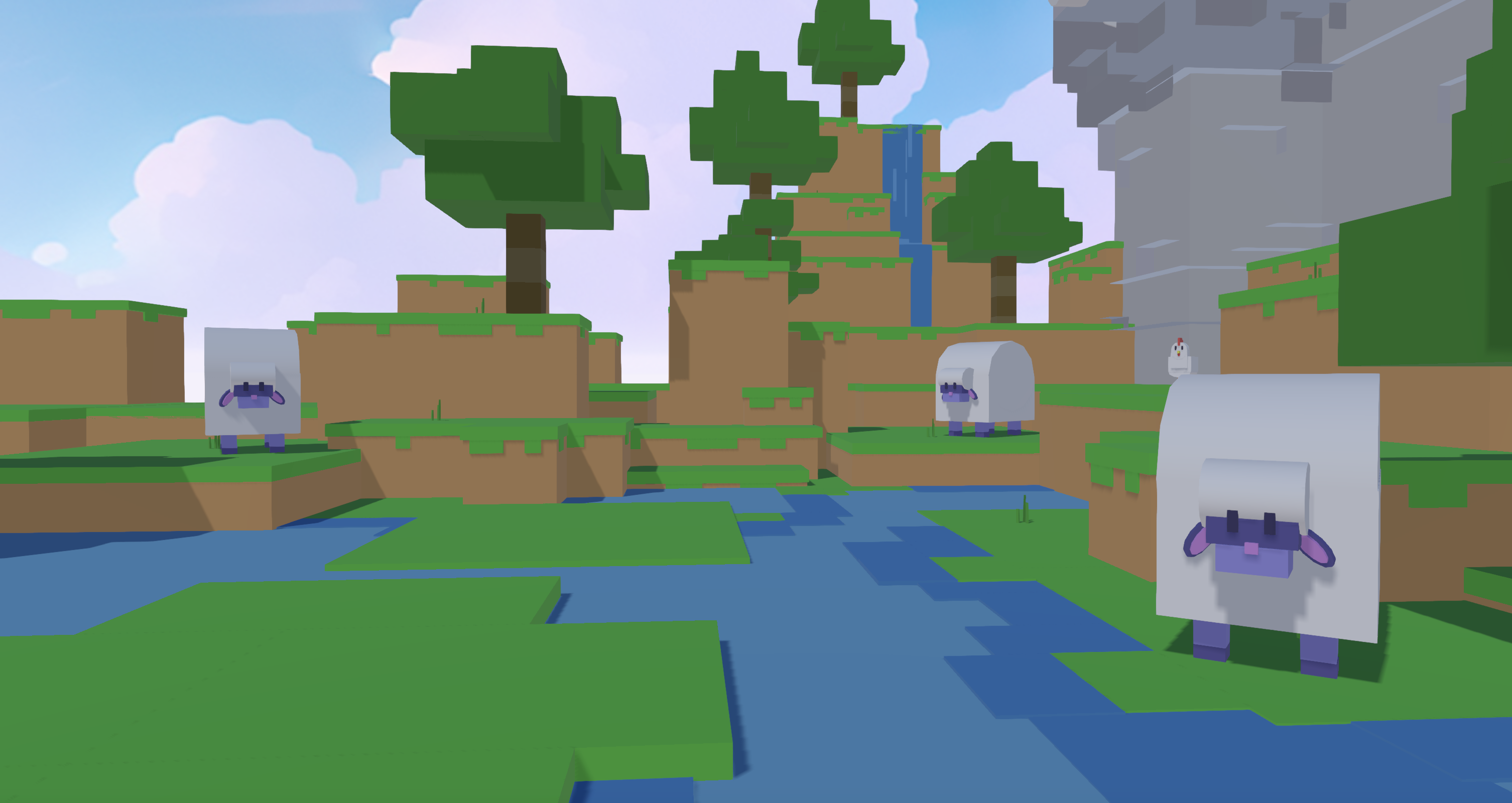
Roblox export. This gap shows up clearly. Rosebud outputs web games. Nilo stands out here for Roblox builders because its real-time LOD system keeps your models within Roblox’s triangle limits, so you generate an asset, adjust it with a slider, and export a Roblox-ready file in FBX, OBJ, STL, or glTF format. You skip the Blender detour.

One builder in Nilo’s February 2026 survey said, “I like how it feels like a good game engine rather than a vibe coding tool, with easy building and a good focus on being able to export and import content.” That survey also found that 93% of builders would recommend Nilo to a friend, and 82% rated their experience as “Awesome” or “Good.”
When you evaluate any tool in this space, ask three simple questions. Can you press play immediately? Can you open the scene and change values by hand? Can you export a build to the platform where you actually want to publish? These questions separate real creation tools from short demos.
Nilo also supports real-time multiplayer creation. You share a link and a friend joins your world and builds alongside you, on desktop or mobile, without downloading anything. Rosebud AI does not offer this kind of shared building experience.
Join Nilo’s open beta and start building your Roblox-ready world.
People Also Ask
What are some good prompt ideas for AI?
The strongest AI game prompts name one core player action, define a complete loop with start, play, win or lose, score, and restart, set a tight scope such as one screen or a 60-second round, specify controls, and request visible feedback for damage, success, and failure. Genre-specific examples include survival prompts like “manage heat and hunger over 5-minute rounds with wolves spawning every 60 seconds,” RPG prompts like “solve one mystery over a single in-game weekend with three NPC clues,” and arcade prompts like “stomp a city as a kaiju within a two-minute time limit.” Always playtest one full round before writing a follow-up prompt, and change only one or two variables at a time.
What are the limitations of Rosebud AI?
Rosebud AI’s main limitations are state desync, where the visible game and the underlying logic fall out of sync during iteration, collision and physics gaps, where prompt-only tools cannot reliably configure broad-phase partitioning, narrow-phase geometry testing, or continuous collision detection, persistent state loss, where off-screen objects and accumulated conditions such as health or cooldowns are not reliably tracked, and platform lock, where Rosebud outputs web games with limited export options, which makes it hard to bring your work into Roblox Studio or other engines. These limitations are structural and do not disappear with better prompts.
Is Rosebud AI worth it?
Rosebud AI can be worth using for quick five-minute prototypes, class exercises, or exploring a game concept before you commit to a full build. It does not fit projects that need iteration, Roblox-compatible exports, real physics, multiplayer, or persistent game state. If you want to ship something to Roblox or build a world you can keep growing, a hands-on browser-based engine with real export options usually serves you better than a prompt-only generator.
Frequently Asked Questions
What is vibe coding?
Vibe coding means building a game by talking, typing, or sending images to an AI instead of writing code by hand. You describe what you want, such as “make the player jump higher” or “add an enemy that follows me,” and the AI generates working code in real time. Nilo’s built-in code editor works this way, so you type or speak in any language, see the change instantly in your 3D world, and can also open the actual code to tweak variables like speed or damage directly.
Do I need to know how to code to use Rosebud AI or Nilo?
You do not need coding knowledge to get started with either tool. Rosebud AI generates a full game from a text description. Nilo’s natural language code editor lets you describe what you want in plain language and generates working game logic instantly. Nilo also lets you see and edit the underlying code variables, so you can learn real programming concepts while you build, without writing code from scratch.
Can I export my Rosebud AI game to Roblox?
Rosebud AI outputs web games and does not provide Roblox-compatible exports. To bring a Rosebud prototype into Roblox Studio, you would need to rebuild the assets manually, retopologize meshes to meet Roblox’s polygon caps, and rig characters separately. Nilo, by contrast, exports directly to FBX, OBJ, STL, and glTF formats with automatic LOD optimization to meet Roblox’s 10K–20K triangle limits.
What is a polygon cap and why does it matter for Roblox?
A polygon cap is the maximum number of triangles, which are the tiny flat shapes that make up a 3D mesh, that a platform allows per object. Roblox enforces a cap of roughly 10K–20K triangles per mesh. If your model exceeds this limit, it might not import correctly or could cause performance problems. Most AI-generated 3D models start well above this limit and need manual cleanup, a process called retopology, to bring them into range. Nilo’s LOD system handles this automatically with a slider, so you can skip Blender.
Can I build multiplayer games with prompt-only tools?
Multiplayer features such as co-op, PvP, and shared world state require persistent, synchronized game state across several players. Prompt-only tools keep game state implicit, which means it lives inside recent observations instead of explicit variables. This design makes reliable multiplayer generation extremely difficult with prompt-only workflows. Nilo supports real-time multiplayer creation, so you share a link and a friend joins your world and builds or plays alongside you instantly, on desktop or mobile.
Conclusion
Rosebud AI prompt examples give you a solid starting point, especially when you use the categorized prompts and follow-up chains covered here. The 15-plus prompts in this article offer a structured way to get prototypes on screen quickly, and the iteration chains help you push further than a single generation can.
Prompt-only workflows still have a ceiling. State desync, collision gaps, physics limits, and platform lock are structural problems, not prompt problems. When you hit that ceiling and want to move an object by hand, export a Roblox-ready asset without a Blender detour, or build a world with a friend in real time, you need a hands-on engine instead of another clever prompt.
Nilo stands out in this space because it is built specifically for Roblox builders like you. It runs in the browser with no download, supports real-time LOD optimization, lets you rig and animate bipedal characters with one click, offers vibe coding with instant 3D feedback, and exports directly to Roblox Studio. In Nilo’s February 2026 survey, 93% of builders said they would recommend it to a friend, and 82% rated their experience as “Awesome” or “Good.”
You can start with Rosebud prompts to explore an idea. When you feel ready to build that idea for real and bring it into Roblox, Nilo becomes the next step.
Join Nilo’s open beta and start building and playing in your browser.